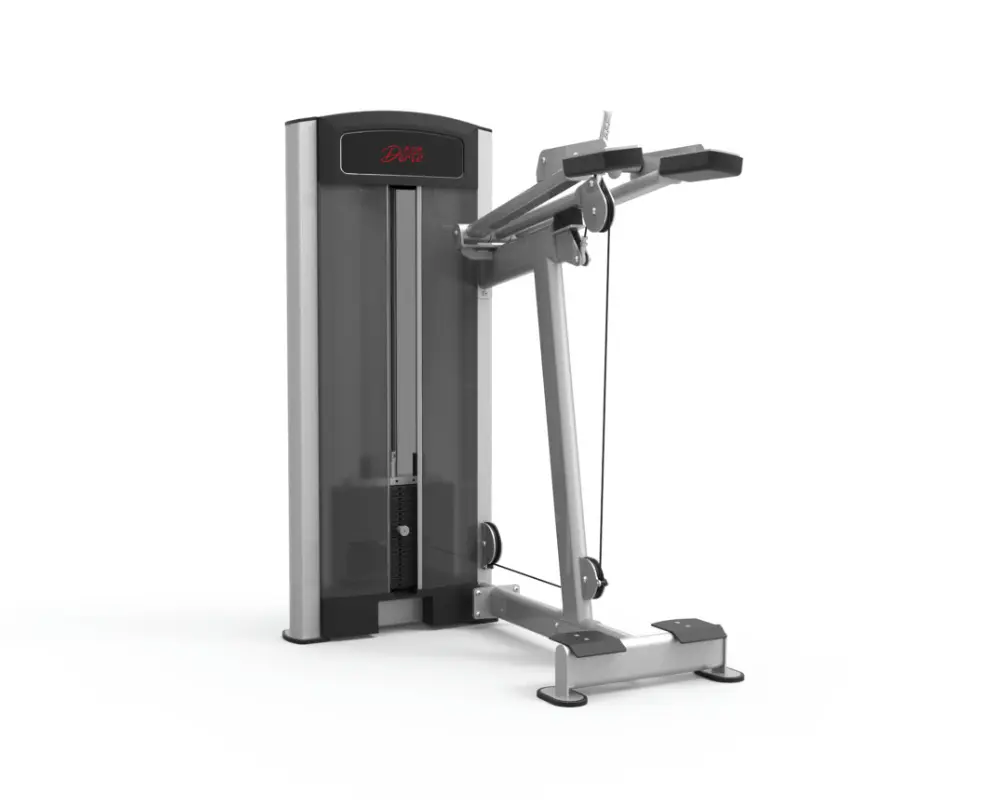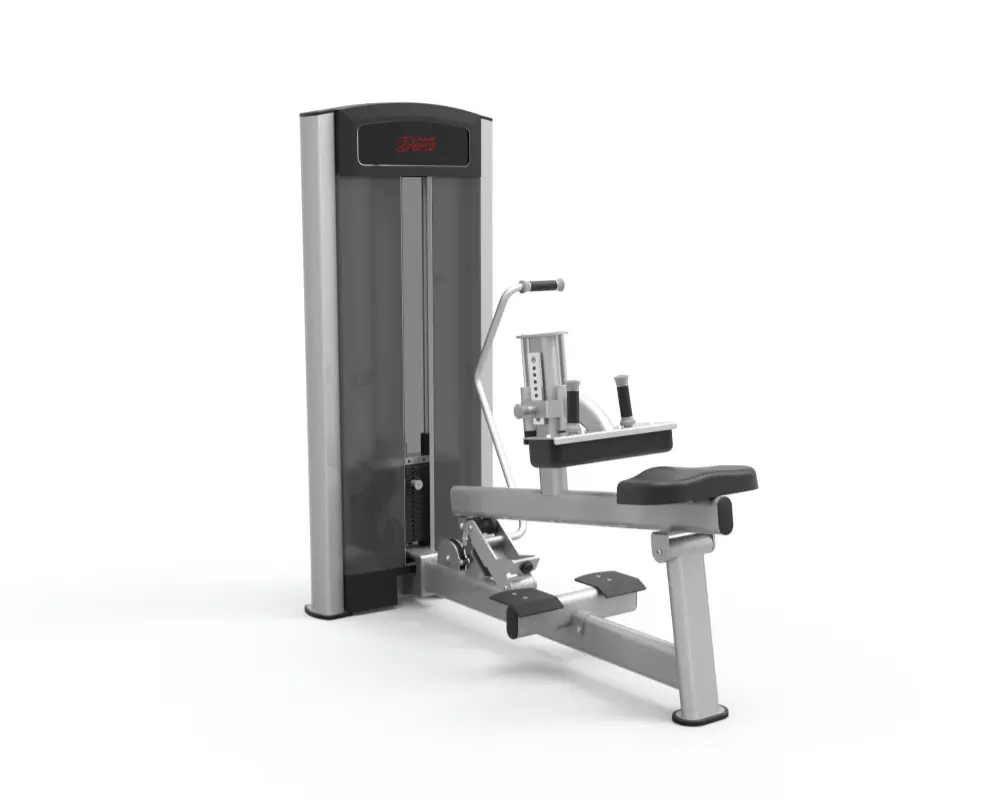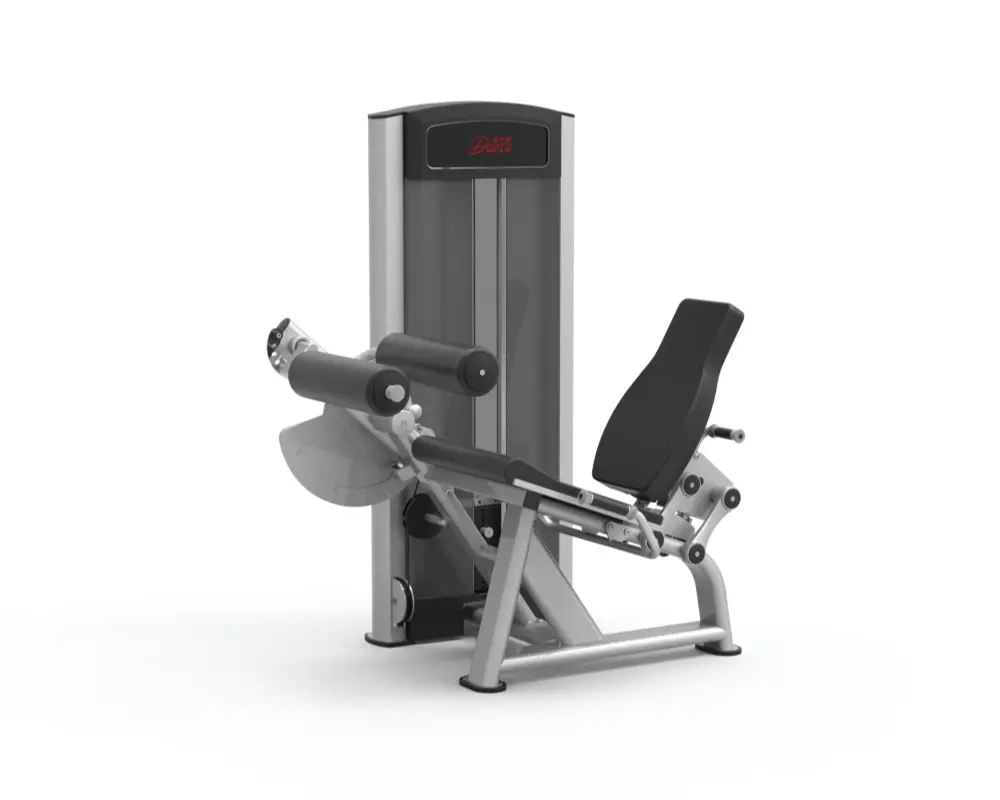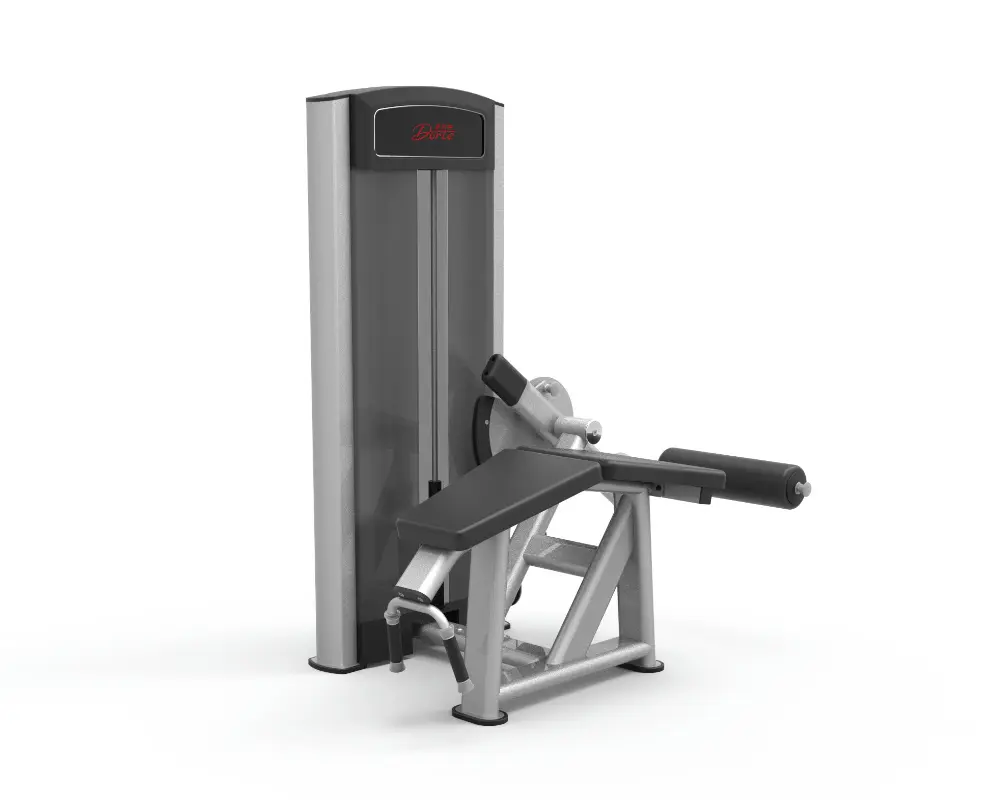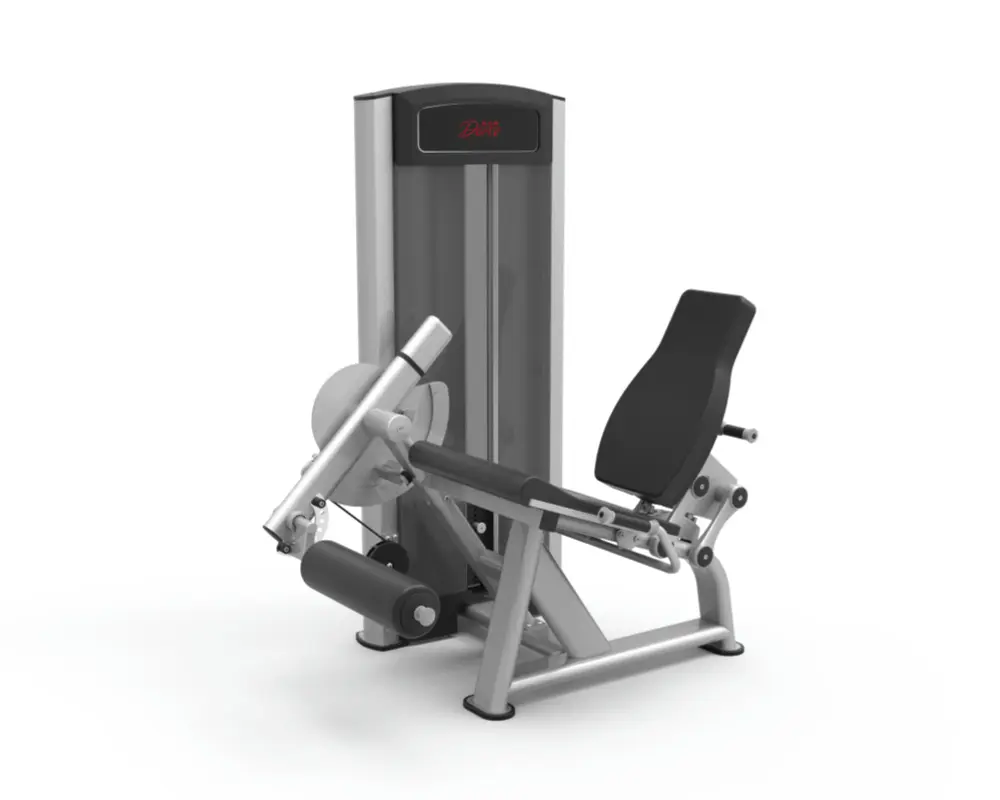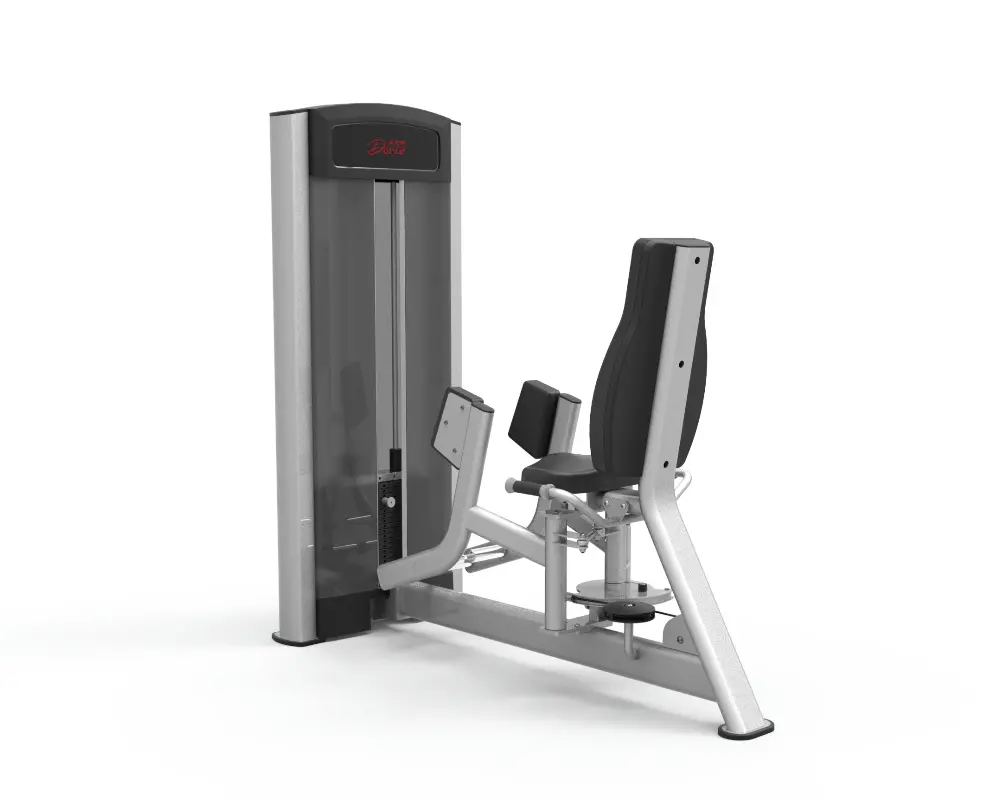

Product Model
| Specification | DL727 |
|---|---|
| Target muscles | Quadriceps, adductor magnus and gluteus maximus, with gracilis and tensor fasciae latae assisting - the anterior thigh chain plus a short hip-extensor contribution |
| Product size | 1205*1117*1660mm |
| Counterweight | 100KG |
| Net weight | 280KG |
| Maximum load capacity | 160KG |
| Wire rope tension | more than 1400KG |
| Main frame specification | Q235 steel, 120*75*3.0mm bread-type tube for the main frame; 120*50*3.0mm flat elliptic tube for secondary members |
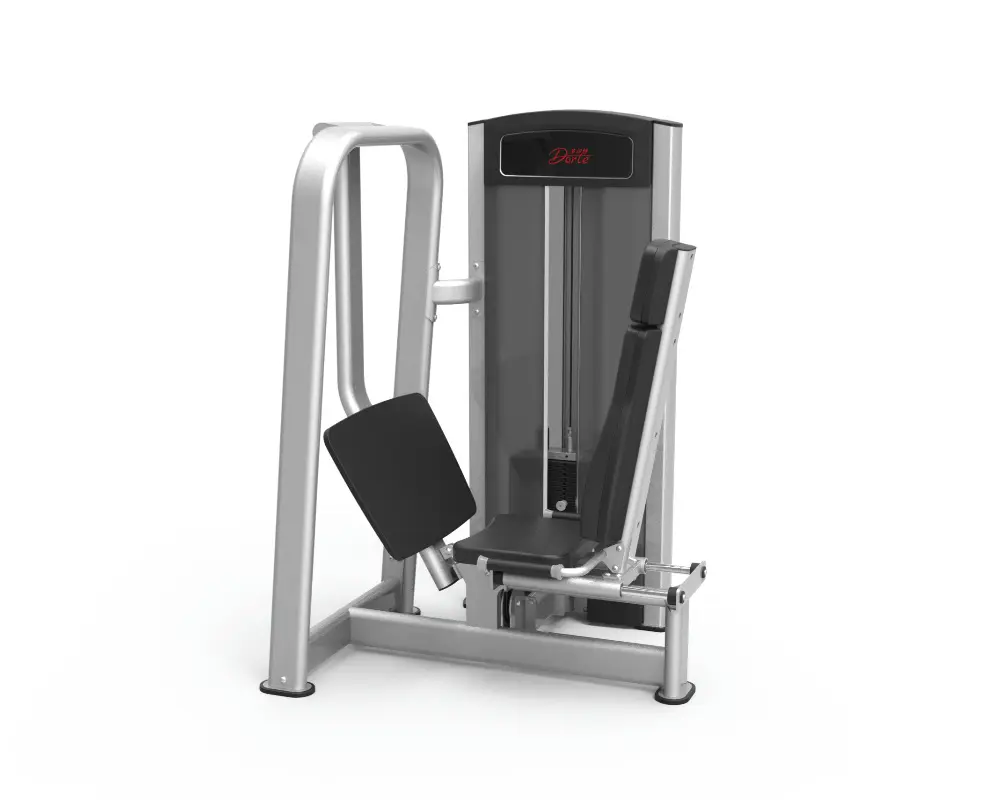
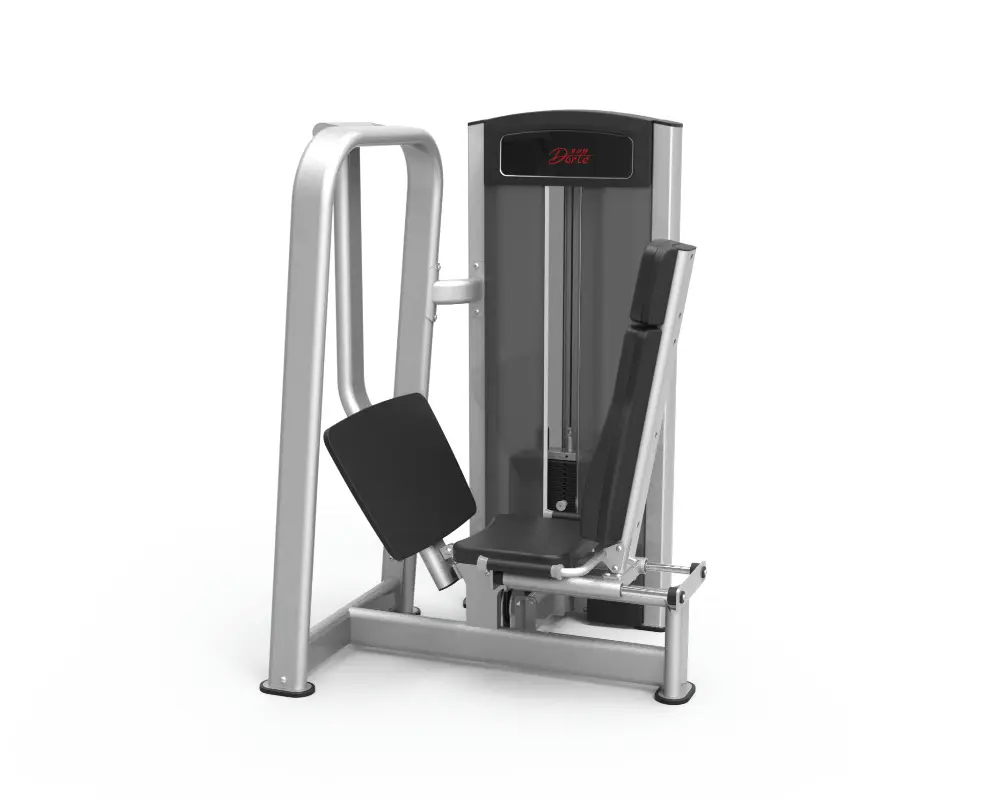
Seated Leg Press Station
A seated leg press isolates nothing. The knee extends, the hip extends through a short arc, the ankle stays put, and every line of the specification describes a machine that does one thing and does it plainly. Catalogue pages treat that as a weakness, which is why the leg press is usually photographed last and written about in three sentences. The property it actually sells does not appear on the muscle list at all: it is the only station in a strength room that puts real load on the legs while keeping the vertebral column out of the load path.
Follow the force. On a barbell squat or a hack squat the load enters at the shoulders and runs down the axial skeleton, so the vertebral bodies carry it and the trunk stabilisers work isometrically to stop the spine folding. That is fine for a healthy member and it is the wrong tool for a member with a symptomatic disc, a recent abdominal repair, a pregnancy past the second trimester, or a room where no coach is standing behind every repetition. On the DL727 the reaction force is taken by the back pad and the seat, the trunk braces rather than bears, and the spine does isometric work instead of compressive work. The quadriceps cannot tell the difference. The lumbar spine can, and it is the spine that decides whether a member keeps training.
The second thing this station changes is what the number on the pin means. Seated, the member's body weight rests on the seat and never reaches the load path, so 100 kg on the pin is 100 kg against the feet. A 100 kg barbell is a different quantity: the bar carries 100 kg, the member's own trunk rides on the same structure, and the knee resists both. Two readings that look identical describe different loads, which is why members routinely report that a leg press feels light on the first set and heavy by the fifth. Nothing changed except the arithmetic they were using to compare it with a squat.
The hip angle is smaller than the muscle list implies. Gluteus maximus, adductor magnus, gracilis and tensor fasciae latae all attach across the hip and all appear in the specification, but the seat and back pad hold the hip inside roughly ten to fifteen degrees of travel, so the hip extensors contribute at the start of the press and hand the movement to the knee almost immediately. This is a quadriceps-dominant station with a hip assist, not a squat substitute — and that is what makes it useful, because it gives a room three rungs of one ladder: extension for isolation, press for integration, free weight for the skill.
Machine mass says where the load goes. 280 kg of frame and mechanism carries a 100 kg stack, a ratio of 35.7% — the lowest in this leg series, against 36.4% for the extension, 39.4% for the seated curl and 47.6% for the standing calf. The weight here is not in the plates; it is in the back pad, the press arm and the pivot, because those are the parts that see the reaction force. A press that flexes under 100 kg is a press nobody trusts with 100 kg, and 280 kg of Q235 steel is how a manufacturer answers that without putting a bigger stack on the tower.
At 1205 × 1117 × 1660 mm the footprint is 1.346 m² — 117 mm narrower and 64 mm deeper than the DL724 extension that usually sits beside it. On a plan drawing the two look like neighbours. On the slab they are not neighbours at all, and that is what the rest of this page is about.
Why the Slab Picks the Spot
280 kg over 1.346 m² is 208 kg/m², the highest figure in the leg series and not by a small margin. The extension is 158, the adductor and abductor 161, the seated curl 132, the prone curl 134. The leg press is 57% heavier on the slab than the seated leg curl and 32% heavier than the extension it stands next to. That reverses the intuition most fit-out plans are built on: the machine that looks like a simple box is the one a structural engineer needs to see, while the machines with the complicated arms are the light ones.
This decides the position on any floor that is not grade level. An office slab from the 2000s is commonly rated for 3.0 to 5.0 kN/m² of live load, which sounds generous until 208 kg/m² lands over a long span with three other stations inside the same bay. Put the press over a column line or a primary beam, not mid-span, and put the leg curls, which carry 70 kg/m² less, where the slab is weakest. That is a two-minute decision during layout that saves a structural survey afterwards, and it is the reason this page leads with the slab rather than with the muscles.
Range is set by the pedal stop and the back pad rather than by the member's judgment, and both halves of that are useful. The advantage is that a tired member cannot quietly shorten the last third of the press, which is where most free-weight sets actually end. The trap is that a 155 cm member and a 190 cm member do not start from the same knee angle at the same pad setting: set the back pad so the knee sits near ninety degrees at the bottom of the stroke, and re-check it for anyone more than 15 cm outside the average. The pedal position that gives one member a full range gives another a quarter rep and a sore knee.
Foot placement on the plate is the adjustment nobody makes, and it changes the exercise more than the pin does. High on the plate, the ankle sits further from the knee and the hip travels through a longer arc, which brings the glutes and hamstrings in; low on the plate, the knee does more of the work and the quadriceps take it. Neither position is wrong; keeping the same one for a year is. Two strips of tape on the plate are enough to make a member rotate between them, and they cost nothing.
Programme it as the middle rung rather than as a substitute. A member who completes twelve clean repetitions on the extension at 35 kg has the quadriceps strength to press; a member who presses 100 kg for ten has the coordination to learn a squat pattern. The press does not replace the rack — it decides who is ready for it, and it makes that decision without a coach watching every repetition, which is the actual constraint in a room with 200 members and one trainer on shift.
Placement follows the entry, and the entry is a hinge. The member sits down, puts both feet on the plate and pushes, so the stack end goes against a wall with the usual 100 mm service gap and the plate end needs about 0.8 m of clear floor to step in and out. Run it alongside the extension and the two leg curls and the four stations take 5.455 m of wall and project no more than 1.117 m — a single bay in most layouts, one purchase order, one colour approval and one installation sequence.
Fitness Equipment Factory
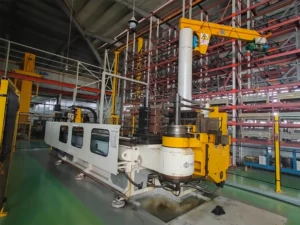
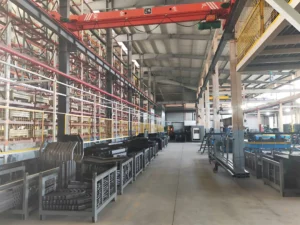
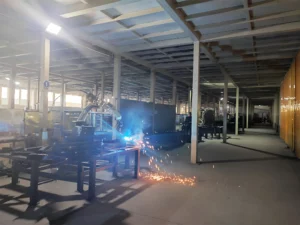
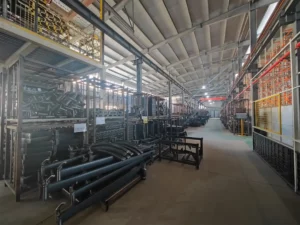
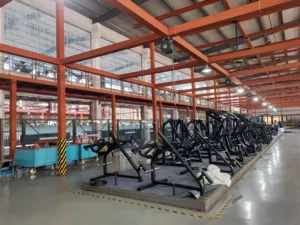
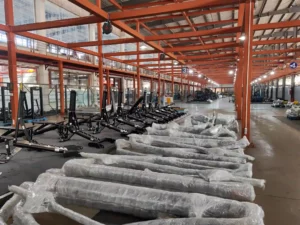
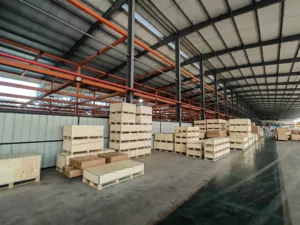
China Ledong offers a comprehensive range of high-quality manufacturing services, from welding and painting to assembly, packaging, and rigorous quality testing, to meet your specific needs. Our experienced team utilizes advanced technology to deliver customized solutions at competitive prices.
Contact now. Get the best solution!
Frequently Asked Questions
Commercial specification, installation and supply questions about the DL727.
Which muscles does the DL727 train?
Quadriceps as the primary movers, with adductor magnus and gluteus maximus contributing through a short hip extension and gracilis and tensor fasciae latae assisting. The fixed hip angle keeps the hip extensors to a brief contribution at the start of the press, so this is a quadriceps station rather than a squat replacement. The calves stabilise the foot against the plate but are not trained.
Is a leg press as good as a squat?
For building quadriceps size and strength in a healthy member, the two produce similar adaptations when volume and effort are matched. The squat also trains balance, trunk strength and the skill of the pattern, and the press trains none of those. What the press does that the squat cannot is load the legs heavily while the spine stays isometric. A room needs the press for the members who cannot squat and the rack for the members who can; owning one is not owning the other.
Does body weight count on a leg press?
No. The member is seated, so body weight goes into the seat and the floor rather than into the lever, and 100 kg on the pin is 100 kg resisted by the legs. On a barbell lift the member's own trunk rides on the same structure as the bar, so a 100 kg squat loads the knee with more than 100 kg. Members who compare the two readings directly are comparing a force with a force plus a mass.
Can it be used by a member with a lower-back injury?
It is usually the first loaded leg movement a member with a disc history is cleared for, because the trunk is supported and the spine works isometrically instead of carrying compression. That is a statement about the machine, not a clearance for a particular person: whether a specific member may use it, through what range and at what load is a decision for their clinician. What the station contributes is a position that keeps the spine neutral set after set without a therapist holding it.
Why is 100 kg enough when the machine weighs 280 kg?
Because frame mass and resistance are different jobs. 280 kg of Q235 is there to stop the back pad, press arm and pivot deflecting under load; 100 kg is what the legs work against. The ratio here is 35.7% stack to machine weight, lower than any other station in the leg series, which means the money went into structure rather than plates. A press with a bigger stack on a lighter frame would flex before it tired the member.
How much floor space and floor loading does it need?
1.205 m by 1.117 m of footprint, with about 0.8 m of clear floor at the plate end for stepping in and a 100 mm service gap at the stack end. Net weight 280 kg over 1.346 m² is 208 kg/m², the highest in the leg series and 57% above the seated curl. On an upper floor, place it over a column line or a beam rather than mid-span.
Can it be used one leg at a time?
Yes, and it is worth programming that way for anyone returning from a knee injury, because one leg on the same pin doubles the load per side and exposes a left-right difference that a two-leg press hides. The plate is wide enough for one foot to sit centred and no adjustment is needed between sides. Keep the free foot off the floor: a member who braces with the other leg is sharing the load with it.
What foot position should members use?
Two positions, rotated. High on the plate moves the ankle further from the knee, lengthens the hip arc and brings the glutes and hamstrings in. Low on the plate puts more on the quadriceps and most closely resembles the bottom of a squat. Mark both with tape and rotate them week to week; the fault is a member who found one spot in week one and never moved.
What warranty and certification apply?
One year on the complete machine, with the back pad, press arm and pivot covered as part of that because they carry the reaction force. The unit is manufactured to meet or exceed EN ISO 20957 / EN 957, and we supply the declaration with the shipping documents. We do not hold our own certificate for re-badged units, so we state compliance rather than certification.
What is the minimum order and lead time?
10 units per order in total, with no per-model minimum, so one DL727 plus nine other machines is a valid order, and pairing it with the leg stations in the same colour keeps one approval and one spare-parts set. Regular production runs 25–35 days to Shenzhen port excluding ocean freight; custom colour or branding runs 35–45 days. FOB Shenzhen, payment before shipment, and the packing list and installation sequence go out before the container leaves.