Fitness equipment manufacturerCommercial home fitness equipment of higher quality
Tel/WhatsApp:+86 180 2651 8045
Rowing machines only look similar. The resistance source decides almost everything else: the noise, the maintenance, the feel of the stroke, and whether the machine can sit in a room with people talking in it.
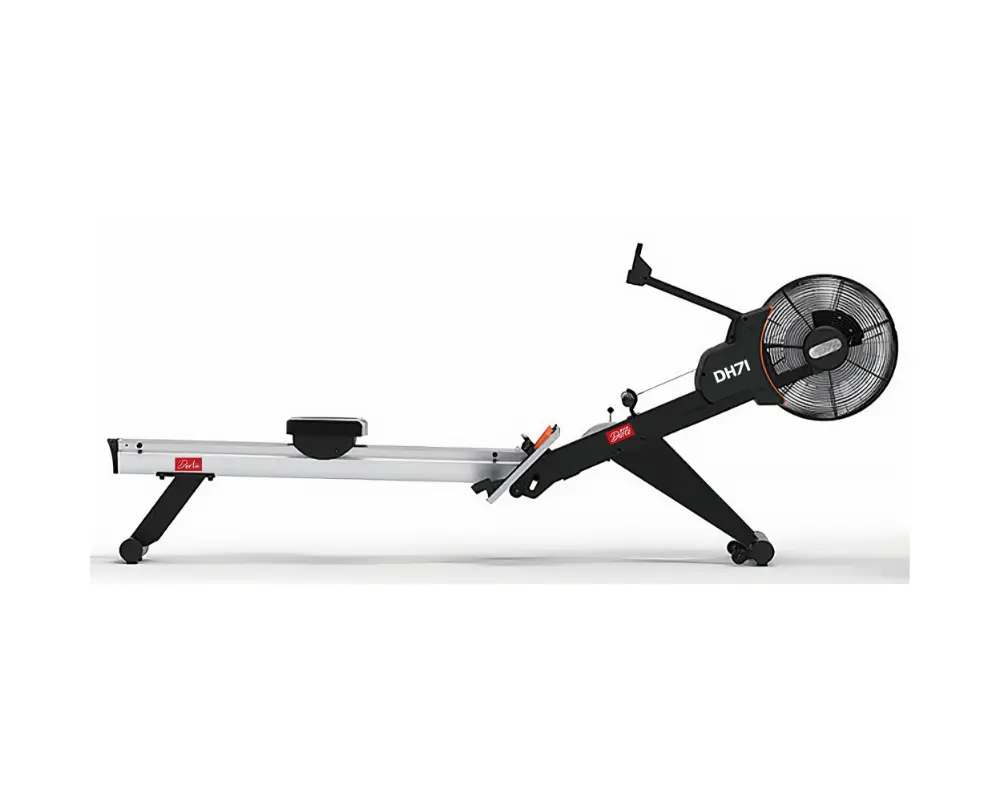
The DH71 uses a fan for air resistance combined with a magnetic brake, giving eight resistance levels across an aluminium rail 2,530 mm long, with a chain drive and a 150 kg maximum user weight.
Air resistance rises with speed, which is why a rowing machine feels natural — pull harder and it fights back in proportion. Adding the magnetic brake on top means the resistance level can be set before the session starts, so a beginner and a trained rower can sit on the same machine and both get a usable stroke. This is the specification that suits a club, a CrossFit box, or any room where rowing is part of a conditioning circuit.
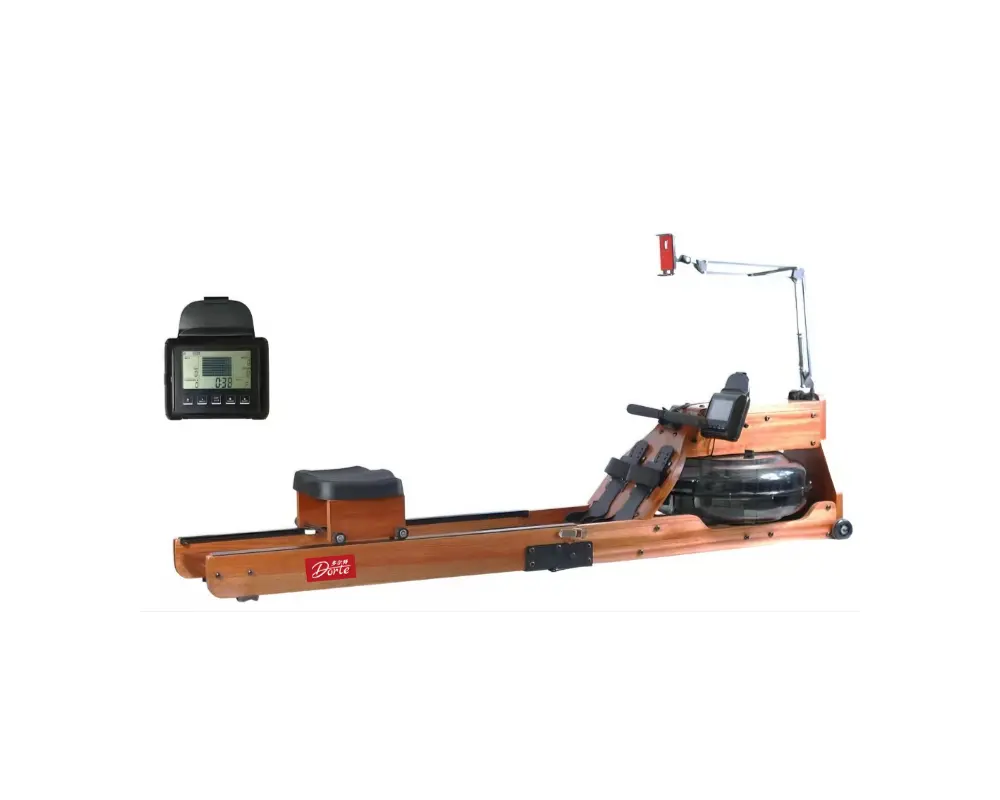
The DH31 uses a water tank of 8–13 litres on a wood rail, eight levels of adjustment and a strap drive, rated to 130 kg. The stroke has a smoother catch and a more continuous resistance than air, and the sound is water moving rather than a fan spinning.
This is the machine people actually want to use, and it is the one that causes the most trouble when placed badly. A tank has to be filled, treated and occasionally emptied; the water is visible and needs to stay clear. It works well in a hotel room where the machine is a feature and in a home gym where it is used by one person. It is a worse choice for a club floor where the machine is in use all day and nobody owns its maintenance.
| DH71 air and magnetic | DH31 water | |
|---|---|---|
| Resistance | Air fan + 8 magnetic levels | Water tank 8–13 L, 8 levels |
| Rail | Aluminium, 2,530 mm | Wood |
| Drive | Chain | Strap |
| Max user weight | 150 kg | 130 kg |
| Noise at working pace | Fan whoosh, audible across a room | Water movement, quieter |
| Maintenance | Chain lubrication, damper check | Water treatment, tank seals |
| Best setting | Club, studio, conditioning circuits | Hotel, home gym, low-traffic rooms |
Two placement mistakes come up again and again:
Both machines stand up on end for storage — the rail pivots to vertical and the footprint drops to roughly 0.6 × 0.6 m. That is the reason rowers work in multi-use rooms: a corporate gym that runs a class twice a week can store four of them against a wall and put them out when needed. Check that the pivot lock is a positive latch rather than friction, because a rail that drops while someone is walking past is a serious hazard.
The most common complaint about a rowing machine is that it "doesn't feel like rowing". That is usually technique, not equipment. Two things on the machine make it easier or harder to learn on:
A monitor that shows split time and stroke rate is worth having in a club, because rowing is one of the few machines where members will chase a number. In a hotel room, a simple monitor with time, distance and calories is enough, and fewer buttons means fewer support calls.
Club and studio. Two to four units in a conditioning area. Rowing is the cheapest way to add full-body conditioning without the floor space a treadmill row requires, and it holds up under group use better than most cardio machines because there is no motor, no deck and no belt to wear.
Hotel. One unit, water resistance, positioned so it can be seen. It is the machine guests recognise from a rowing class and the one that gets a photo taken of it. Keep it away from guest rooms if the tank is the loud version.
Corporate and factory. One or two units serve as a warm-up and as the only full-body option in a room dominated by machines. In a room under 100 sqm, a rower that stands up for storage is often a better use of the space than a third bike.
Part of the commercial cardio range. Complete layouts: 100 sqm, 250 sqm. Commercial terms: FAQ.

Gym Equipment Factory