Fitness equipment manufacturerCommercial home fitness equipment of higher quality
Tel/WhatsApp:+86 180 2651 8045
Cardio is the first thing a visitor sees and the last thing that gets planned. In most of the rooms we fit out, the cardio row is decided after the strength equipment, and it ends up in whatever space is left. That order is backwards, because cardio machines are the ones with the tightest clearances, the heaviest power draw and the noisiest failure modes.
Four constraints decide the layout: row spacing, the distance from the machine to whatever the user is looking at, the electrical run, and the floor's ability to absorb vibration. Get those right and the model choice becomes straightforward.
A treadmill needs roughly 1.9 m of depth including the deck travel and the step-off zone behind it, and 0.8–0.9 m of width per machine. Machines placed side by side with a shared armrest gap save space but create a problem: when two people run at speed, their arm swing overlaps. We use 0.9 m centre to centre as the working minimum and 1.1 m where the budget allows.
Facing matters more than people expect. Rows facing a blank wall feel like a punishment. Rows facing a window, a mirror, or the room itself get used for longer sessions. If the only option is a blank wall, mount a screen at 2.2–2.5 m centre height and treat it as part of the fit-out, not an afterthought.
A commercial treadmill draws roughly 10 A at 220 V under load. A row of six on one 16 A circuit will trip the moment two people climb at the same time. Above four treadmills, plan a dedicated circuit per two machines, and run 380 V three-phase to the room if it is available.
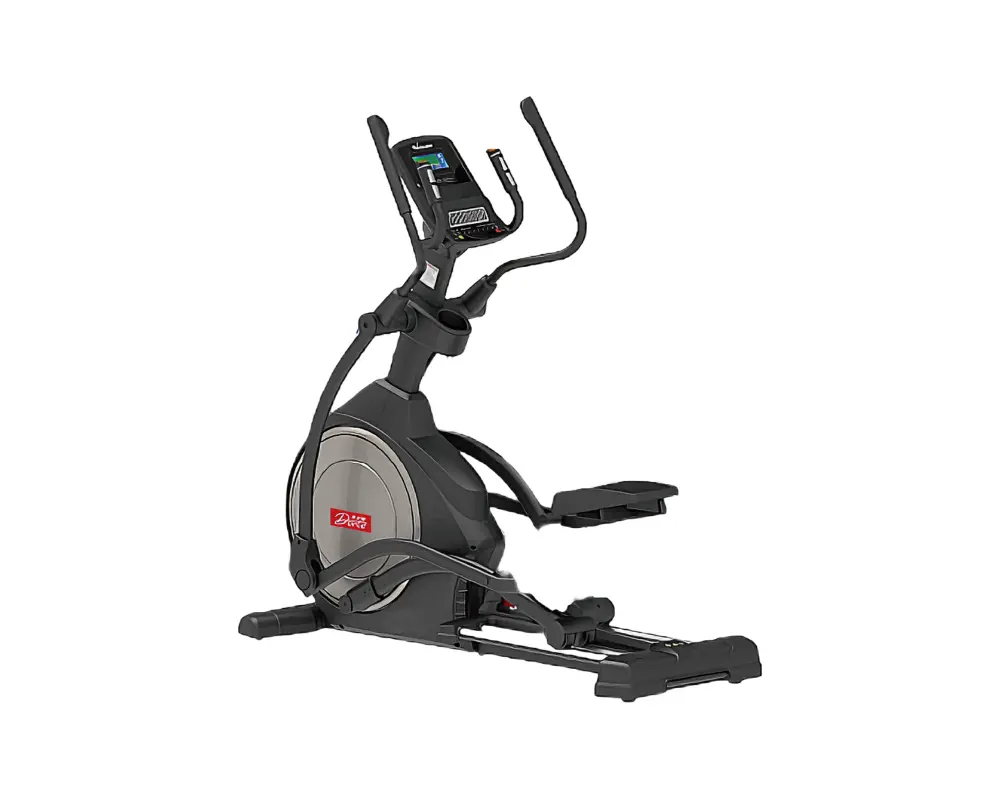
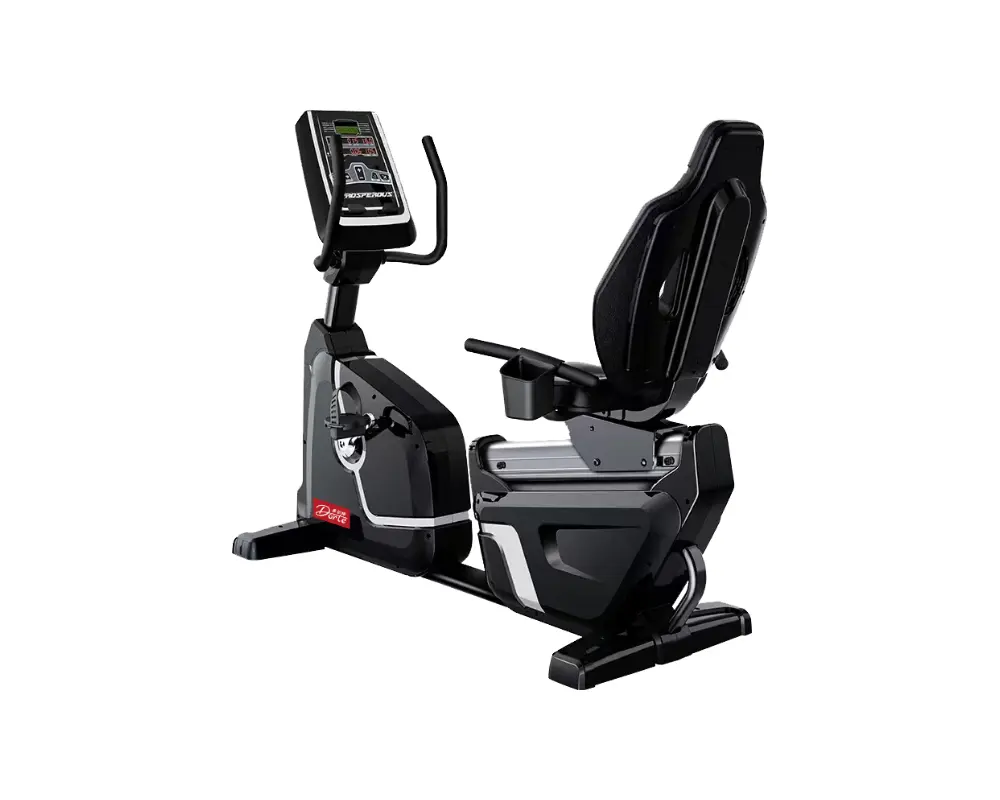
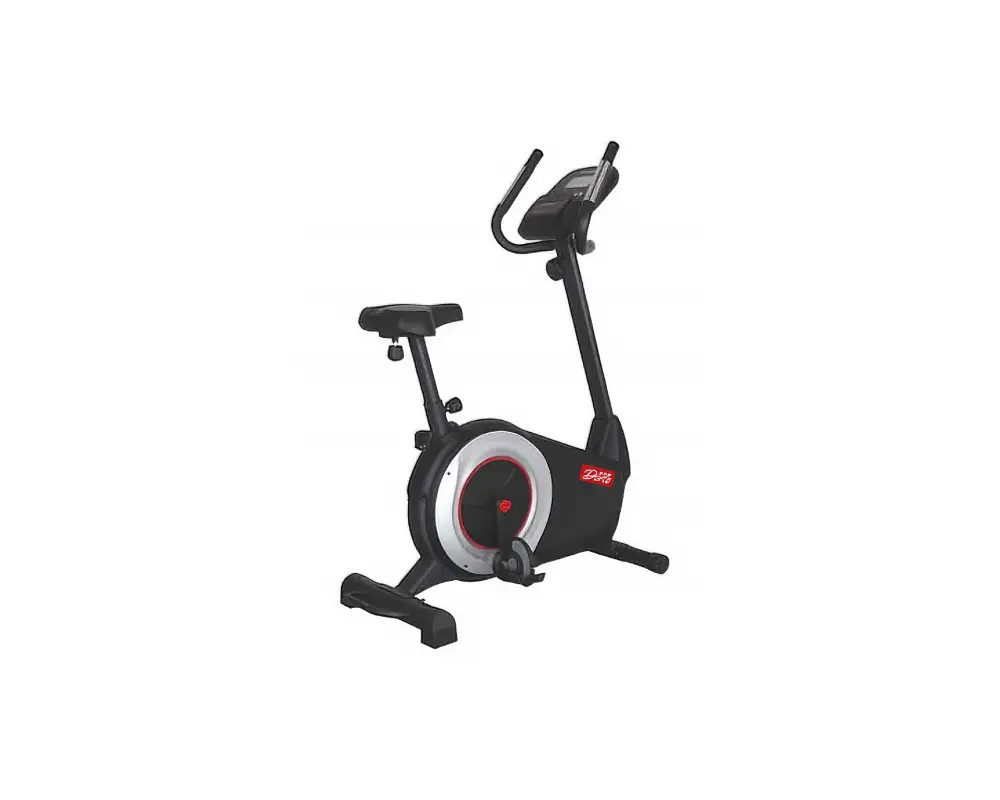
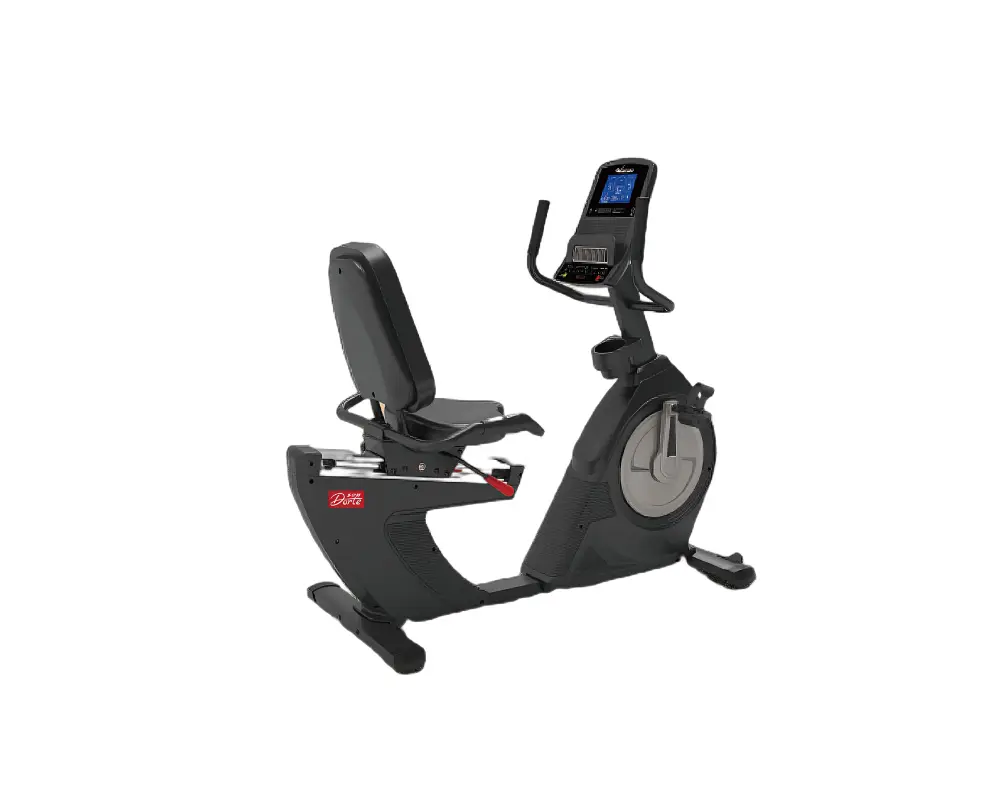
This is where the self-powered range earns its place. Our DT51E elliptical, DL71U upright bike and DW51R recumbent bike generate their own power — no cable, no socket, no breaker. For a hotel gym carved out of a guest floor, or a factory room where the nearest distribution board is two walls away, that removes the single biggest cost in the project.
The trade-off is honest and worth stating. A self-powered machine needs the user to keep turning the pedals to hold resistance; drop below a certain cadence and the resistance fades, because there is no mains supply to fall back on. For a member who trains at a steady pace this is invisible. For someone who stops mid-interval to answer a phone, the machine goes quiet. If the room is unsupervised and the users are first-timers, a mains-powered unit is the safer choice.
Cardio machines are the loudest thing in a gym, and treadmill impact is the main source of complaints from the floor below. Two fixes work: rubber tiles of at least 8 mm under the row, and positioning machines on load-bearing beams rather than mid-span. On a raised access floor, no mat will help — the whole floor is a drum.
Stair climbers and climb mills add a second problem: the user's full body weight is on the pedals at all times, so the frame transmits a low, heavy thump that travels further than treadmill noise. Put them at the edge of the room, not in the middle.
| Machine | Area used | Best for | Maintenance load |
|---|---|---|---|
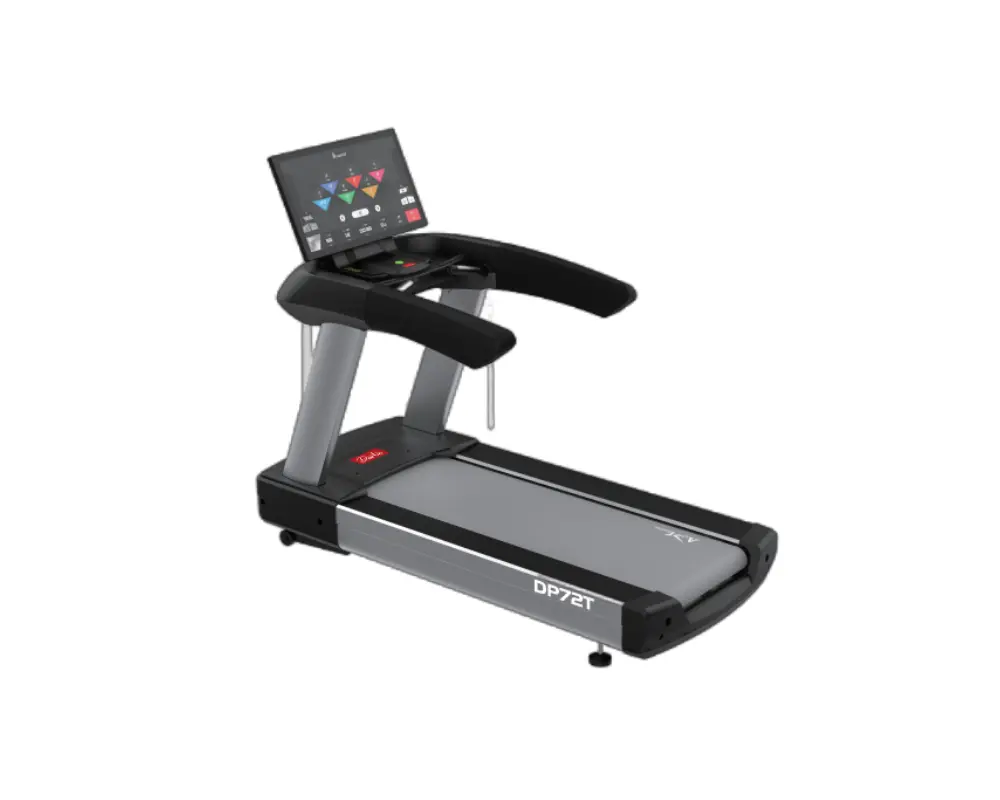
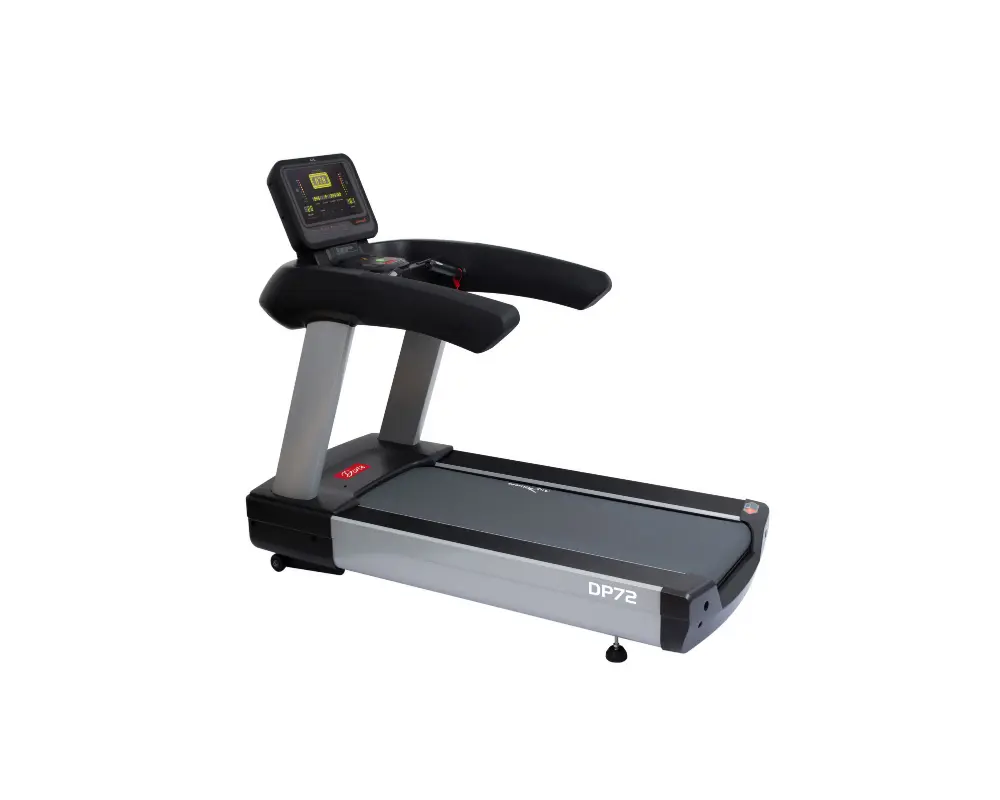
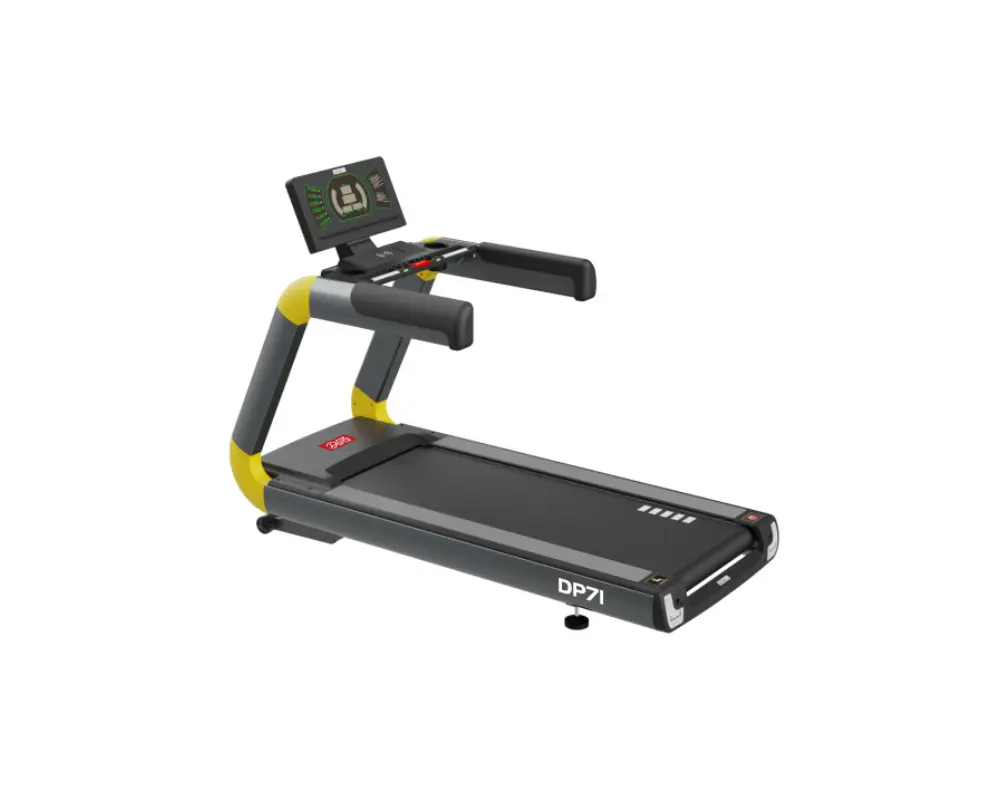
| Treadmill | 1.9 × 0.9 m | General fitness, the default cardio choice | Belt tracking and deck lubrication every 3–6 months |
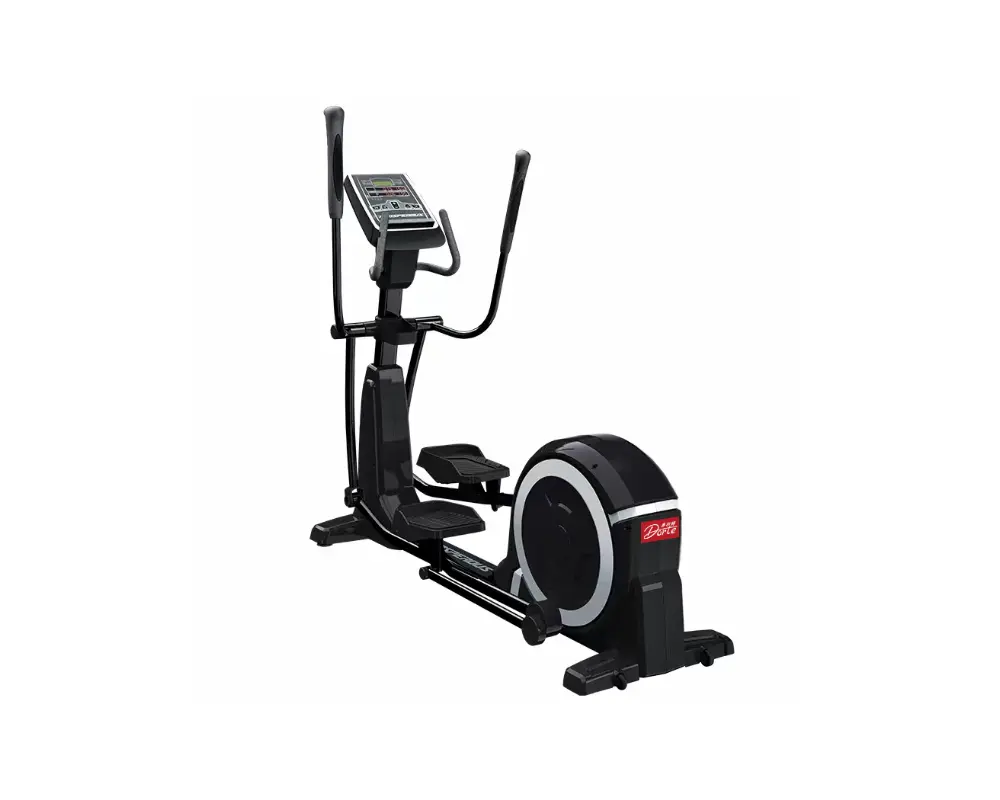
| Elliptical | 2.1 × 0.8 m | Low-impact sessions, older users, joint recovery | Roller and rail wear, checked yearly |
| Upright bike | 1.2 × 0.6 m | Smallest footprint, warm-up, interval work | Lowest of the group |
| Recumbent bike | 1.6 × 0.65 m | Users who need back support, longer steady sessions | Low |
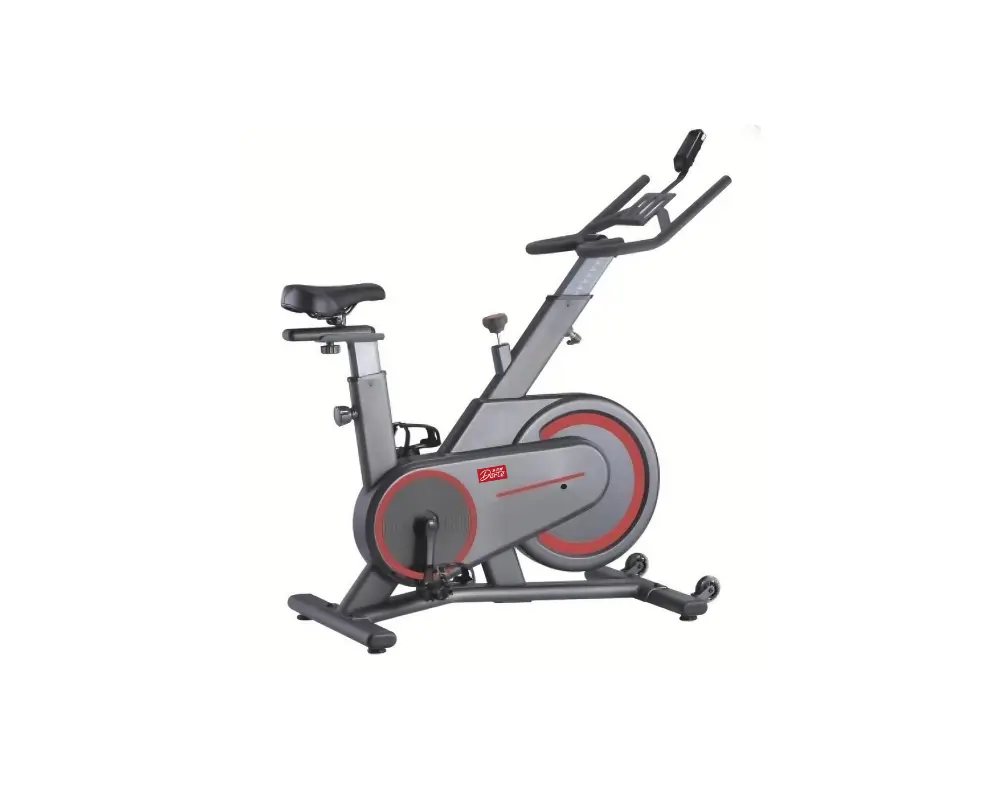
| Indoor cycle | 1.2 × 0.55 m | Classes, high-intensity intervals | Brake pad and flywheel bearing |
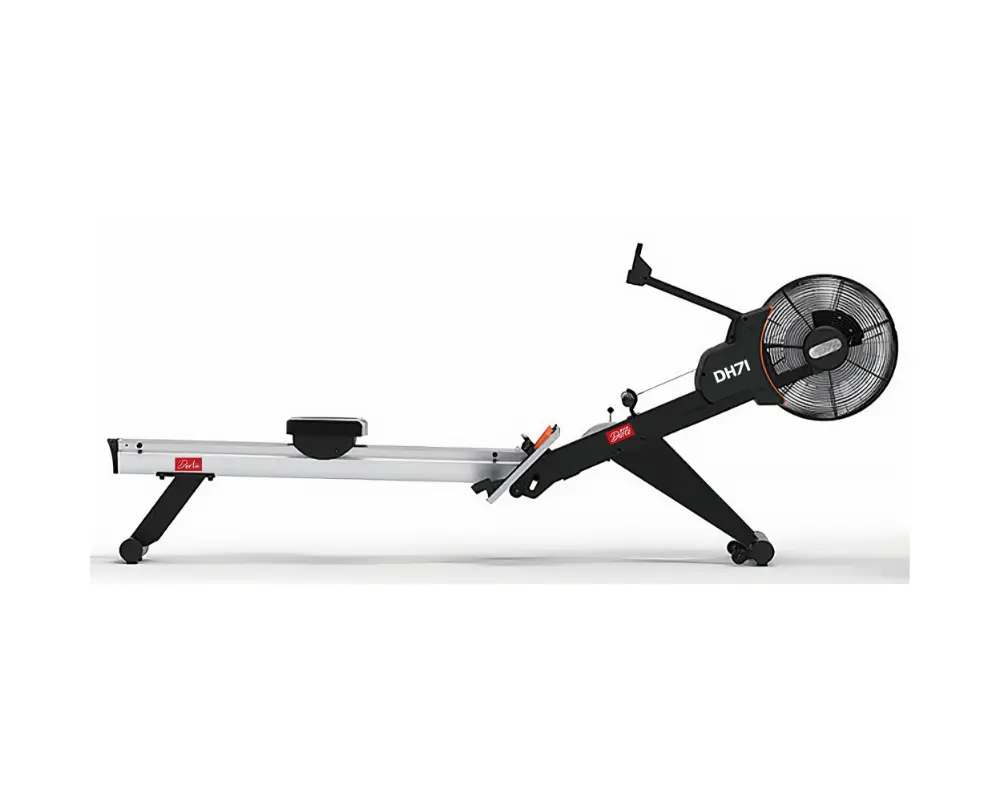
| Rower | 2.4 × 0.6 m in use | Full-body conditioning, team sessions | Chain or strap, damper check |
| Air bike | 1.3 × 0.7 m | Conditioning circuits, short hard efforts | Fan bearings, moderate |
| Stair climber / climb mill | 1.6 × 0.9 m | Glute and leg conditioning, small footprint for the effort | Step chain and pedal bearings |
A mixed row of treadmills, two ellipticals, bikes and one stair climber covers more users per square metre than any single machine type repeated. A row of eight identical treadmills looks impressive in a photo and sits half empty on a Tuesday morning.
Unsupervised, 24-hour access, and used by people who may never have touched a gym. Priorities are a low step-up height on the treadmill, a console that starts without a login, and quiet operation because the room is next to guest rooms. Three to six machines is normal. Self-powered bikes and ellipticals are a real advantage here, since they remove both the cabling and the electrical inspection from the project.
Two sharp usage peaks, morning and after shift, and mostly beginners. Treadmills and upright bikes absorb the traffic; one elliptical covers the members who cannot run. Machines get used hard in short bursts and then sit idle, which is the cycle that kills DC motors in cheap treadmills — the windings never cool evenly. Buy the continuous-duty drive, not the one with the bigger peak number on the brochure.
The only setting where the top of the range makes sense, and the only one where duplicating a machine is justified. If members queue for the treadmill at 7 pm, a second row costs less than a bigger room. Cardio in a club also has to be replaced on a cycle — five to seven years for a treadmill under club traffic — so buy on serviceability, not only on the spec sheet.
For a complete room rather than a cardio row, see the full commercial range or the layouts for 100 sqm and 250 sqm. Treadmill specifics are covered in the treadmill range, and the commercial terms are collected on the FAQ page.

Gym Equipment Factory