Fitness equipment manufacturerCommercial home fitness equipment of higher quality
Tel/WhatsApp:+86 180 2651 8045
Bikes take the least floor of any cardio machine and get used by the widest range of people, which is why they are usually the first thing bought and the last thing specified properly. Four types sit under the same name and they are not interchangeable: upright, recumbent, indoor cycle, and air bike.
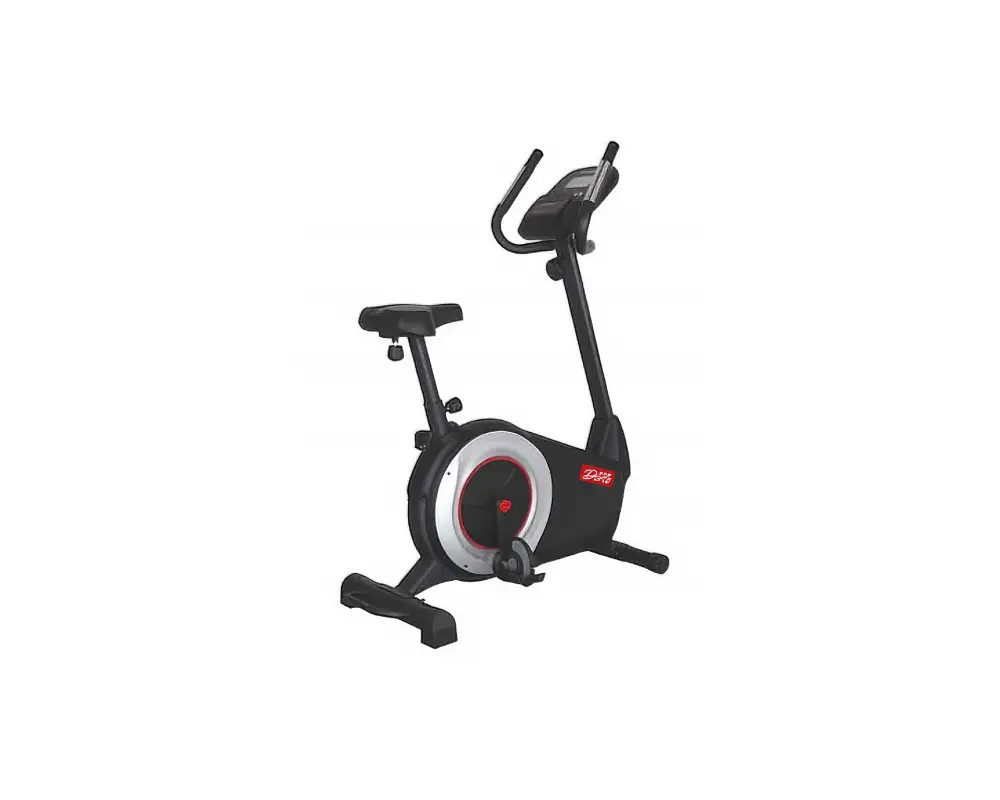
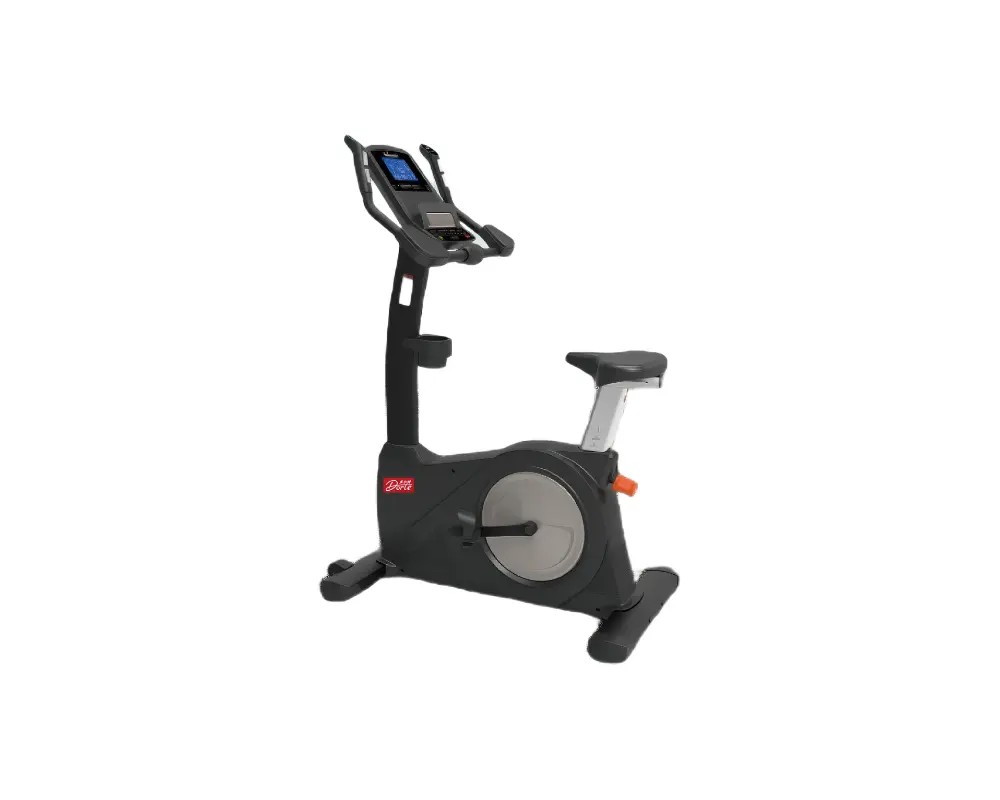
Smallest footprint of the group at roughly 1.2 × 0.6 m, and the hardest to get comfortable for anyone over 180 cm, because the handlebar-to-seat distance is fixed on most designs. Used for warm-ups, steady sessions and interval work. A commercial upright should adjust at the seat post through at least 25 cm of travel, otherwise it fits half the room.
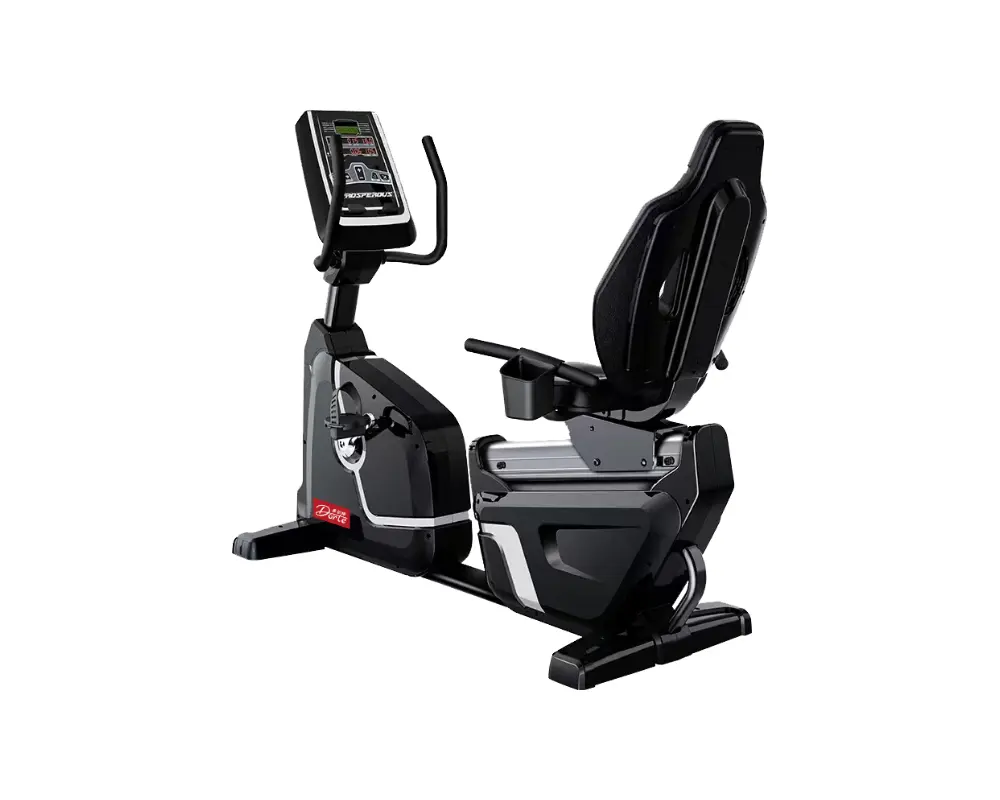
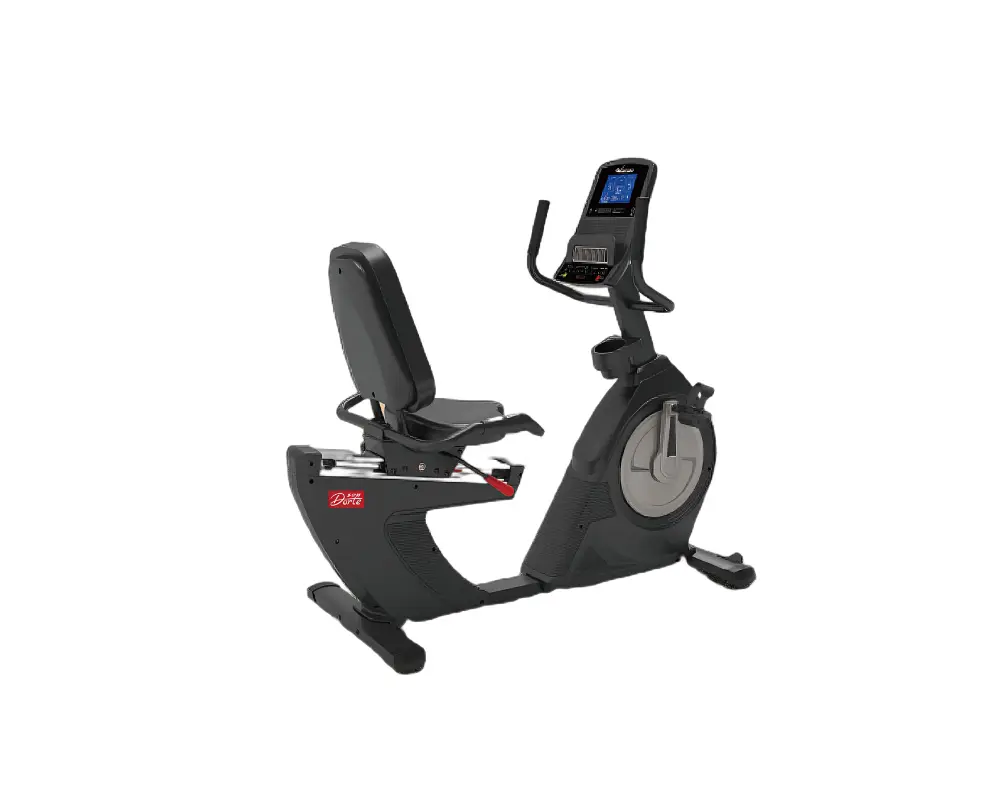
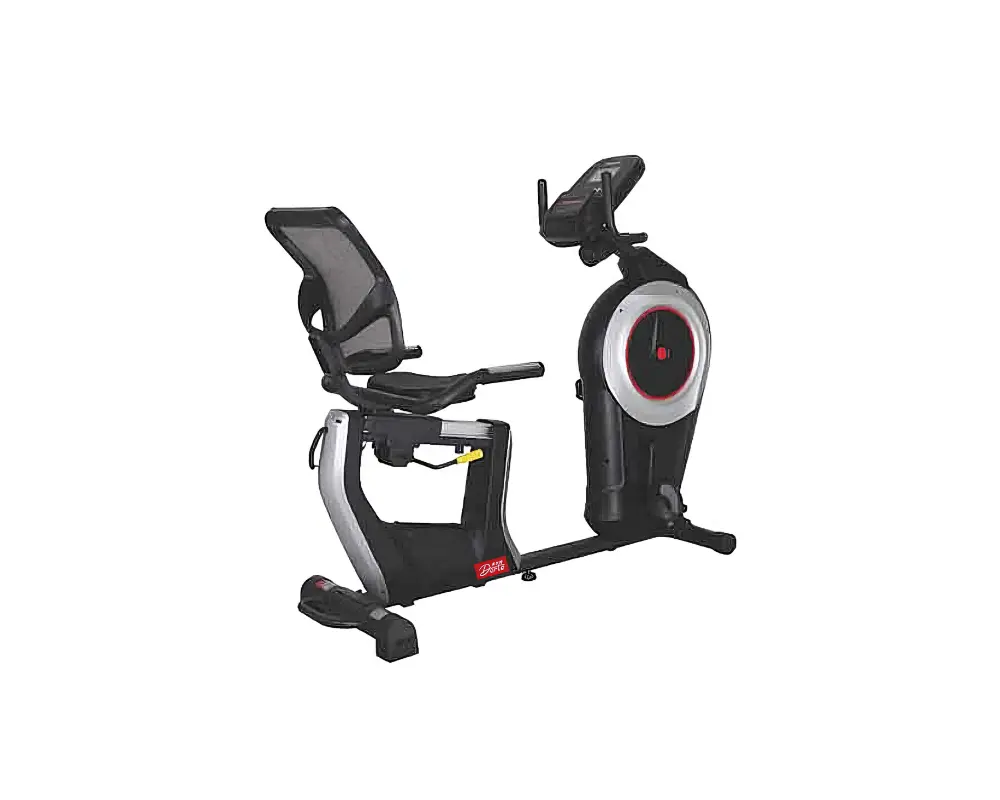
Adds about 40 cm of length and a full back rest, and takes the load off the lower back and wrists. In a corporate or hotel gym this is the machine that gets used by older users and by anyone coming back from injury, and it is the one that is missing from most equipment lists. The seat rail on a commercial recumbent should not flex under a 150 kg user at the furthest setting — that flex is the failure point on cheap units.
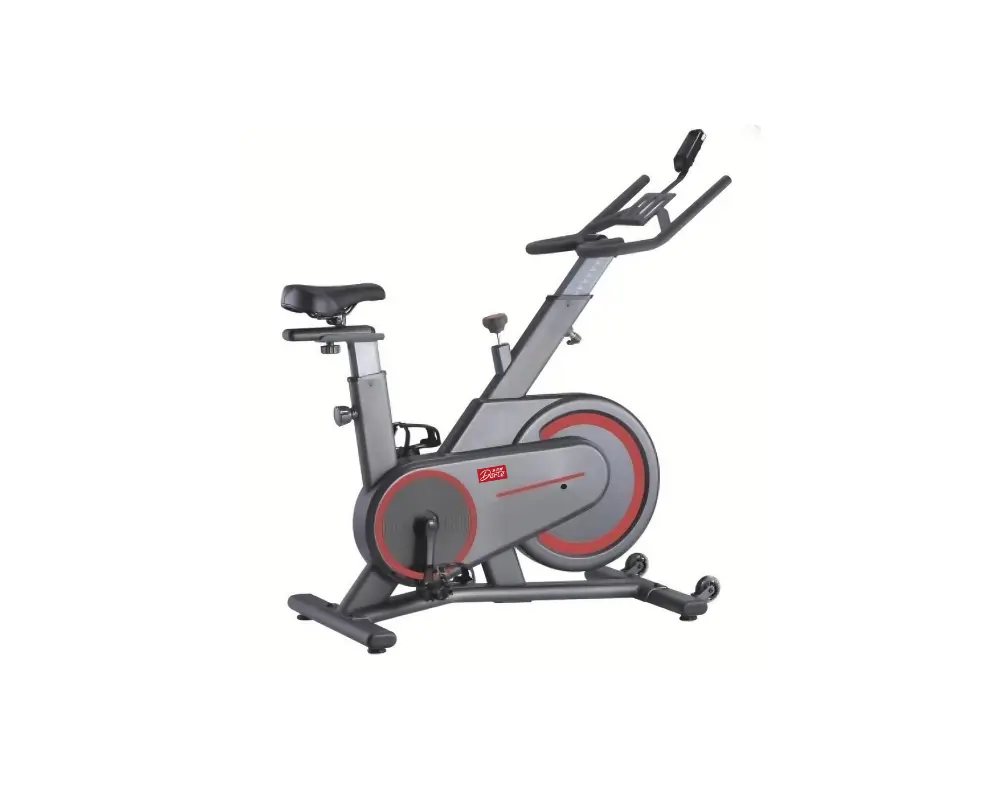
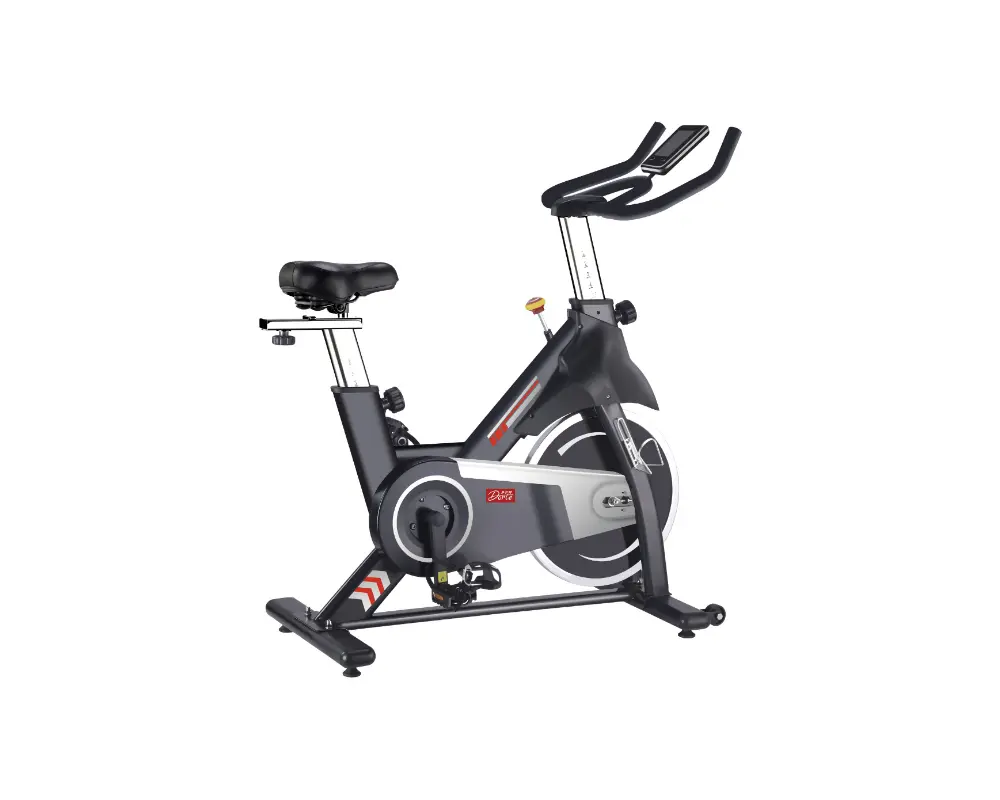
Built for classes and high-intensity intervals: no console functions to speak of, a heavy flywheel, and a resistance knob rather than a program. The flywheel weight is the number that matters. Below 18 kg the bike feels weightless when the user stands to climb, and the whole frame rocks. Our commercial unit runs an 18 kg dual-direction flywheel with a belt drive, which is the specification a studio needs and also the one a hotel should buy if it wants the bike to survive unsupervised use.
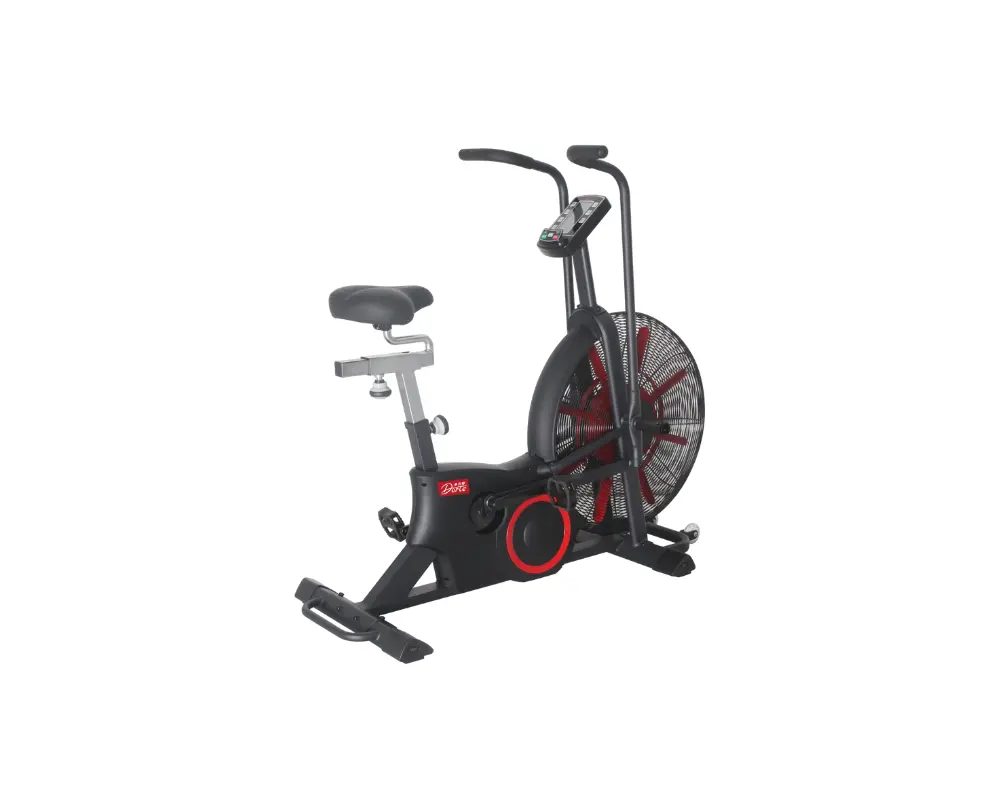
Wind resistance from a 610 mm fan, so resistance rises with speed and there is no ceiling on effort. Used for conditioning circuits and short hard efforts rather than steady sessions. It is also the most punishing machine in the room — 60 seconds on an air bike is a full session for most people, which is why it takes very little floor space and still gets used.
Most of our commercial bike range is self-powered: the DL71U upright and DW51R recumbent run a 10 kg generating flywheel with 1–24 levels of electromagnetic resistance and no mains connection at all.
This changes the feel of the machine, and it is worth understanding before you specify it. A traditional bike carries a heavy flywheel so that the pedal stroke keeps momentum between pushes. A self-powered unit uses a lighter flywheel that doubles as a generator, and the resistance is created electrically rather than by friction or by mass. The result is a stroke that feels even and quiet, but with less of the heavy, rolling momentum a studio rider expects.
What you gain is a machine that needs no socket, no breaker and no electrical inspection, at a lower total weight. What you give up is resistance at very low cadence: stop pedalling and the resistance fades, because there is no mains supply behind it. For an unsupervised hotel room that is a fair trade. For a spin studio where members surge and coast, it is not.
| Specification | Why it matters | Target |
|---|---|---|
| Flywheel weight (indoor cycle) | Below this the bike rocks when the user stands | 18 kg minimum for commercial |
| Seat post travel | Leg extension has to be right, not approximate | 25 cm of adjustment, fits 150–195 cm |
| Q factor (pedal spacing) | Wide spacing pushes the knee outward under load | 15–17 cm on a commercial bike |
Two more worth knowing. Belt drive instead of chain removes the maintenance item that kills bikes in humid rooms — a chain needs lubrication and picks up dust, and nobody in a hotel is going to oil it. And the pedal should be a proper commercial platform with a toe cage or a dual-sided SPD, not the light resin pedal fitted to home units, which is the first thing to break.
A cycling studio is a different project from a gym corner, and three things separate a room that works from one that gets complaints:
Also fix the bikes down or buy weighted ones. A studio bike that slides during a standing climb is a safety issue, not an annoyance.
Hotel. Two uprights and one recumbent covers the range of guests, with self-powered units preferred so no cabling is needed in a room that was not designed as a gym. Skip the indoor cycle unless the hotel runs classes.
Corporate and factory. Uprights absorb the peak; one recumbent serves the users who cannot sit on a narrow saddle. If the room has a fitness instructor running sessions, one air bike adds a conditioning option in under a square metre.
Club and studio. Indoor cycles in a class room, two or three uprights for individual use, an air bike in the conditioning area. Bikes in a club wear out on the seat and the pedals long before the frame, so buy on whether those parts can be replaced individually.
Part of the wider commercial cardio range. For layouts, see 100 sqm and 250 sqm, or the FAQ page for commercial terms.

Gym Equipment Factory