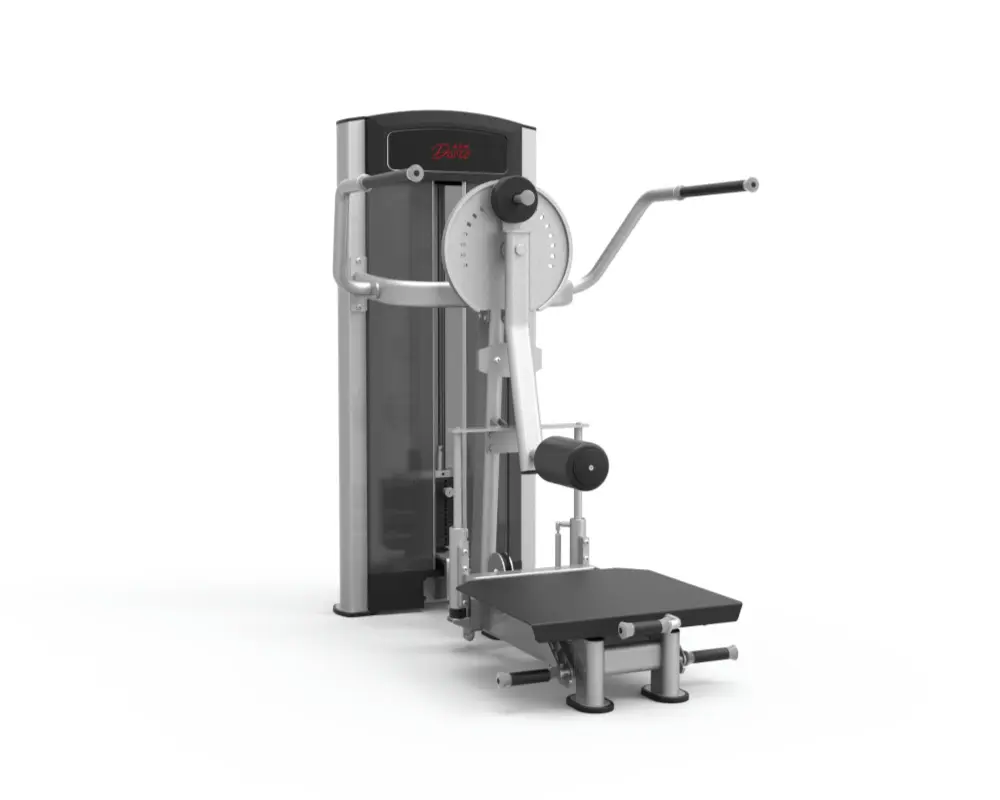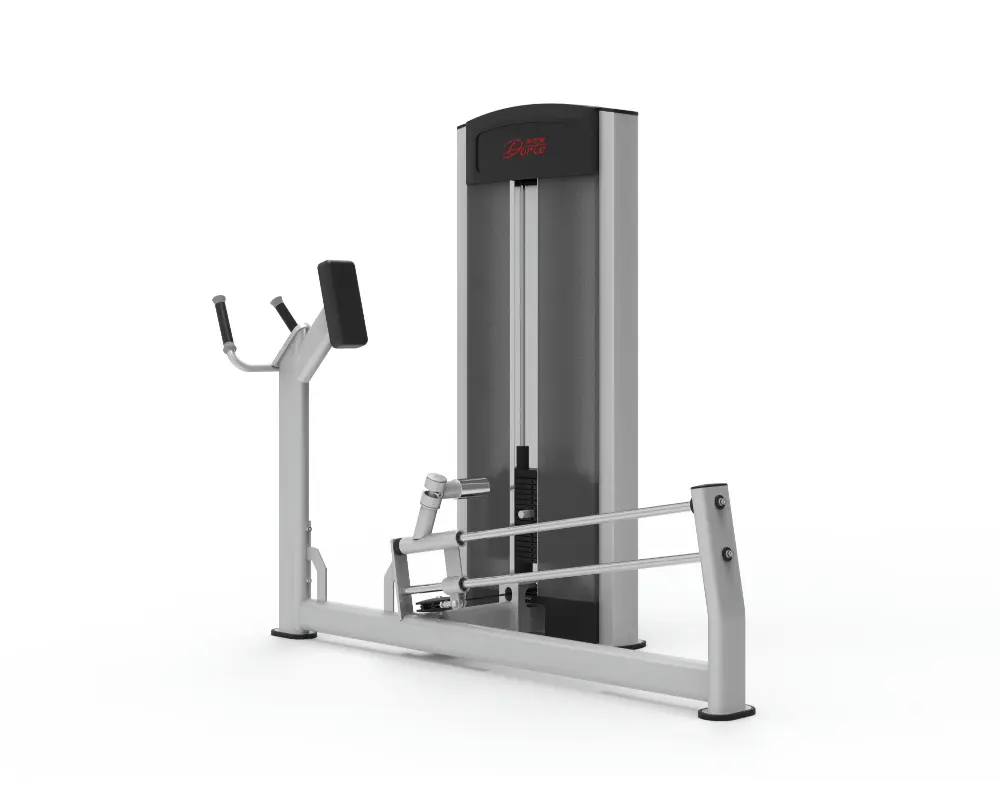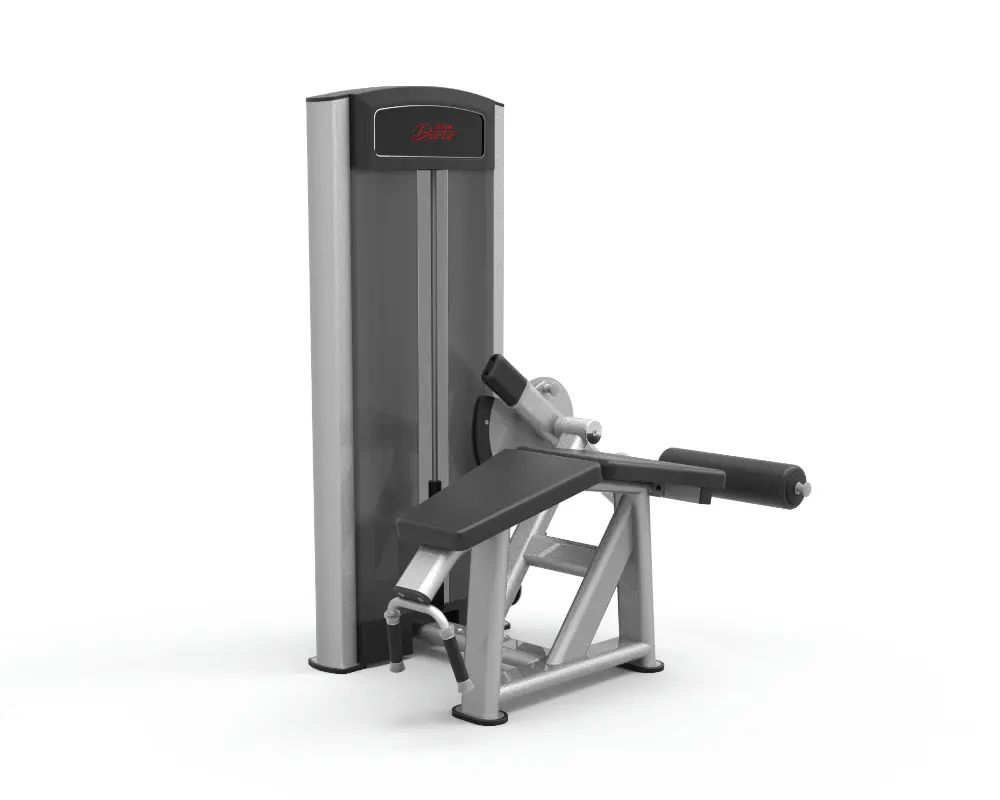

Product Model
| Specification | DL725 |
|---|---|
| Target muscles | Biceps femoris long head and short head, semitendinosus and semimembranosus - the hamstrings, with gastrocnemius assisting at the end of the range |
| Product size | 1470*1014*1660mm |
| Counterweight | 80KG |
| Net weight | 200KG |
| Maximum load capacity | 160KG |
| Wire rope tension | more than 1400KG |
| Main frame specification | Q235 steel, 120*75*3.0mm bread-type tube for the main frame; 120*50*3.0mm flat elliptic tube for secondary members |
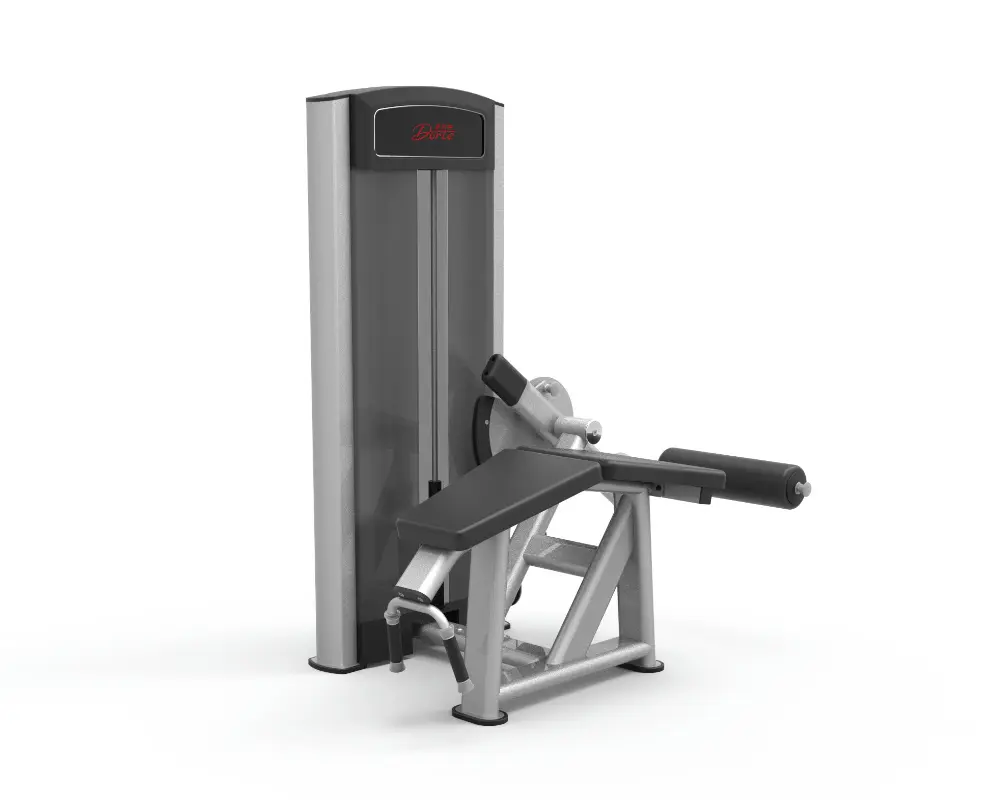
Prone Knee Flexion Station
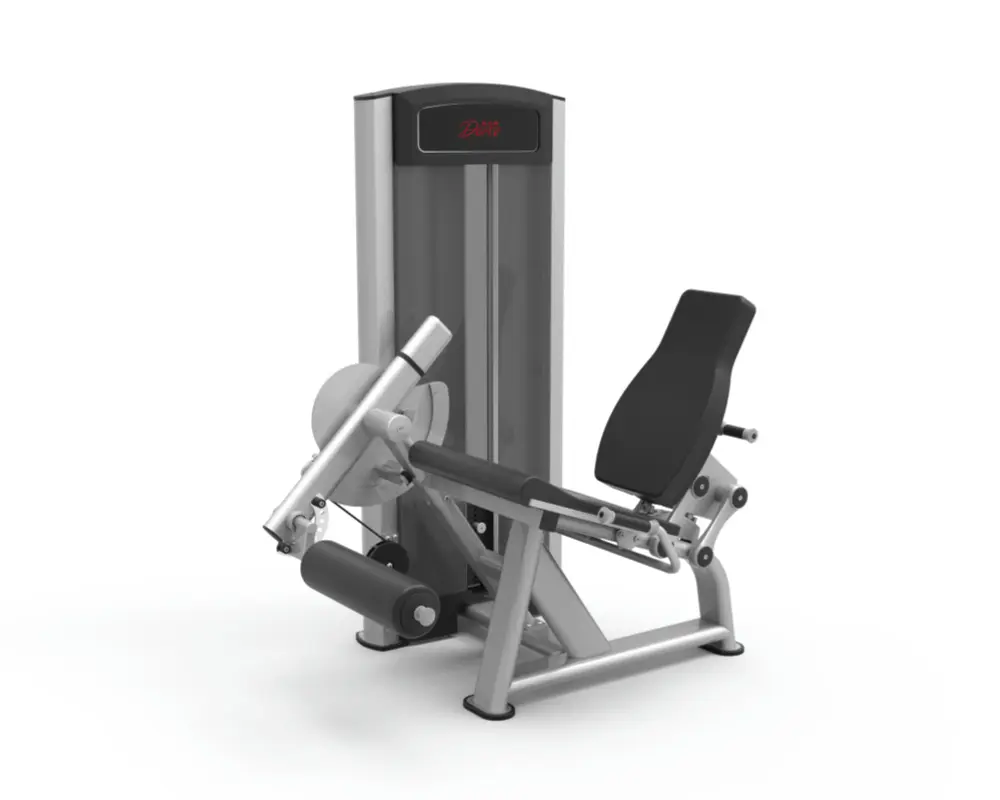
The DL725 flexes the knee with the member lying face down, so the knee moves while the hip stays extended. Set against the rest of the range that reads like a detail of posture rather than a difference in training. It is the opposite. Hip angle decides which part of the hamstring is under load and at what length, and that one variable is why two leg curl machines can sit in the same catalogue without duplicating each other.
The hamstrings are four muscles behind the thigh — biceps femoris long head, biceps femoris short head, semitendinosus, semimembranosus — and three of the four cross the hip as well as the knee. Only the short head of the biceps is a knee-only muscle. That anatomy turns hip position into the load-distribution switch. Face down with the hip extended, the long head is lengthened at its upper attachment and stays long through the whole arc, so the resistance at the ankle is carried by the muscles that cross both joints. Sit up with the hip at ninety degrees and the same long head is shortened before the first repetition, and the work shifts toward the short head and the two medial muscles. Both stations are sold as a leg curl. They do not train the same thing.
Why the lengthened position matters comes from where these muscles fail. Hamstring strain is the most common non-contact injury in football and in sprint-based sport, and it happens in terminal swing — the instant before the foot lands, hip at maximum flexion and knee almost straight, the muscle at its longest and contracting to slow the shin down. Injury is a lengthened eccentric event, not a short-range strength event. A member who moves a heavy stack through the middle of the range and cannot control the last thirty degrees of the return has the profile that re-injures. The DL725 trains the position where that control is built, which is the argument for the station and the reason the lowering phase matters more than the pin.
Two limits belong in the specification rather than in a brochure. The first is comfort under load: face down, the body weight and the pull of the movement both run through the front of the thighs and the chest, and a member with patellofemoral pain will often prefer a seated curl where the knee is unloaded. That is an argument for offering both hip angles, not for preferring one machine. The second is the calf. Gastrocnemius crosses the knee, so it assists flexion, and it assists more when the ankle is plantar-flexed. An ankle pad set across the top of the foot lets the member point the toe, shorten the calf and finish the repetition with the ankle instead of the hamstring, while giving away roughly ten degrees of knee range. The pad belongs on the lower shin, two to three centimetres above the ankle joint, foot relaxed at ninety degrees.
The resistance curve is the objection every leg curl has to answer. The ankle pad swings on a radius from the knee axis, so the moment arm is short near full extension and long near full flexion. Members feel the machine heaviest at the end of the curl — where the hamstring is shortest and strongest — and lightest at the start, where it is longest and weakest. Curve and muscle are inverted through the middle of the range and matched only at the two ends. The answer is not a bigger stack. It is three seconds on the way down, a controlled stop two or three degrees short of full extension, and single-leg sets for anyone whose two sides differ. Used that way, 80 kg is a working load for most trained members rather than a warm-up.
Frame is Q235 steel: 120 × 75 × 3.0 mm bread-type tube for the main structure, 120 × 50 × 3.0 mm flat elliptic tube for the secondary members. The wire rope is rated above 1400 kg on a 200 kg machine rated for a 160 kg member, a margin of about seven to one, so the cable is not the service item on these units. Pad and leg roller are one-piece foam under PU leather on an aluminium parallelogram arm with torsion spring assist, so the pad face stays parallel as it rises instead of rolling, and an adjustment is one hand rather than two.
At 1470 × 1014 × 1660 mm the DL725 is 11% wider and 3.7% shallower than the DL724 beside it, and both figures follow from the face-down position. The rest of this page is about what they buy on a plan.
Why the Hip Stays Extended
Every dimension on this machine follows from one decision: keep the hip extended. A member who lies face down occupies the frame lengthwise, head at one end and ankle pad at the other, so the body sets the long dimension and only the weight stack and the ankle pivot need width — 1470 mm along the body, 1014 mm across it. The DL724 inverts that ratio, because a seated member folds at the hip and the movement runs forward on a short radius: 1322 mm across, 1053 mm deep.
Side by side the difference is 148 mm of width for 39 mm less depth, 11.2% wider and 3.7% shallower. Neither number is large on its own. Together they say the pair belongs on a long wall rather than in a deep bay.
Against a wall the DL725 claims 1.470 m of that wall and projects 1.014 m into the room. One DL725 and one DL724 in a line need 2.792 m of continuous wall and never project more than 1.053 m. The two hip machines, DL722 and DL723, need 1.492 m of wall between them but project 1.664 m, because the leg swings sideways and the frame has to carry that arc. A converted office floor, a hotel function room, a studio where the wall is long and the depth is short — those rooms take the leg curl and the leg extension comfortably and fight the hip stations.
Footprint alone understates the space, because a face-down machine is entered differently. A member steps in, kneels and lowers the torso onto the pad, so the clear zone sits at the foot end and runs about 0.9 m, roughly 0.2 m more than the 0.7 m a seated station needs. The stack tower sits at the head end, so that end goes against a wall with the usual 100 mm service gap and nothing else: the 0.9 m belongs to the foot end, which is where members walk in.
Floor loading is where it wins on old buildings. 200 kg over 1.49 m² is 134 kg/m², against 161 kg/m² for the DL722 and DL723 and 158 kg/m² for the DL724. The leg curl loads the slab 17% less than the hip stations and 15% less than the leg extension while weighing about the same as either. On a second-floor fit-out, in a building whose drawings predate the load case, this is the station to put upstairs first and the figure to hand the structural engineer.
Set-up decides whether the station gets used. Three adjustments: pad length so the knee axis lines up with the pivot and the knee does not hang past the pad edge; ankle pad two to three centimetres above the ankle joint with the foot at ninety degrees; and a start position fifteen to twenty degrees short of full extension, because the last few degrees into a straight knee load the joint capsule and the patella without asking the hamstring for anything. A room that demonstrates those three settings once in the first week keeps the station busy. A room that does not ends up with a machine three members know how to use and everyone else treats as a bench.
One ordering note, because it decides single versus pair. Extension and flexion are the two halves of the same joint, and a room that carries the extensor side without the flexor side builds a strength ratio it then has to correct. Quadriceps dominance over the hamstrings is one of the few modifiable risk factors for a non-contact knee injury, and it is corrected by training the back of the thigh, not by adding another press. The DL724 and the DL725 share a platform, a colour approval and a spare-parts set, so they belong on one purchase order and one installation sequence.
Fitness Equipment Factory
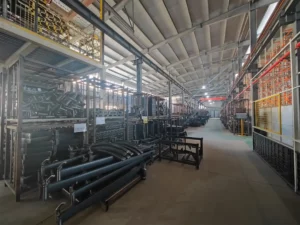
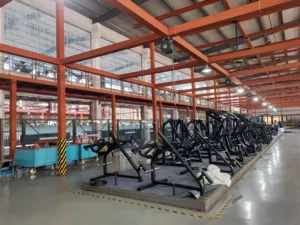
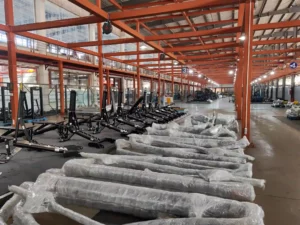
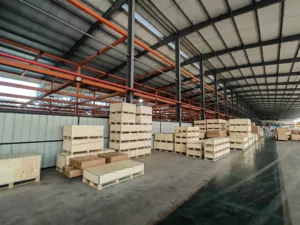
China Ledong offers a comprehensive range of high-quality manufacturing services, from welding and painting to assembly, packaging, and rigorous quality testing, to meet your specific needs. Our experienced team utilizes advanced technology to deliver customized solutions at competitive prices.
Contact now. Get the best solution!
Frequently Asked Questions
Commercial specification, installation and supply questions about the DL725.
Which muscles does the DL725 train?
Biceps femoris long head and short head, semitendinosus and semimembranosus, with the gastrocnemius assisting at the end of the range because it crosses the knee. The face-down position keeps the hip extended, so the long head of the biceps works at a longer length than a seated curl can give it. Glutes and calves stabilise the position but are not the target.
Lying or seated leg curl: which one should a commercial gym buy?
Decide by who uses the room, not by the catalogue. If the membership includes football, sprint or court sports, the prone station trains the position where those members get injured and is the one to buy first. If the room serves a mostly seated office population, or members returning from knee surgery who need the joint unloaded, the seated station is easier to use and easier to supervise. A room with space for two leg stations should carry both hip angles: the muscles overlap, the joint positions do not.
Why does the lowering phase matter more than the stack?
Because hamstring strain is a lengthened eccentric event. Three seconds on the return, a stop two or three degrees short of full extension and no bounce at the bottom train the part of the range where the muscle fails. Members who chase the pin and drop the weight fast get stronger through the middle of the arc and no more resistant to injury.
Is 80 kg enough for a trained member?
The plate measures mass; the knee sees torque. The ankle pad sits roughly 0.30 m from the knee axis, so 80 kg is about 235 N·m of knee flexion torque — more than most members can control through a three-second return for ten repetitions, and more than they can hold on one leg. Single-leg sets and slow eccentrics use the stack harder than a bigger stack would.
Where exactly should the ankle pad sit?
On the lower shin, two to three centimetres above the ankle joint, foot relaxed at ninety degrees. Across the top of the foot is the common mistake: it lets the member point the toe, which shortens the calf and lets the gastrocnemius finish the repetition, and it gives away about ten degrees of range at the knee.
Can it be used one leg at a time?
Yes, and on this station it is the better default for anyone with a side-to-side difference. One leg at a time doubles what each side sees at the same pin and exposes a difference a two-leg set hides. Because the stack sits to one side of the frame, anchor the base in rooms where single-leg work is the main use rather than an occasional variation.
How much floor space and floor loading does it need?
1.470 m by 1.014 m of footprint, plus about 0.9 m of clear space at the foot end for stepping in and lying down. Net weight 200 kg over 1.49 m² is 134 kg/m². The stack tower goes against a wall at the head end; the 0.9 m of clear space belongs to the foot end.
What warranty and certification apply?
One year on the complete machine. The unit is manufactured to meet or exceed EN ISO 20957 / EN 957, and we supply the declaration with the shipping documents. We do not hold our own certificate for re-badged units, so we state compliance rather than certification.
What is the minimum order and lead time?
10 units per order in total, with no per-model minimum — one DL725 plus nine other machines is a valid order, and pairing it with the DL724 keeps one colour approval and one spare-parts set. Regular production runs 25–35 days to Shenzhen port, excluding ocean freight; customized colour or branding runs 35–45 days. FOB Shenzhen, payment before shipment, and the packing list and installation sequence go out before the container leaves.