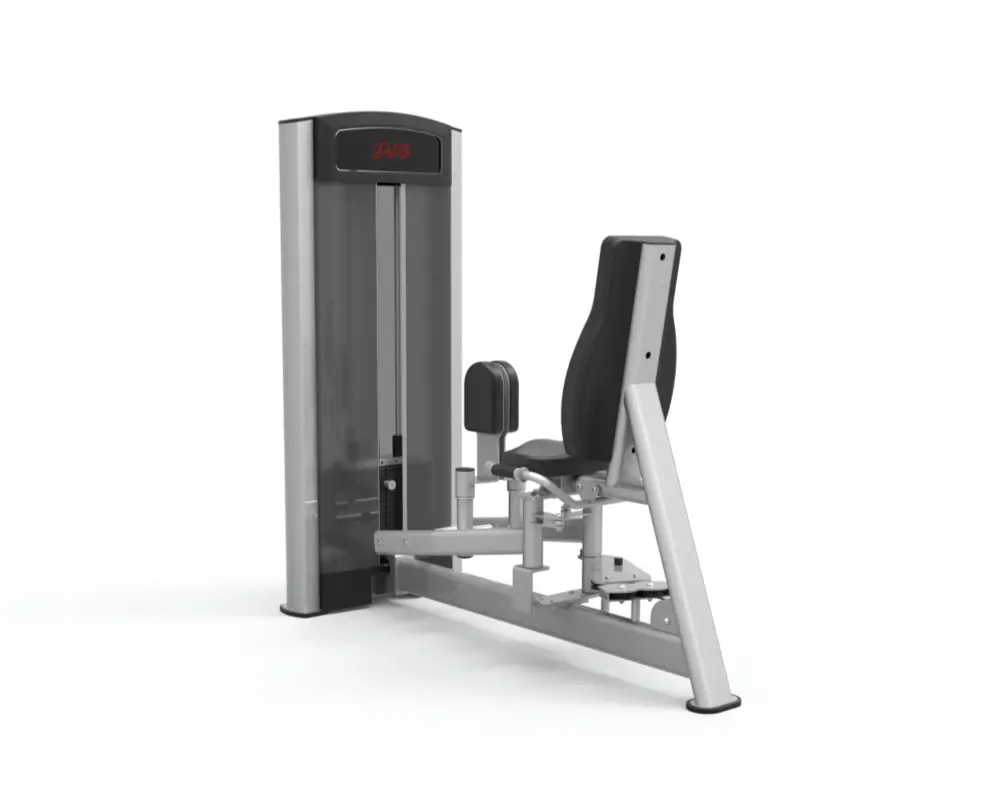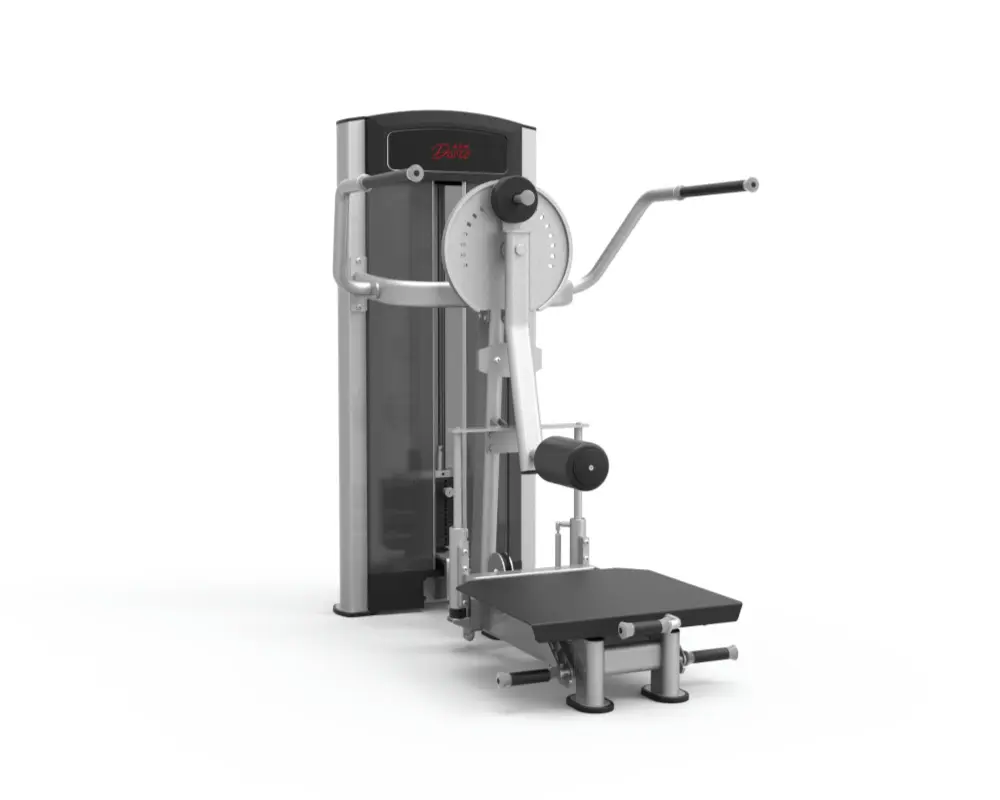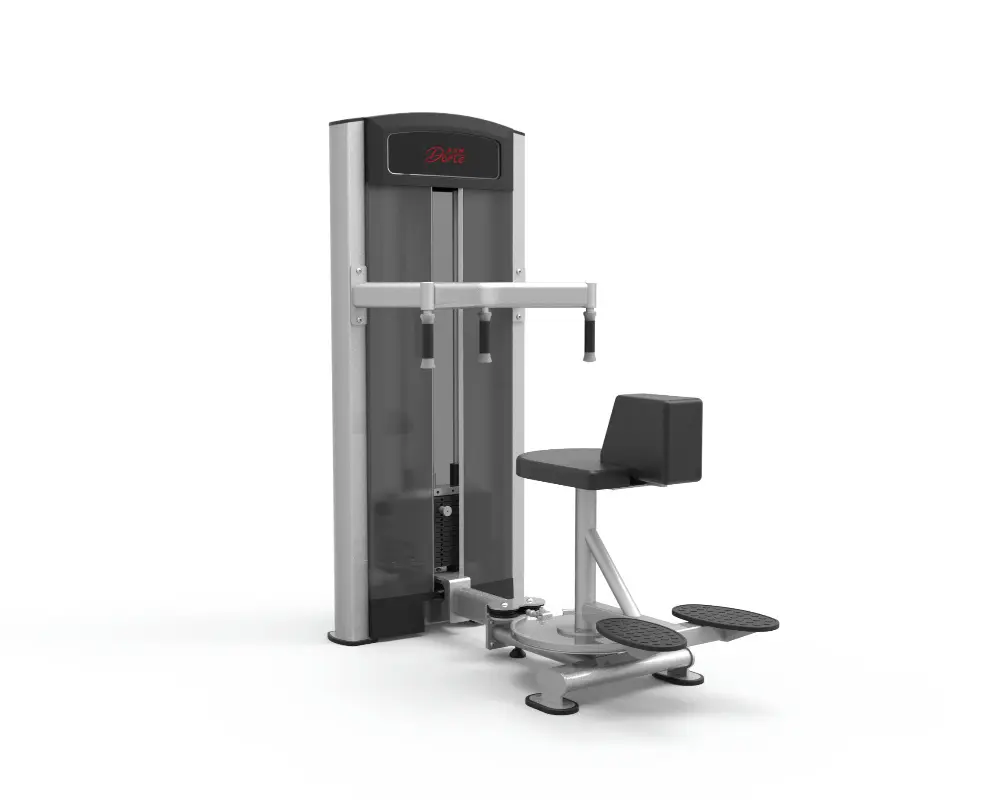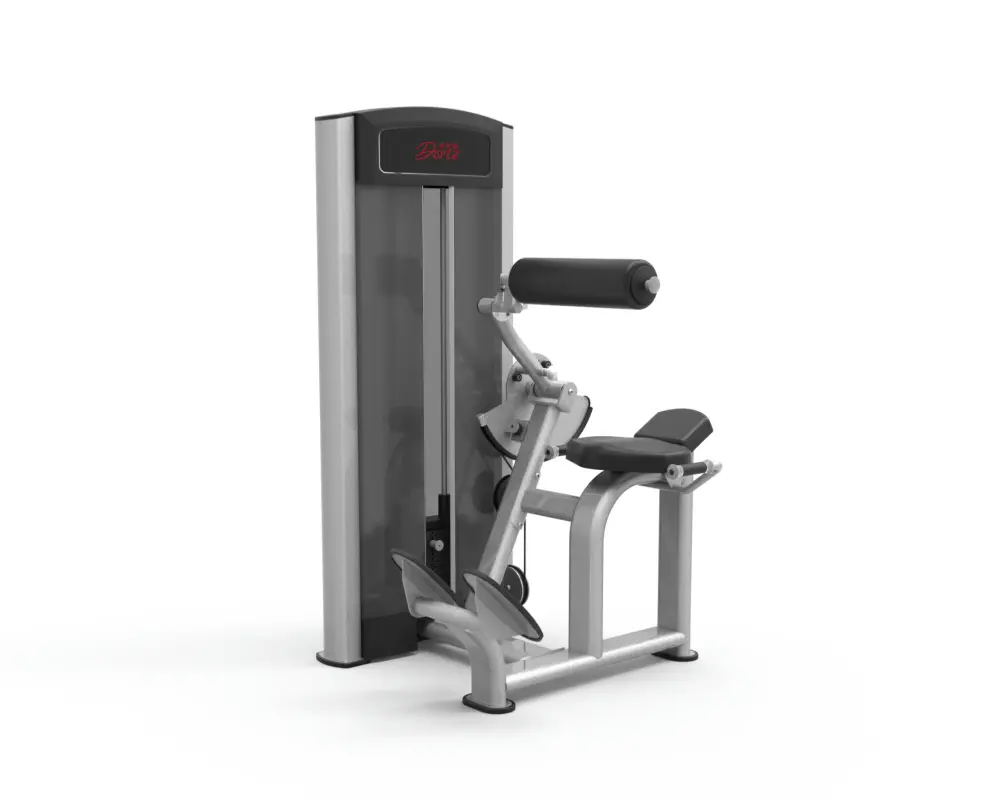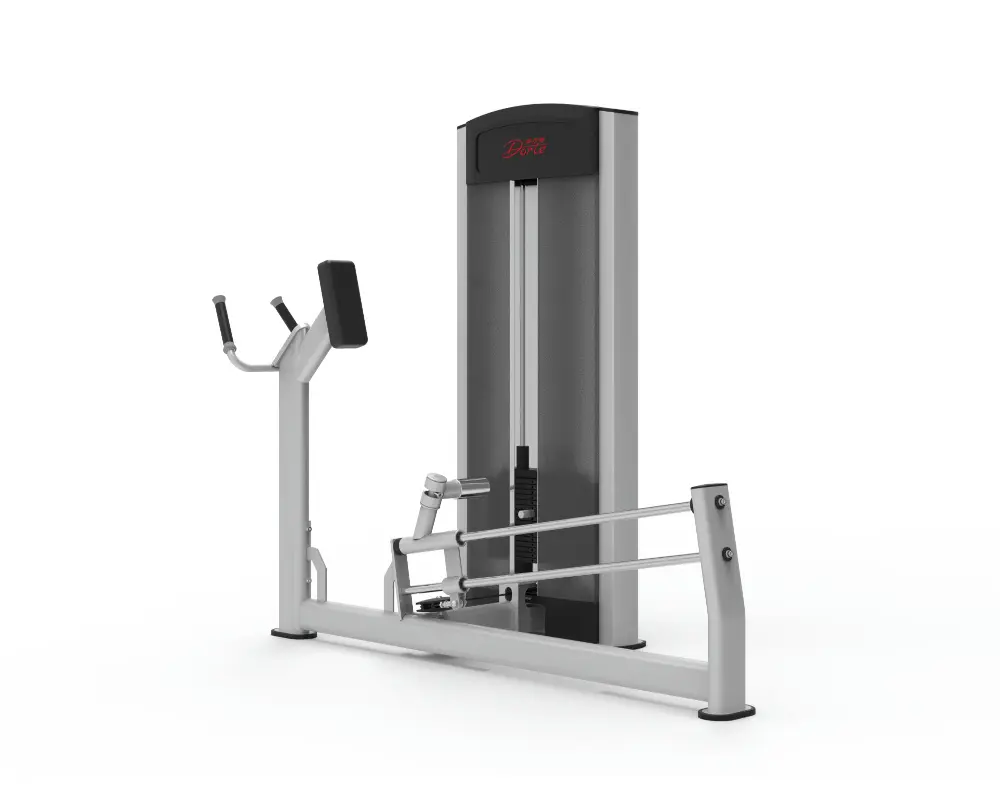

Product Model
| Specification | DL719 |
|---|---|
| Target muscles | Gluteus maximus, gluteus minimus, biceps femoris, semitendinosus, semimembranosus |
| Product size | 2027*843*1660mm |
| Counterweight | 80KG |
| Net weight | 190KG |
| Maximum load capacity | 160KG |
| Wire rope tension | more than 1400KG |
| Main frame specification | Q235 steel, 120*75*3.0mm bread-type tube for the main frame; 120*50*3.0mm flat elliptic tube for secondary members |
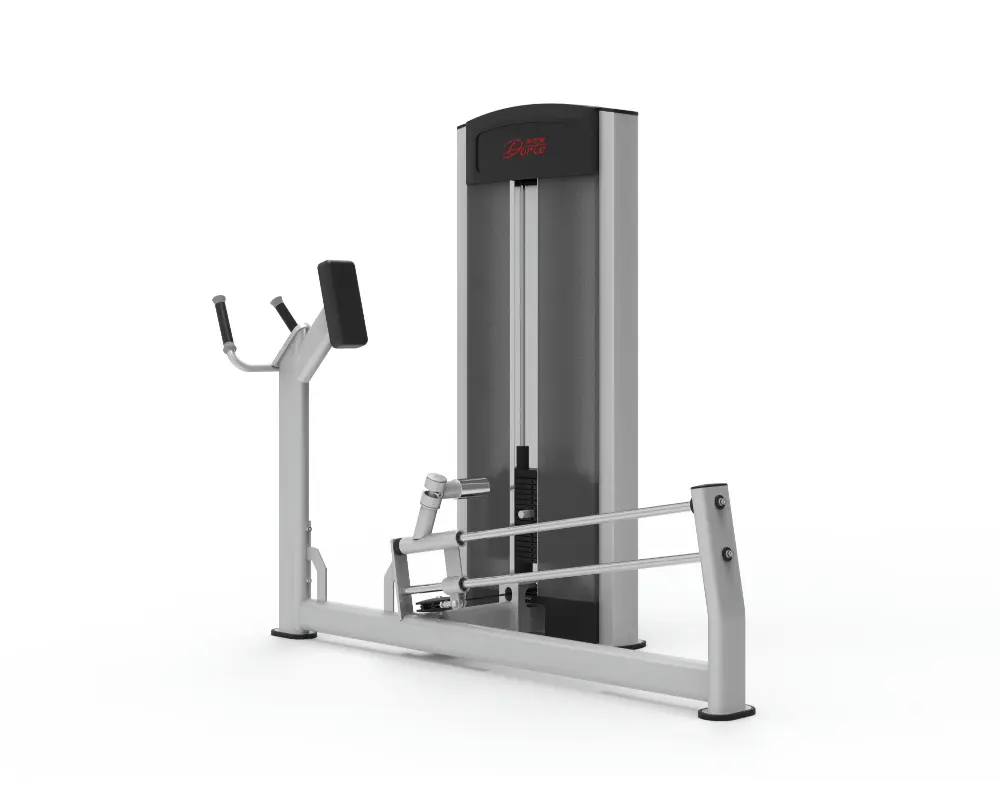
Standing Hip Extension Station
The DL719 is the one station in this series that does a single job: hip extension. The member stands at the chest pad, hooks one ankle behind the roller and drives the leg back, so the gluteus maximus works against the stack with nothing else taking part. Squats, deadlifts and lunges all load the glutes, but they load the quadriceps and the erectors at the same time, and in most members the glutes are the group that gives out first and therefore the group that never reaches a real training stimulus.
2027 mm is the deepest footprint in the range, and none of it is waste. Hip extension happens behind the body, so the moving arm needs an arc long enough to keep tension through the whole path instead of only at the top. The other two dimensions are what make it practical: 843 mm of width is the narrowest in the series, so the unit fits a wall run or the gap between two treadmills that would otherwise hold a bench, and 1660 mm of height keeps the stack under the usual 1.8 m clear-height line.
The 80 kg stack is not a downgrade against the 90 kg used on the chest and back stations. A single-leg hip extension peaks far below a two-legged press or row; 80 kg already exceeds what the great majority of members can move on one leg, and every plate above that adds cost and dead travel at the bottom of the stack rather than useful resistance. The working range for most people sits between 25 and 55 kg.
Net weight is 190 kg, and that figure matters more here than on a seated machine. A standing single-leg drive pushes back against the frame and tries to rotate the torso off the chest pad. The 3.0 mm Q235 tube and the 120 × 75 mm bread-type main frame are what hold the pelvis square, and a square pelvis is the difference between training the glute and training a compensation pattern. Thinner 2.0 mm tube develops flex at the pivot long before the rope shows wear.
Upholstery is one-piece foam with a PU leather cover, mounted on an aluminium parallelogram arm with torsion-spring assisted lift. The spring carries the pad weight so the height change is one-handed, and the parallelogram keeps the pad face at a constant angle through the travel instead of tilting as it rises.
Where It Fits on the Floor
Plan the clearance behind the machine, not in front of it. The leg travels backwards through the full arc, so the 2027 mm depth is working space, not just frame. Leave 800 mm behind the roller so a member can step in and out without walking round the arm.
In a 100 sqm corporate room the DL719 usually goes at the end of the strength run, next to the seated stations, because it is the one item in the lower-body group that a beginner can use on day one without coaching. Pair it with the DL720 multi-hip machine and the two cover hip extension, flexion, adduction and abduction in about 5.5 metres of wall. Both count toward the 10-unit minimum in a single order.
Fitness Equipment Factory
China Ledong offers a comprehensive range of high-quality manufacturing services, from welding and painting to assembly, packaging, and rigorous quality testing, to meet your specific needs. Our experienced team utilizes advanced technology to deliver customized solutions at competitive prices.
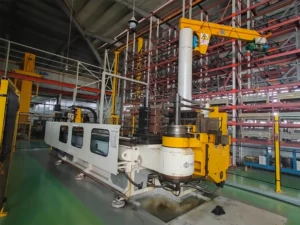
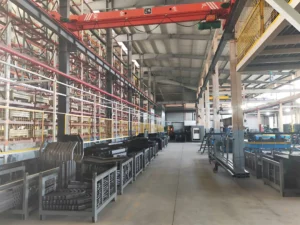
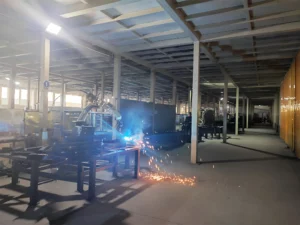
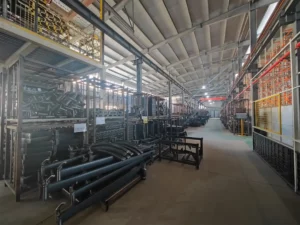
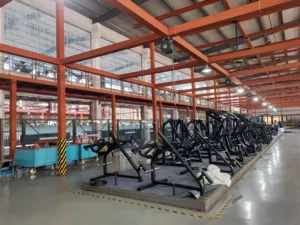
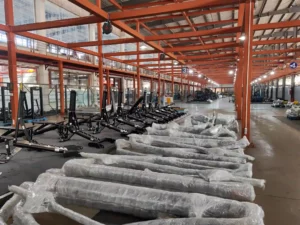
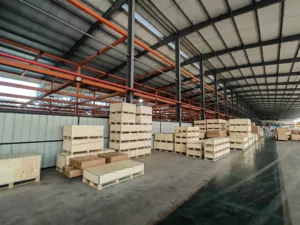
Contact now. Get the best solution!
Frequently Asked Questions
Commercial specification, installation and supply questions about the DL719.
Which muscles does the DL719 train?
The gluteus maximus is the primary mover, with the gluteus minimus and the hamstring group — biceps femoris, semitendinosus and semimembranosus — working as the hip extensors. Because the torso is fixed against the chest pad, the erectors stop being the limiting factor, which is what happens on a Romanian deadlift.
Why is the DL719 the deepest machine in the series?
Because hip extension needs a long arc. The 2027 mm depth is the swing radius of the leg arm plus the frame, and a shorter arm would only load the top third of the range. Plan the clearance behind the roller, not in front — the member steps into the machine from the front.
Why an 80 kg stack when the chest stations use 90 kg?
Because it is a single-leg movement. One-leg hip extension peaks well below a two-leg press, and 80 kg in 5 kg increments already covers every member a commercial gym will see. The useful band is roughly 25–55 kg; heavier plates would sit untouched and add to freight.
How much user weight can the DL719 take?
160 kg maximum user weight, with the wire rope rated above 1400 kg. The 7 × 19 galvanised cable is shared across the series, so one spare part number covers the whole floor and wear is governed by the pulley blocks rather than the rope.
What steel frame does it use?
Q235 steel, 120 × 75 × 3.0 mm bread-type tube for the main frame and 120 × 50 × 3.0 mm flat elliptic tube for secondary members. The 3.0 mm wall is deliberate: standing single-leg work loads the frame in torsion, and 2.0 mm tube starts to flex at the pivot within a year.
Is the DL719 suitable for beginners?
It is one of the few lower-body machines that a beginner can use unsupervised. The path is fixed, the chest pad removes balance from the equation, and there is no way to round the lower back under load the way there is on a deadlift. Most gyms put it at the end of the strength run for exactly that reason.
What warranty and certification apply?
One year on the complete machine. The unit is manufactured to meet or exceed EN ISO 20957 / EN 957, and we supply the declaration with the shipping documents. We do not hold our own certificate for re-badged units, so we state compliance rather than certification.
What is the minimum order and lead time?
10 units per order in total, with no per-model minimum — one unit of the DL719 is enough to start, and the other nine can be any other machines. Regular production runs 25–35 days to Shenzhen port, excluding ocean freight; customized colour or branding runs 35–45 days. FOB Shenzhen, payment before shipment.