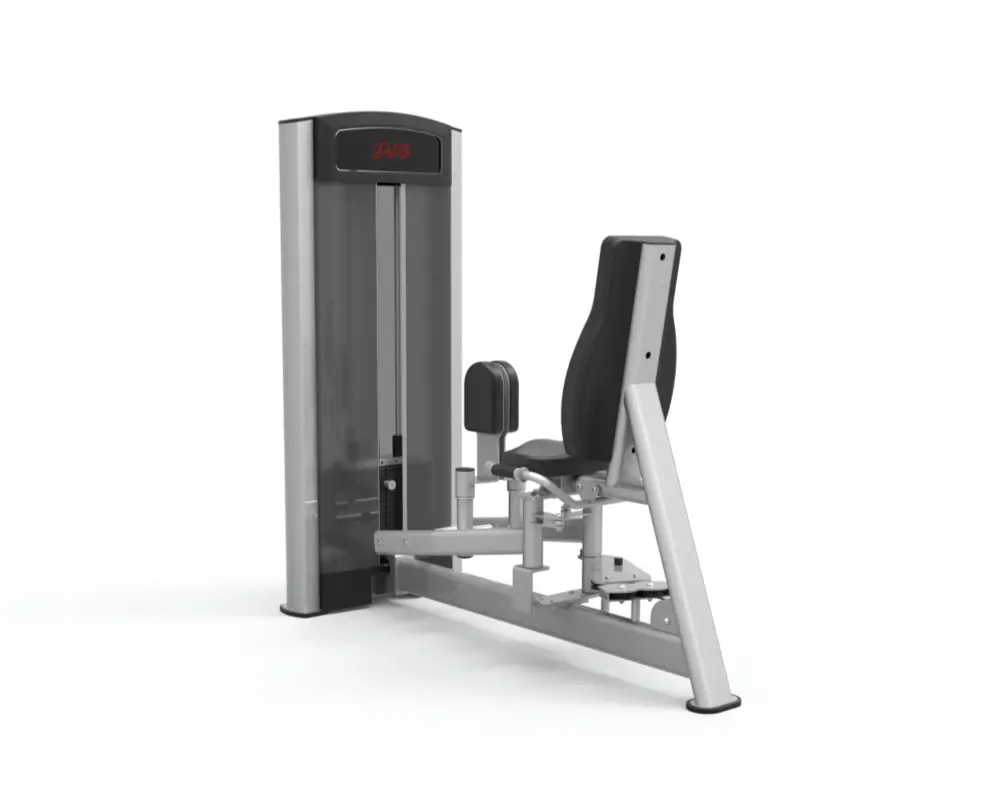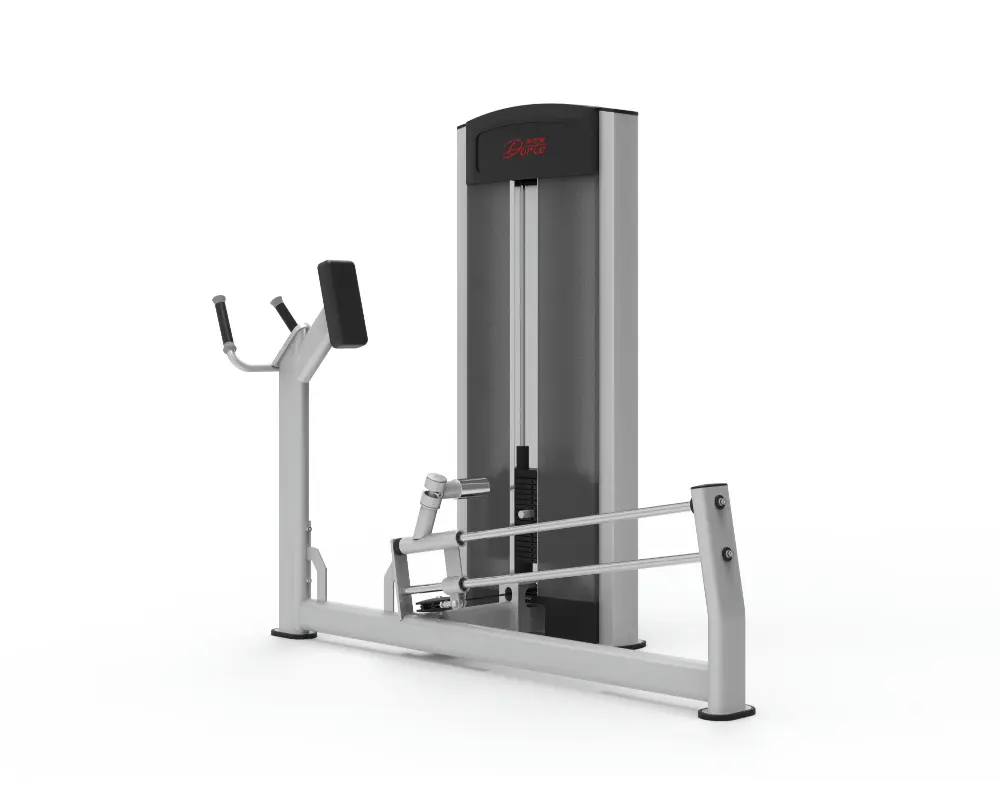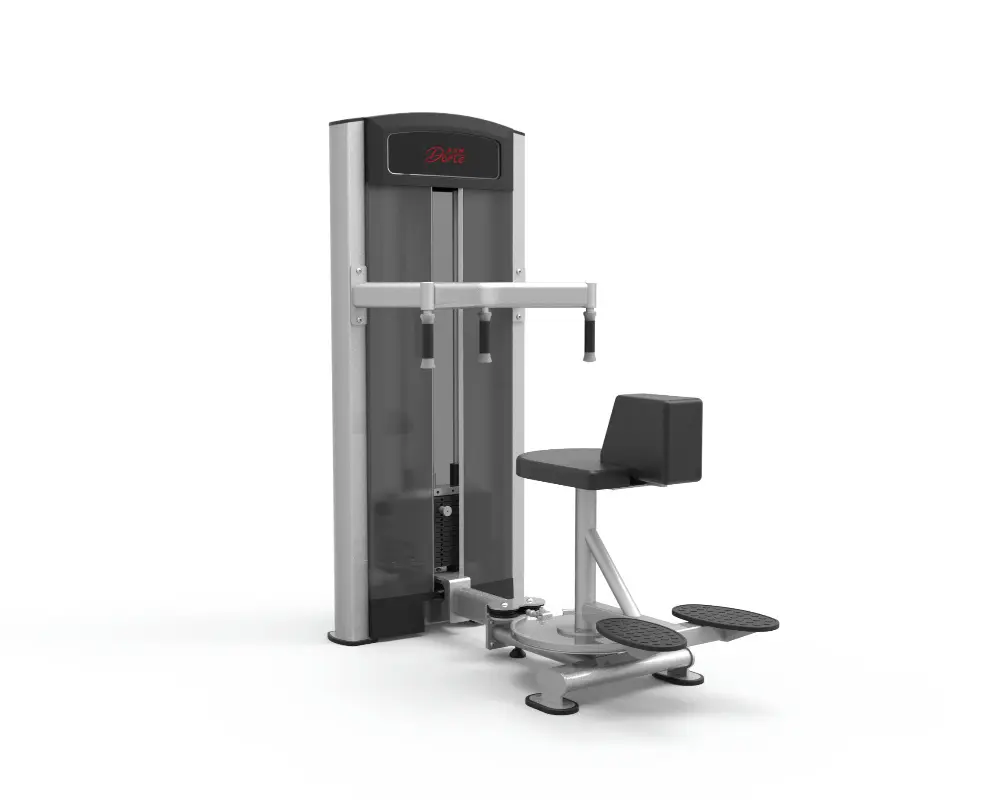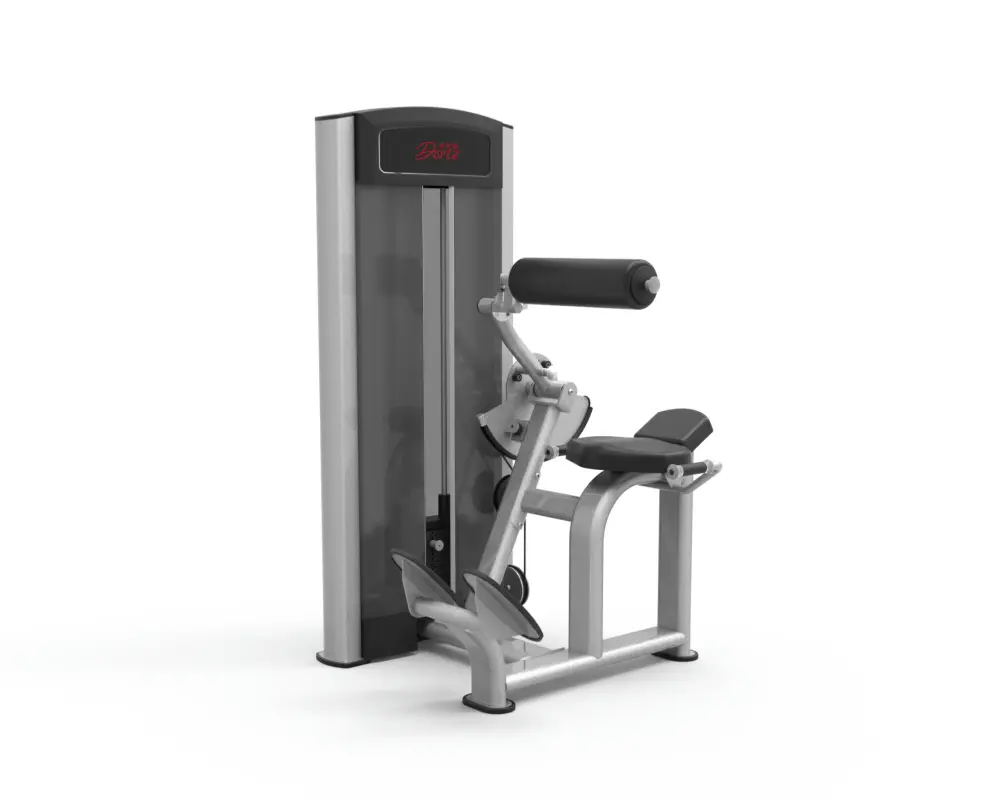

Product Model
| Specification | DL720 |
|---|---|
| Target muscles | Sartorius, adductor magnus, adductor longus, vastus medialis, gluteal group |
| Product size | 1066*1568*1660mm |
| Counterweight | 70KG |
| Net weight | 235KG |
| Maximum load capacity | 160KG |
| Wire rope tension | more than 1400KG |
| Main frame specification | Q235 steel, 120*75*3.0mm bread-type tube for the main frame; 120*50*3.0mm flat elliptic tube for secondary members |
Adjustable-Plane Hip Station
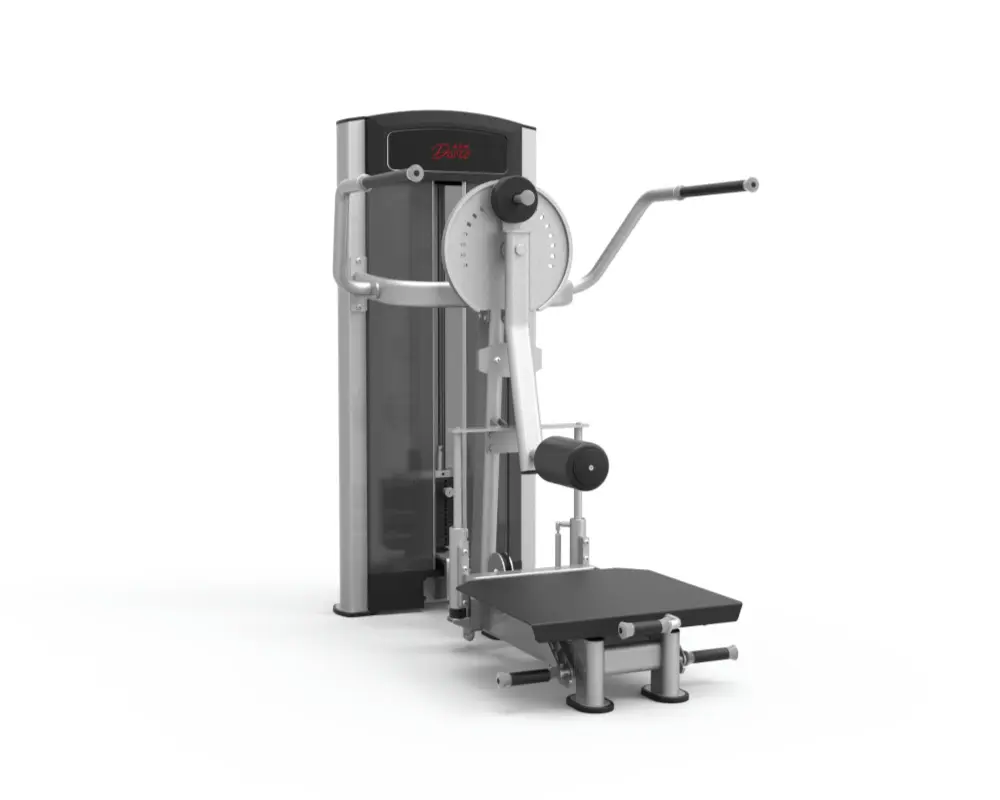
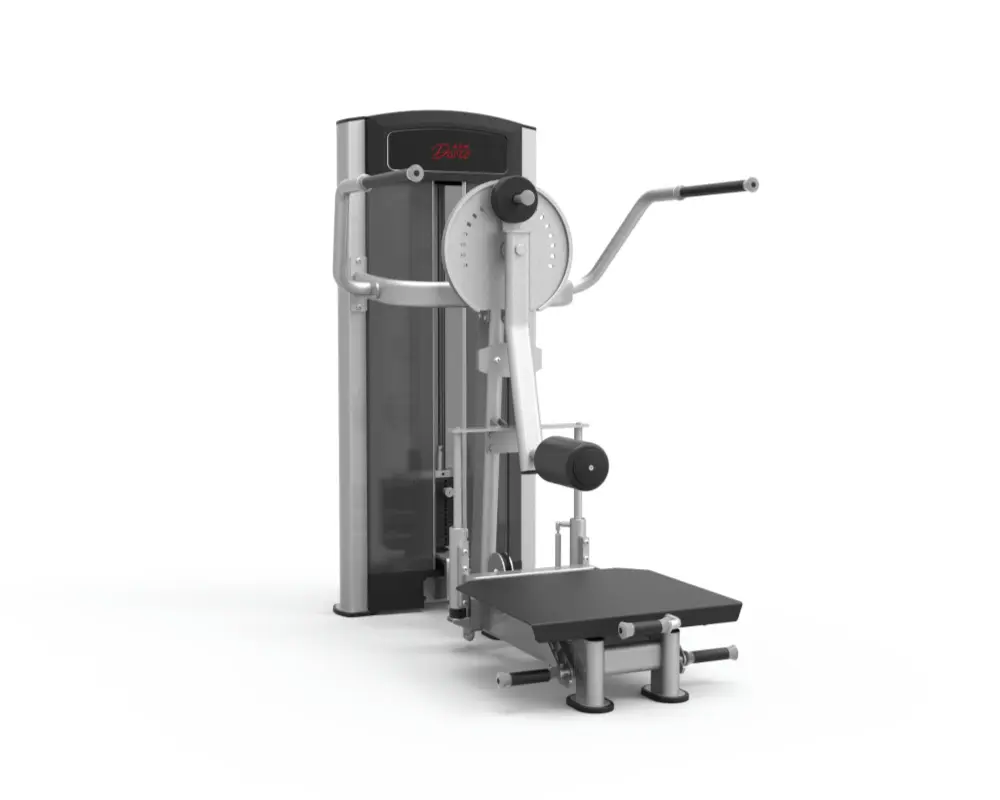
The DL720 is built around a numbered index plate instead of a fixed pivot. The roller arm locks into different positions on that plate, so the same machine covers hip extension, hip flexion, adduction and abduction — four movement planes on one footprint. That is not a marketing extra. Hip abductors and adductors fail in different directions for different athletes, and a gym that only owns a fixed-path hip machine can only train one of them.
At 235 kg it is the heaviest unit in the series, and the ratio is the reason. Net weight sits at 1.47 times the 160 kg user rating, higher than any seated station here. The member stands on the foot platform and drives one leg, so the reaction force goes straight into the frame instead of into a seat bolted to the floor. A lighter machine walks and rocks under a strong client, and rocking is what members read as cheap.
The 1066 mm width and 1568 mm depth follow the same logic. The width carries the foot platform plus the two hand grips that a standing movement needs for balance, and the depth is the arc the roller arm sweeps as it clears the calf. The 70 kg stack is the lightest in the lower-body group, not because the machine is weaker but because every one of the four movements is single-joint work on a small muscle group. A 100 kg stack would be decoration.
Muscle coverage on the adduction setting is the sartorius, adductor magnus, adductor longus and vastus medialis, all working with the gluteal group as stabilisers. That combination is worth knowing: the adductors take two to three times body weight in a change of direction, and almost no member trains them, which is why groin strains and medial knee pain show up in people who otherwise look strong.
The frame is the same Q235 120 × 75 × 3.0 mm bread-type main tube and 120 × 50 × 3.0 mm flat elliptic secondary used across the range, with one-piece foam upholstery on an aluminium parallelogram arm and torsion-spring lift.
Footprint and Clearance
The DL720 is a standing machine, so the usable footprint is larger than the frame. Budget 1.2 m of clear floor in front of the foot platform for stepping on and off, and keep the hand-grip side away from a wall — a member holding one grip under load will lean into the machine and needs a shoulder's width of room.
It pairs with the DL719 rather than replacing it. The DL719 is single-purpose and seated-free but limited to extension; the DL720 covers four planes but costs more and needs more room. Where floor area is the constraint and the membership is general fitness, the DL721 seated inner/outer thigh station does the two most requested hip movements in 750 mm of width. Where the membership includes sport or rehab clients, the DL720 is the one that gets used.
Fitness Equipment Factory
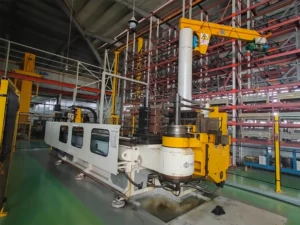
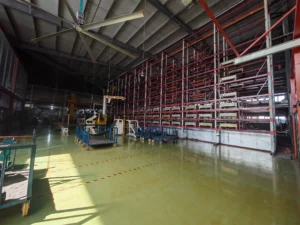
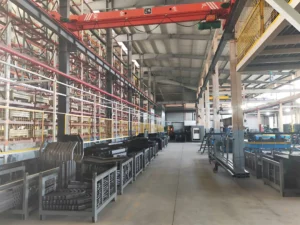
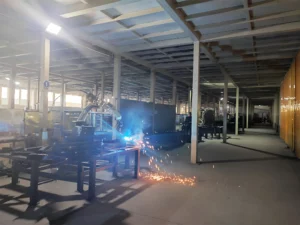
China Ledong offers a comprehensive range of high-quality manufacturing services, from welding and painting to assembly, packaging, and rigorous quality testing, to meet your specific needs. Our experienced team utilizes advanced technology to deliver customized solutions at competitive prices.
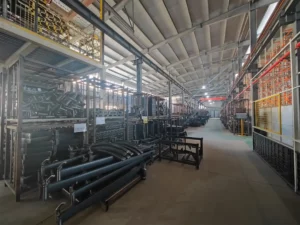
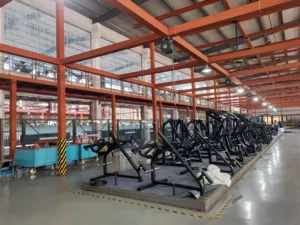
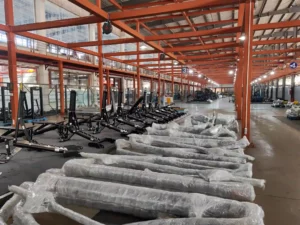
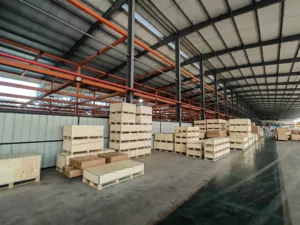
Contact now. Get the best solution!
Frequently Asked Questions
Commercial specification, installation and supply questions about the DL720.
What movements can the DL720 do?
Four: hip extension, hip flexion, hip adduction and hip abduction. The roller arm locks into different positions on the numbered index plate, and each position sets a different plane of travel. Changing between them takes a few seconds and needs no tools.
Which muscles does it work on the adduction setting?
Sartorius, adductor magnus, adductor longus and vastus medialis, with the gluteal group stabilising the pelvis. These are the muscles that resist a collapsing knee in a cut or a landing, and they are the ones most members never train.
Why does the DL720 weigh 235 kg when the DL719 weighs 190 kg?
Because it is a standing machine with a foot platform and a movable arm, so the reaction force has to be absorbed by the frame rather than by a seat. At 235 kg the net-to-user ratio is 1.47, the highest in the series — that is what stops the machine walking when a strong member drives through it.
Why only a 70 kg weight stack?
All four movements are single-joint work on relatively small muscle groups. Hip abduction and adduction peak well below pressing or rowing, and the useful range for most members is 15–40 kg. A larger stack would add cost, freight weight and dead travel without changing training outcomes.
How much user weight can it take?
160 kg maximum user weight, with the wire rope rated above 1400 kg. The cable is the same 7 × 19 galvanised specification used across the range, and the framing carries a standing load, so the 160 kg rating applies to a standing member driving through the platform.
DL720 or DL721 — which one should a gym buy first?
If the membership is general fitness, buy the DL721: it is seated, 750 mm wide, and covers the two hip movements most members ask for. If the membership includes sport, rehab or older clients who need hip flexion and extension as well, buy the DL720. The two are not substitutes; most 250 sqm and larger rooms end up with both.
What warranty and certification apply?
One year on the complete machine. The unit is manufactured to meet or exceed EN ISO 20957 / EN 957, and the declaration ships with the documents. We do not hold our own certificate for re-badged units, so we state compliance rather than certification.
What is the minimum order and lead time?
10 units per order in total, with no per-model minimum — a single DL720 can be part of that ten. Regular production runs 25–35 days to Shenzhen port, excluding ocean freight; customized colour or branding runs 35–45 days. FOB Shenzhen, payment before shipment.