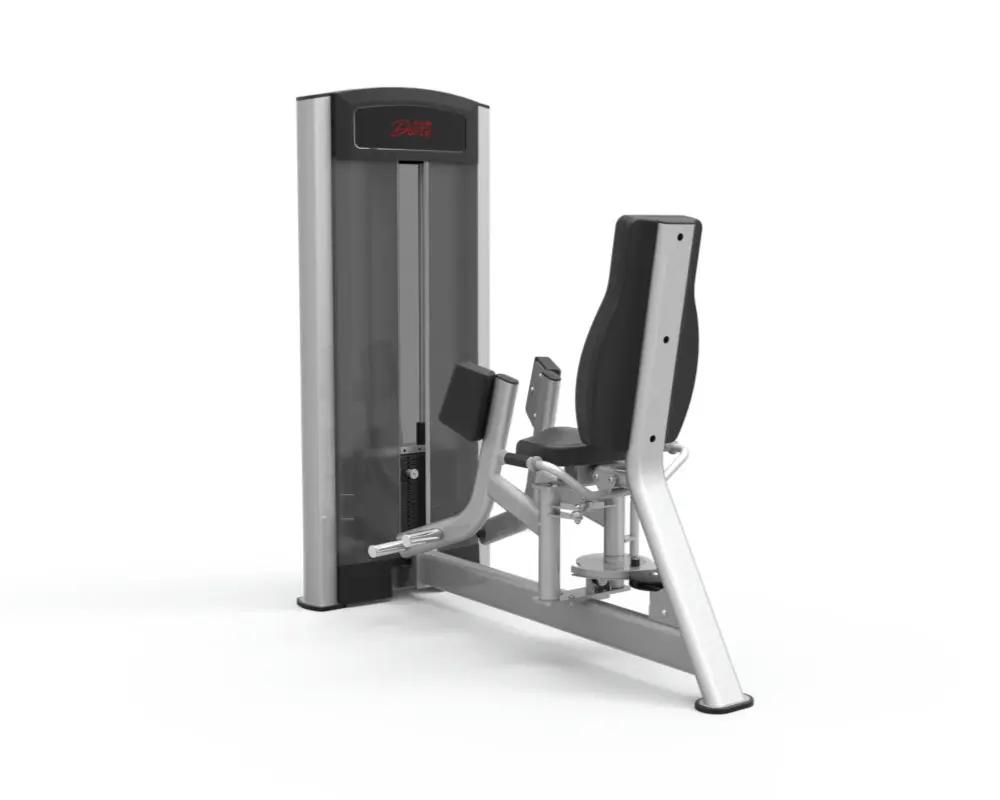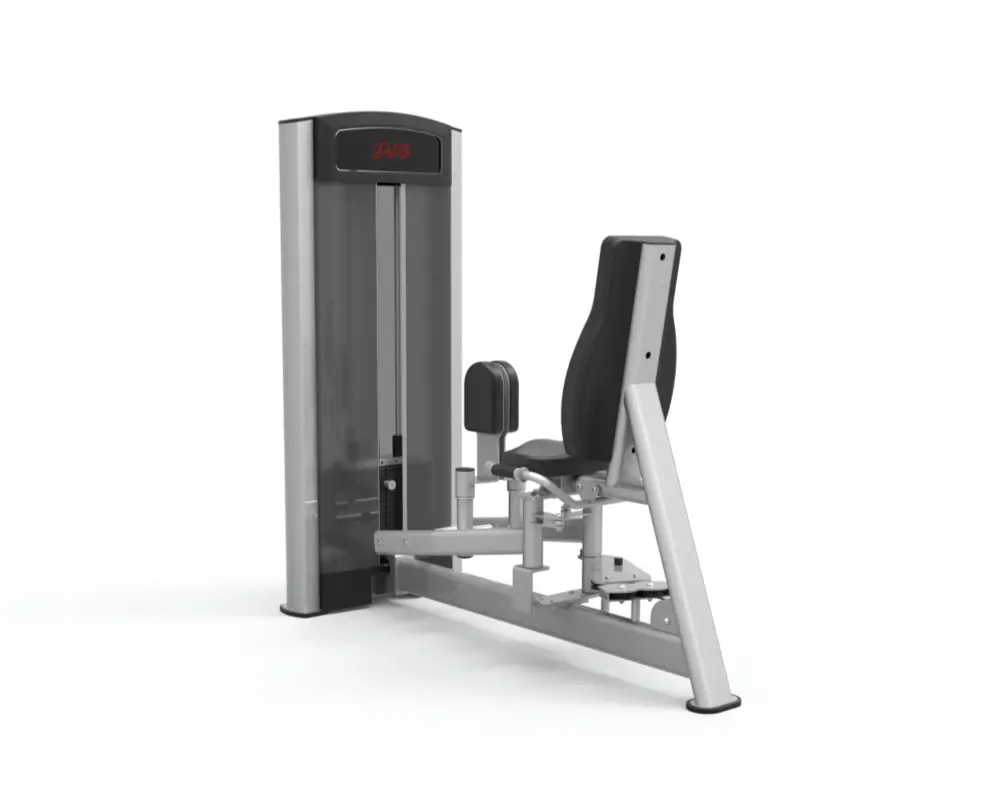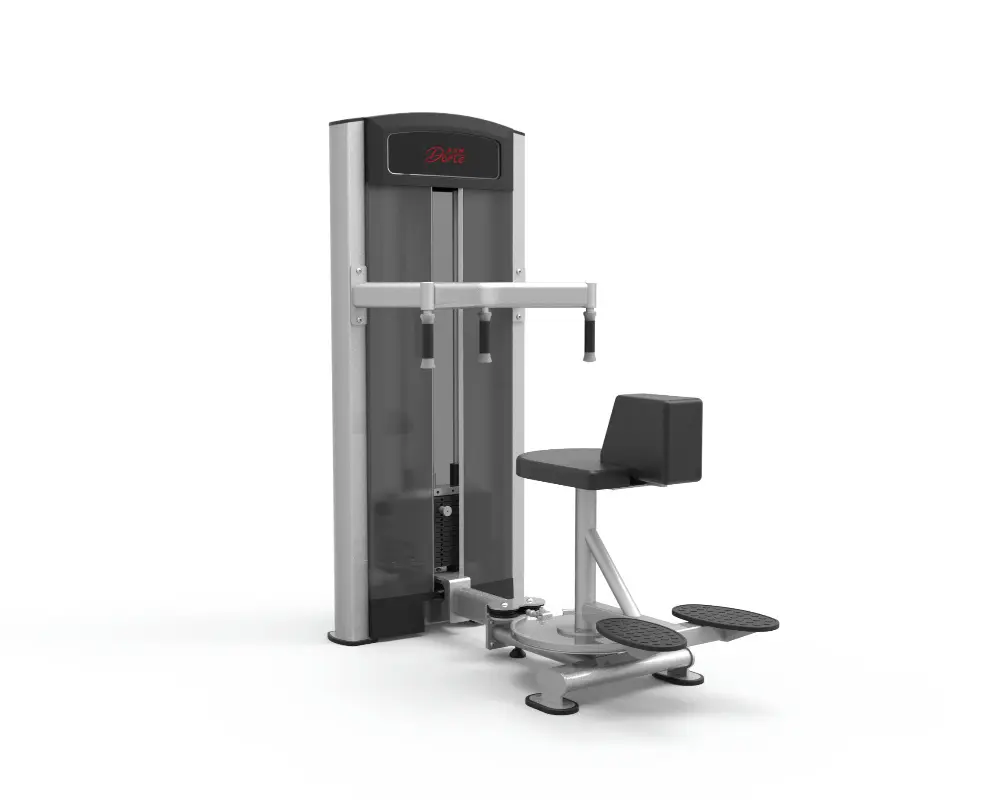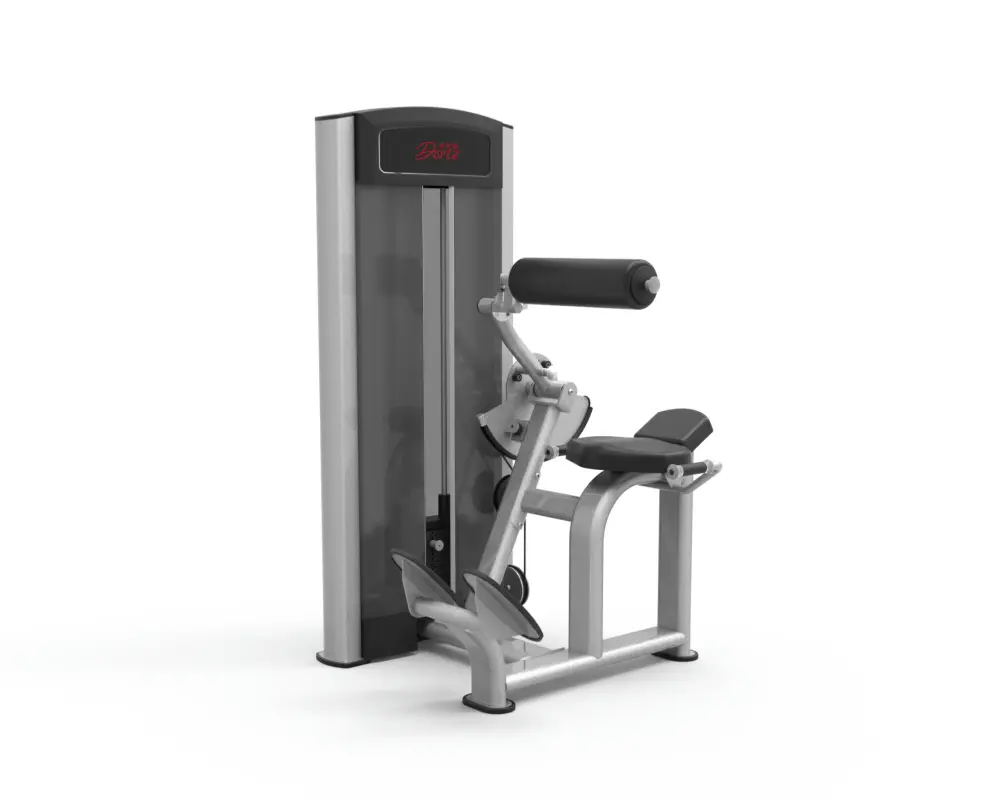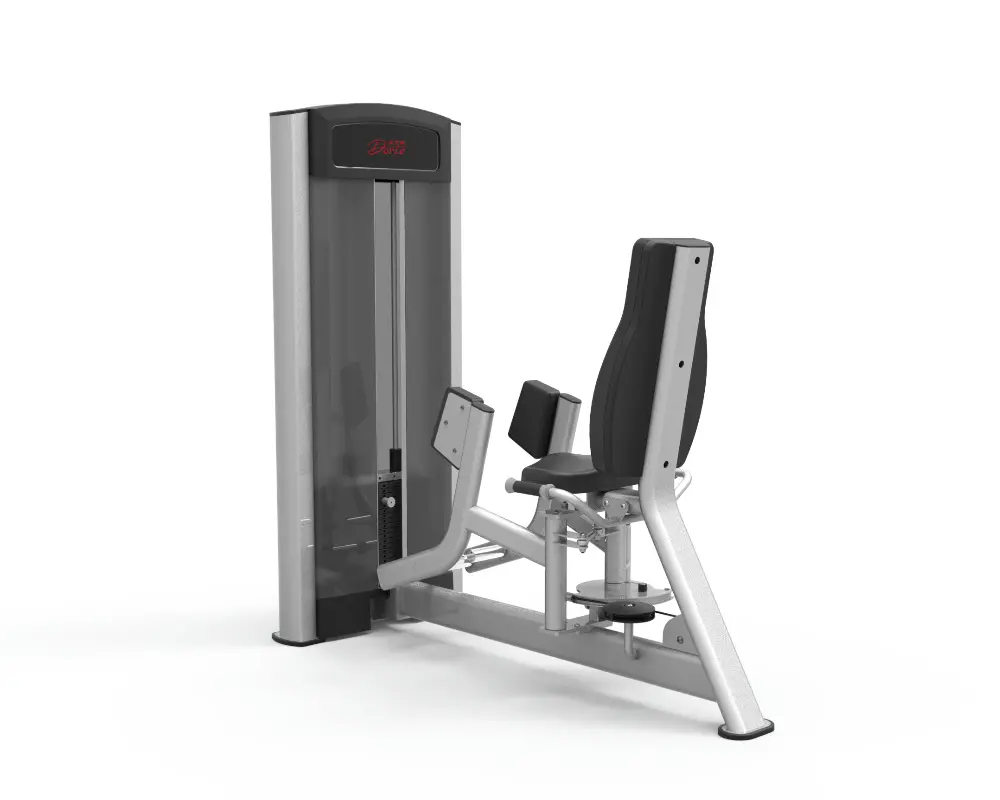

Product Model
| Specification | DL723 |
|---|---|
| Target muscles | Gluteal group, outer thigh |
| Product size | 746*1664*1660mm |
| Counterweight | 80KG |
| Net weight | 200KG |
| Maximum load capacity | 160KG |
| Wire rope tension | more than 1400KG |
| Main frame specification | Q235 steel, 120*75*3.0mm bread-type tube for the main frame; 120*50*3.0mm flat elliptic tube for secondary members |
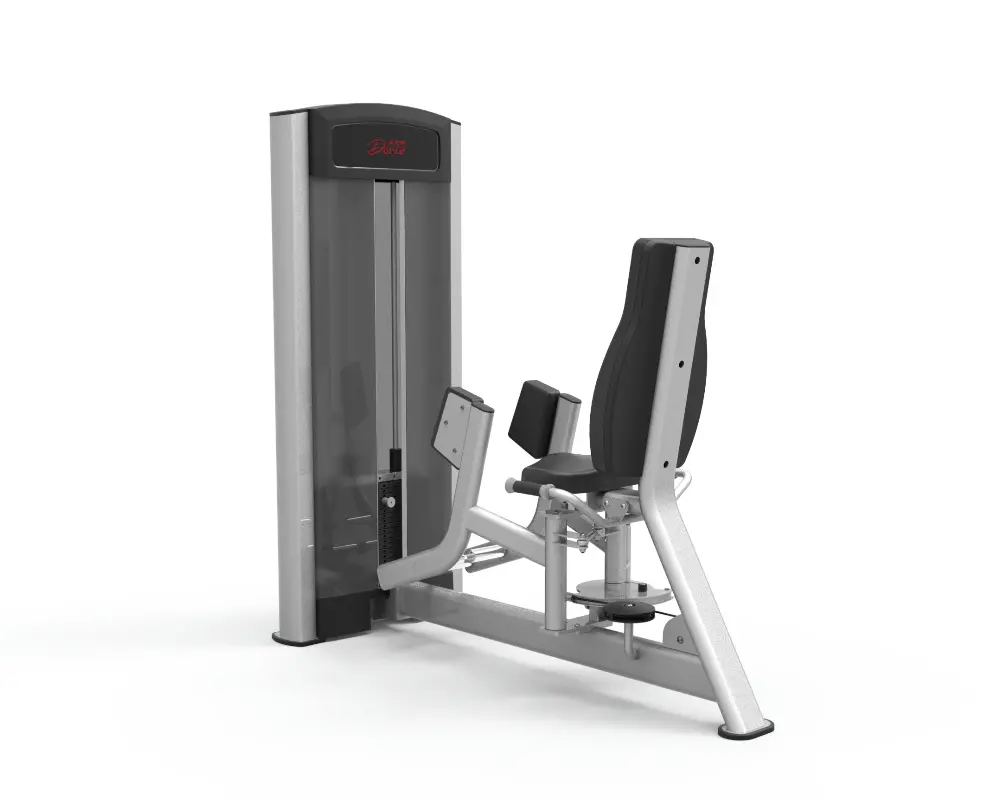
Seated Hip Abduction Station
The DL723 does hip abduction: the member sits, sets the knees inside the two pads and presses outward. It is the outward half of a pair that shares one frame with the DL722 adductor, and the frame is identical — same tower, same base, same seat, same 80 kg stack, 746 × 1664 × 1660 mm either way. Only the moving arm and the pad bracket are reversed. That is worth saying plainly, because it tells a buyer what the money is actually being spent on: not a bigger machine, a different one.
What it trains is the muscle group that holds the pelvis level on one leg. The gluteus medius, the gluteus minimus and the tensor fasciae latae pull the femur away from the midline, and they are the reason a runner's pelvis does not drop on every stride and a landing knee does not collapse inward. When they are weak, the pelvis drops on the unsupported side and the knee follows it, and the member feels it as patellofemoral pain, ITB tightness or a hip that aches after stairs — never as "weak abductors", because nobody has a word for that.
This is why a gym full of sagittal-plane machines produces members with a specific blind spot. A member can leg press 200 kg and still have a single-leg stance in which the pelvis drops measurably, because nothing in the room has ever asked those muscles to work. Abduction is a frontal-plane movement and every main lower-body station — squat, press, extension, curl — is sagittal. The DL723 is the corrective, and it is also one of the few stations an older member can use on the first visit without a coach standing over them.
The stack is dedicated, and that is the real argument over a multi-function unit. On the DL721 the two directions share one 80 kg stack, one cable and one changeover lever, so only one member can work at a time and only in the direction the lever is set to. On the DL723 abduction owns all 80 kg and its own cable, all the time. For a room running 40 or more members an hour at peak, that difference in availability is worth more than the wall space the second machine costs.
80 kg is more than the movement needs and that is deliberate. The useful band for abduction is roughly 15–40 kg; the multi-hip DL720 caps abduction at 70 kg shared across four settings, while here the whole stack belongs to one movement. The reason to carry the headroom is not the average member, it is the returning athlete doing end-range work at 60 kg plus, and the physio-led session that needs a light start and a heavy finish on the same pin block.
Mechanically the unit is the standard frame of the range: Q235 120 × 75 × 3.0 mm bread-type main tube, 120 × 50 × 3.0 mm flat elliptic secondary members, wire rope rated above 1400 kg against a 200 kg machine, one-piece foam upholstery with a PU leather cover, and an aluminium parallelogram arm with torsion-spring assisted lift. That 1400 kg rating is seven times the machine's own weight, and it is why the cable is not the part that fails first on these units.
Clearance, Placement and the Pair
Because the member is seated and the pads travel within the frame line, the DL723 needs almost no side clearance — the space it wants is in front of the seat, roughly 700 mm, for sitting down and standing up. That makes it usable against a wall run or in the corner of a studio where a standing hip station with a foot platform would not fit.
Two units, DL722 and DL723 side by side, take 1.49 m of wall and give the room both directions with independent stacks. The honest arithmetic: the pair costs roughly 1.7 times the dual-function DL721, and what that buys is simultaneous use, uncompromised pad geometry on each side, and redundancy if one cable is out. If traffic is light or the room is tight, the DL721 is the better buy and we will tell you so; if the gym runs a peak-hour queue at the leg stations, the pair pays for itself in availability. If only one of the two is going in this quarter, put in the abductor first — it serves more of the membership.
Fitness Equipment Factory
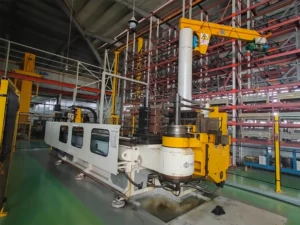
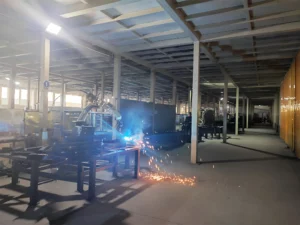
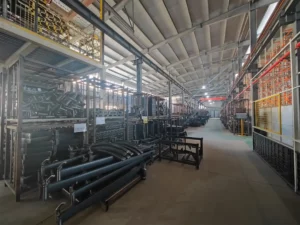
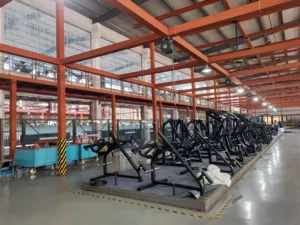
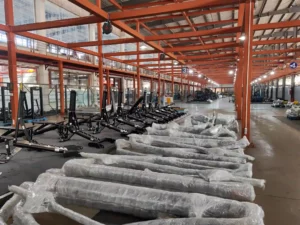
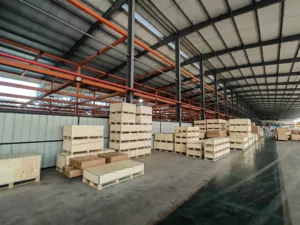
China Ledong offers a comprehensive range of high-quality manufacturing services, from welding and painting to assembly, packaging, and rigorous quality testing, to meet your specific needs. Our experienced team utilizes advanced technology to deliver customized solutions at competitive prices.
Contact now. Get the best solution!
Frequently Asked Questions
Commercial specification, installation and supply questions about the DL723.
Which muscles does the DL723 train?
The gluteal group and the outer thigh. In practice that is the gluteus medius and gluteus minimus doing the abduction with the tensor fasciae latae assisting, and it is the group responsible for keeping the pelvis level while one leg carries the body.
What does hip abduction actually do for a member?
It stabilises the pelvis and the knee in single-leg stance. Weak abductors let the pelvis drop on the unsupported side, the femur rotates inward, and the knee follows — which shows up as patellofemoral pain, ITB tightness, or simply a hip that aches after stairs. Members rarely describe it that way, so the machine is usually under-used until an instructor puts them on it once.
Why does a small muscle need an 80 kg stack?
Because the useful band is 15–40 kg for general members and the headroom is for the other end: a returning athlete working at 60 kg plus, and a physio-led session that needs a light start and a heavy finish on the same stack. The 5 kg plate steps do more for progression than the ceiling does.
The DL720 multi-hip machine also does abduction. Why own both?
Because they answer different questions. The DL720 puts abduction alongside three other planes on one standing footprint, which suits a room that needs coverage. The DL723 gives abduction a dedicated 80 kg stack and its own cable, which suits a room where abduction is used constantly. A 250 sqm room with a sporting membership typically ends up with both; a 100 sqm corporate room buys neither and takes the DL721.
Is it suitable for older members?
It is one of the easiest stations in the room for them. The member is seated, the back is supported, the movement is short and the load starts light, so there is nothing to balance and no way to lose position under load. Hip abductor strength is also the thing most directly tied to confident walking and stair use, which is why it is usually the station an older member is shown first.
Abductor or adductor first, if the budget only covers one?
The abductor, for most commercial gyms. Abduction carries over into running, stairs and knee tracking, so it serves the general membership; adduction pays off specifically for sport and rehab members. A gym with a five-a-side or school-sport clientele should reverse that answer.
What warranty and certification apply?
One year on the complete machine. The unit is manufactured to meet or exceed EN ISO 20957 / EN 957, with the declaration supplied in the shipping documents. We do not hold our own certificate for re-badged units, so the wording is compliance rather than certification.
What is the minimum order and lead time?
10 units per order in total, with no per-model minimum — one DL723 plus nine other machines is a valid order. Standard production runs 25–35 days to Shenzhen port, excluding ocean freight; customized colour or branding runs 35–45 days. FOB Shenzhen, payment before shipment, and the packing list and installation sequence go out before the container leaves.