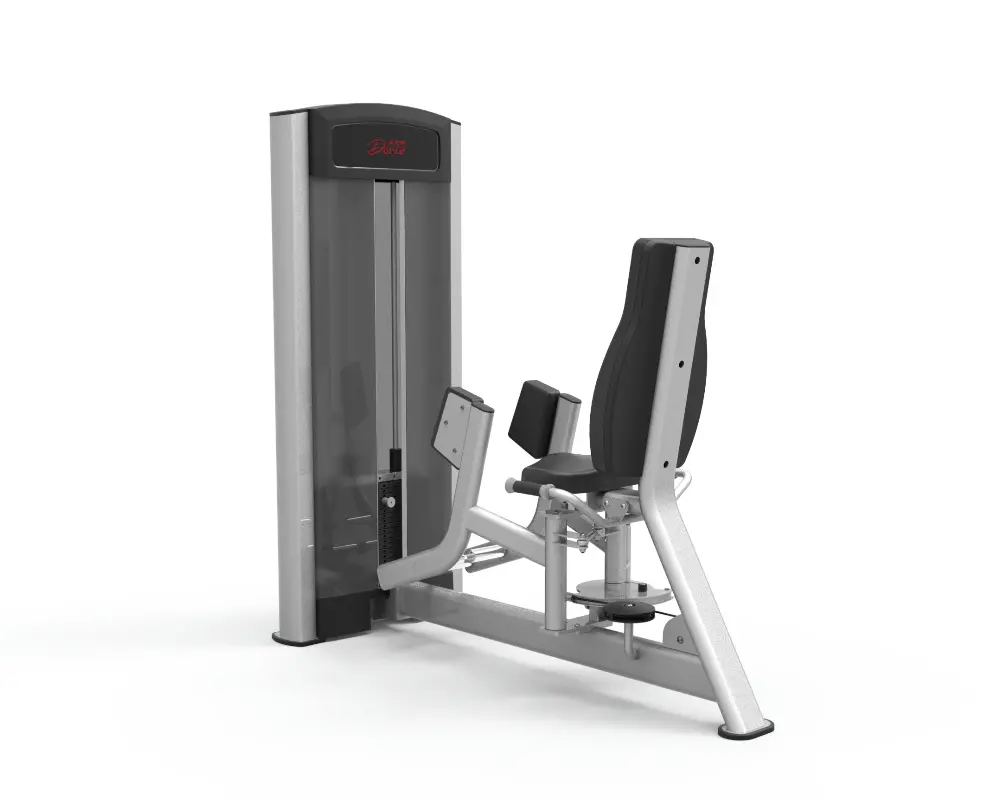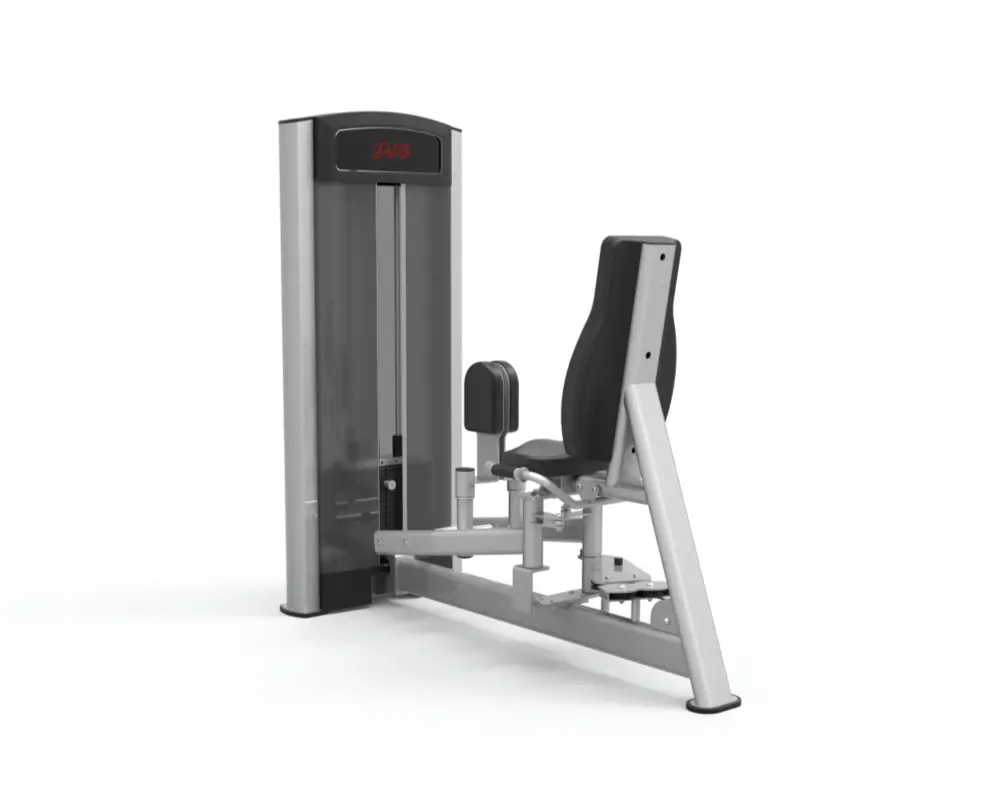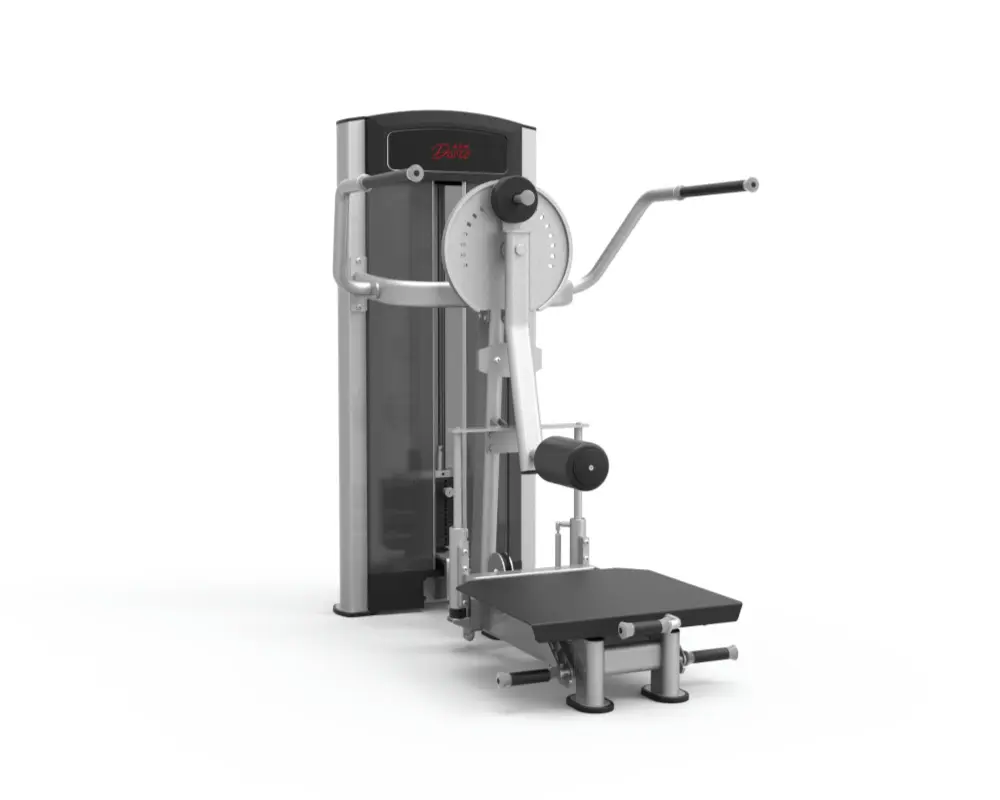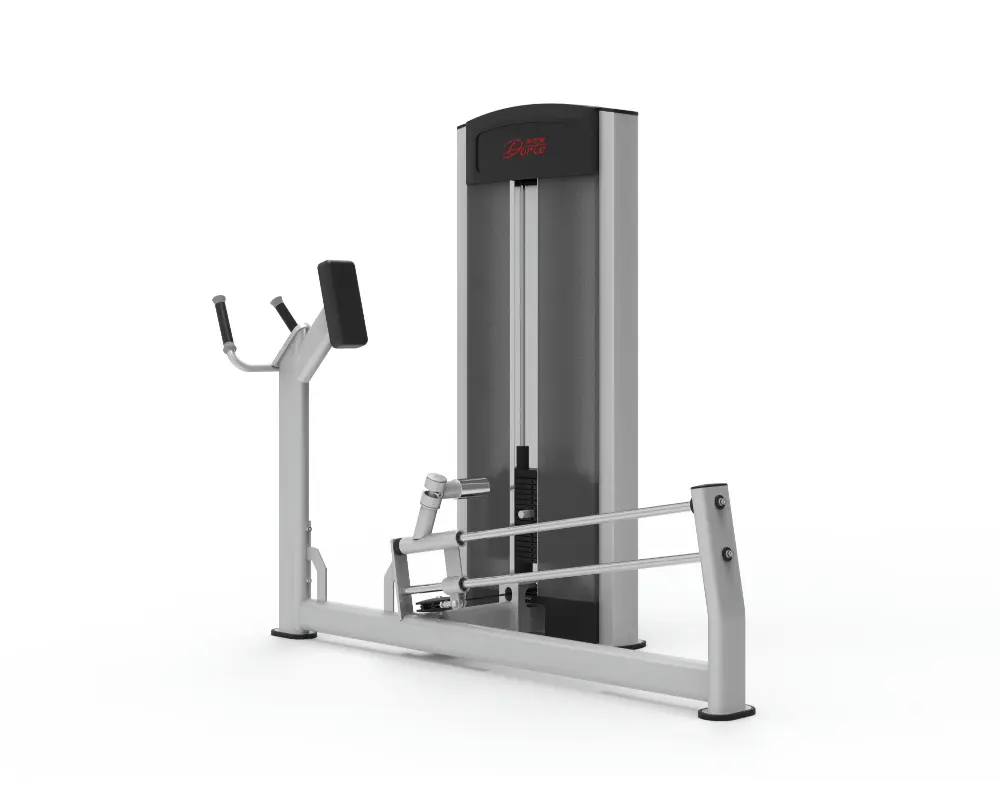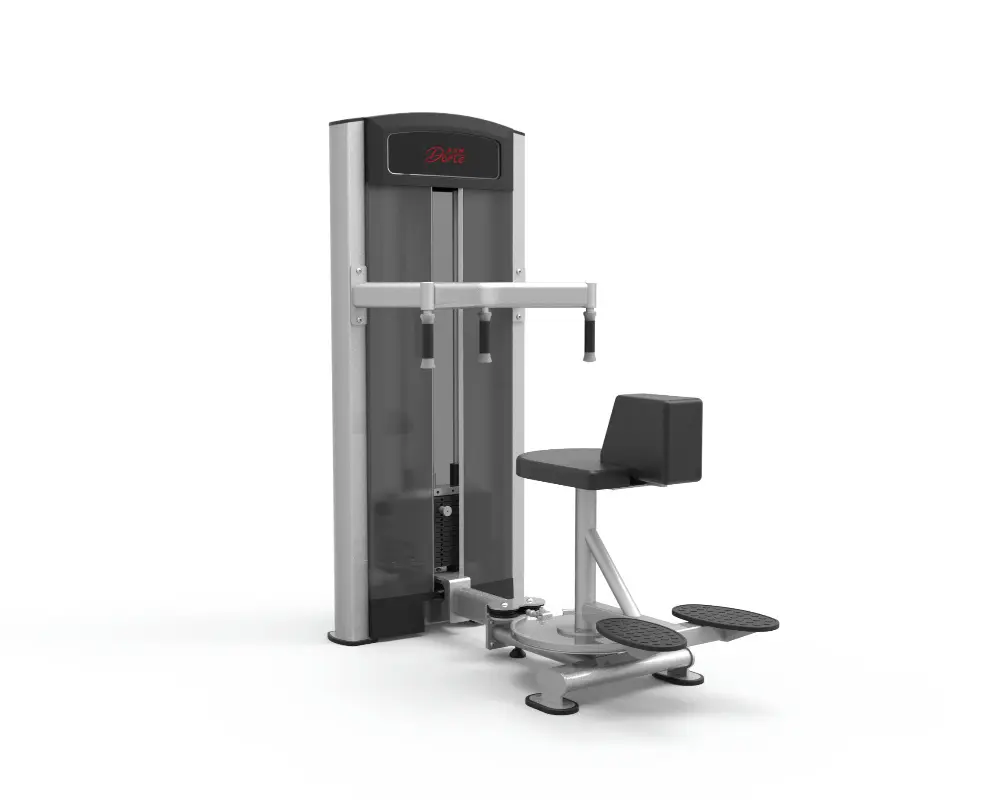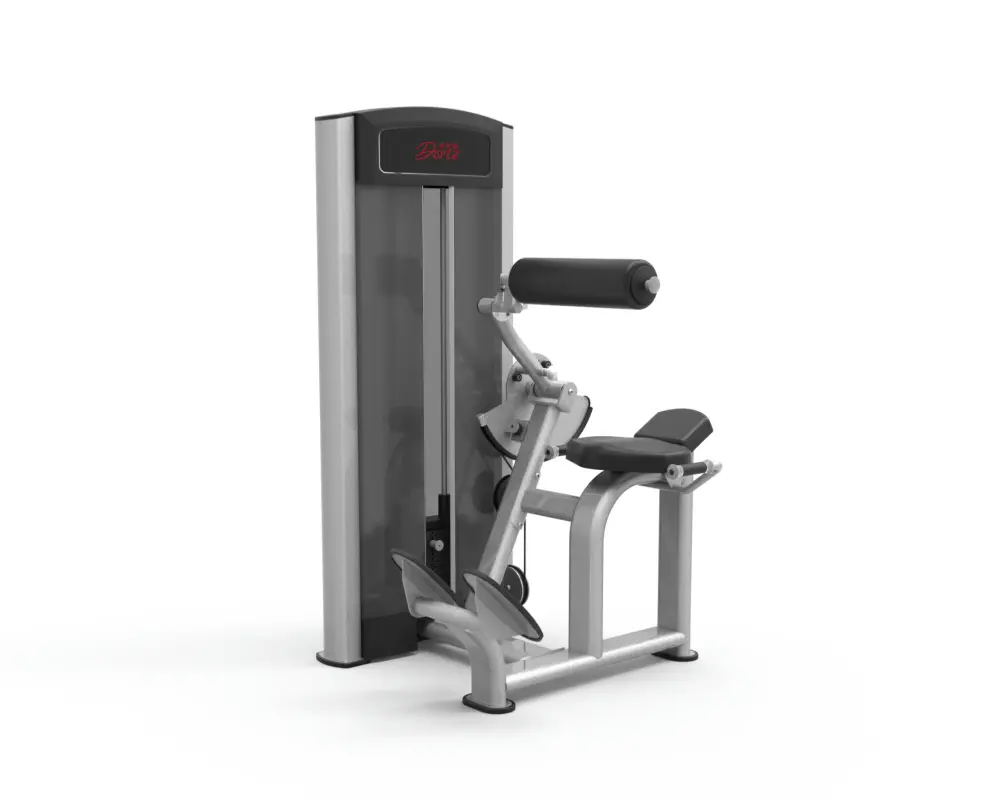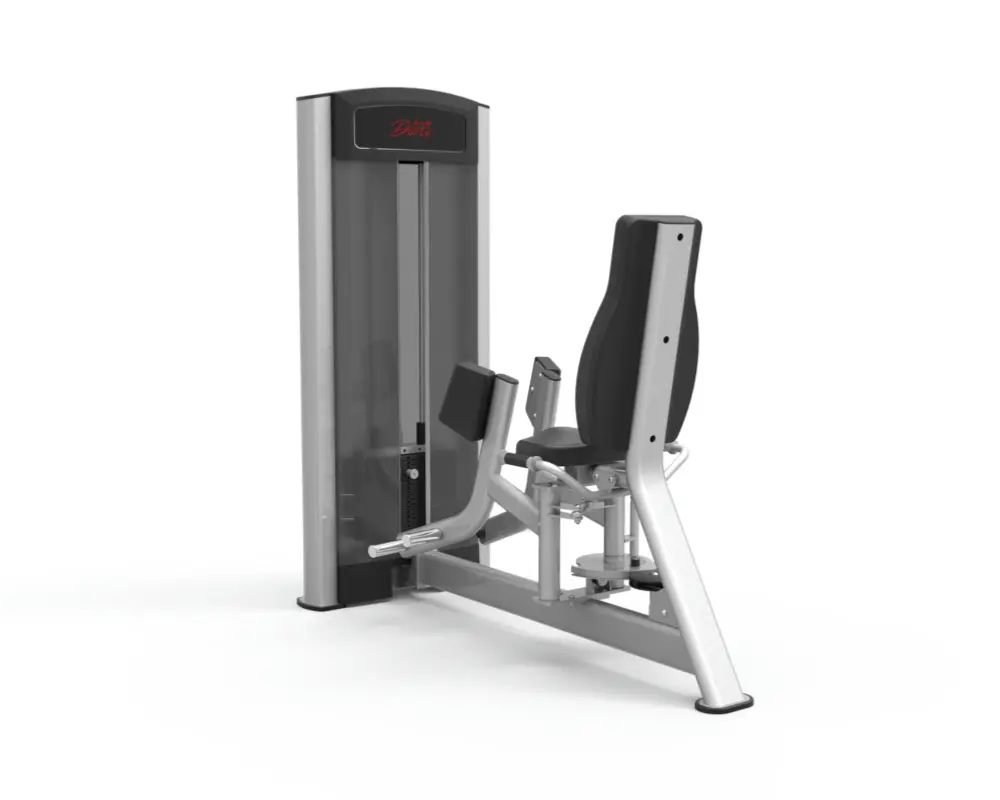

Product Model
| Specification | DL722 |
|---|---|
| Target muscles | Adductor magnus, adductor longus, vastus medialis |
| Product size | 746*1664*1660mm |
| Counterweight | 80KG |
| Net weight | 200KG |
| Maximum load capacity | 160KG |
| Wire rope tension | more than 1400KG |
| Main frame specification | Q235 steel, 120*75*3.0mm bread-type tube for the main frame; 120*50*3.0mm flat elliptic tube for secondary members |
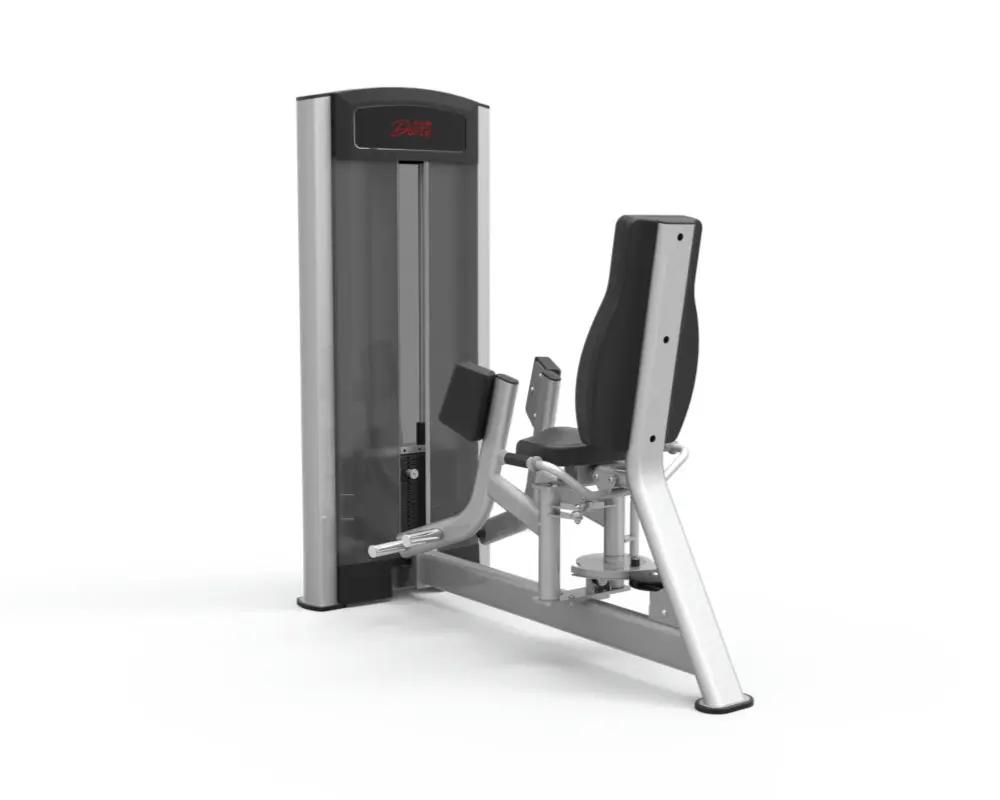
Seated Hip Adduction Station
The DL722 trains one movement and refuses to train anything else: hip adduction, the leg pulling inward against resistance. The member sits with the back flat on the pad, sets the knees outside the two pads and squeezes them together. No balance, no trunk contribution, no ankle work, no way to shorten the range by shifting position. That single-mindedness is the point of the machine, because adduction is the one hip movement almost nothing else on a commercial floor trains.
Squats, leg press, leg extension and the walking lunge are all sagittal-plane movements. Adduction is frontal-plane. A member can load 1.4 times body weight on the leg press and still own adductors that have not been trained beyond walking since school. The two facts are not contradictory; they are different planes, and the group that is missing is the one that has to brake a leg driven outward.
That is where the demand actually comes from. Adductor strain is one of the most common time-loss injuries in football, futsal and ice hockey, and the mechanism is nearly always the same: the leg is pushed out under load during a cut, a slide tackle or an over-long stride, and the adductor group has to decelerate it. Gyms serving five-a-side teams, school athletes or anyone in a change-of-direction sport get more use from this station than the membership mix suggests, because it is a machine a member feels on the first set and comes back to without being told to.
At 746 × 1664 × 1660 mm the DL722 shares its tower, base, seat and 80 kg stack with the DL723 abductor. Only the moving arm and the pad bracket differ. On a plan the pair reads as a 1.49 m block of wall — 746 mm each — which is still less width than a single leg press takes, so a room that can hold a press can hold both directions.
The figure worth handing to a structural engineer is not the 200 kg machine weight, it is 161 kg/m². That is 200 kg spread across the 1.24 m² footprint, and it is the number that decides whether the gym can go on an upper floor of a hotel or an office conversion. It sits well under the 3.0 kN/m² live load a commercial floor is normally designed for, but the machine weight quoted on its own tells an engineer nothing useful.
The stack is 80 kg and the useful part of it is the lower half. Hip adduction in a general-fitness population sits in the 20–50 kg band; the ceiling exists so that a trained athlete, or a rehab programme progressing to end-range strength, does not run out of plates. A 100 kg stack would add freight weight and dead travel at the bottom without adding a member who can use it. What matters more than the top of the range is the step size: adduction responds to small, frequent increases, and the 5 kg plates are what let a post-injury member progress week on week instead of jumping past the point where the tissue adapts.
Upholstery is one-piece foam with a PU leather cover on an aluminium parallelogram arm with torsion-spring assisted lift, the same adjustment used across the range. The spring carries the pad weight so a height change is one-handed, and the parallelogram holds the pad face at a constant angle through the travel instead of rotating as it rises. The main frame is Q235 120 × 75 × 3.0 mm bread-type tube with 120 × 50 × 3.0 mm flat elliptic secondary members. The wire rope is rated above 1400 kg against a 200 kg machine — a margin of seven to one, which is why the cable is not the service item on these units and the pulley blocks are.
Where It Sits on a Floor Plan
The 1664 mm depth is the frame plus the arm's travel in front of the seat, so plan it as working space rather than as obstacle. Leave 700 mm in front of the seat for getting in and out, and put the machine where a member can sit down without stepping over anything — a hip adduction station loses more use to an awkward approach than to the movement itself.
In a 100 sqm corporate room the DL722 usually ends up beside the seated leg stations rather than in the free weight area, because it needs no spotter and no instruction beyond one demonstration. If the room can only carry one of the pair, carry the DL723 abductor: abduction has more general-fitness carryover into running, stairs and knee tracking, while adduction is the machine that pays off for sport and rehab members specifically. Where the floor is a 250 sqm room or larger, both, side by side, on the same colour approval.
Fitness Equipment Factory
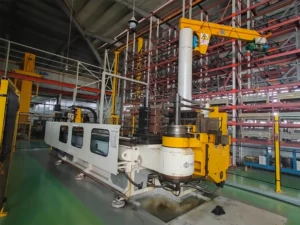
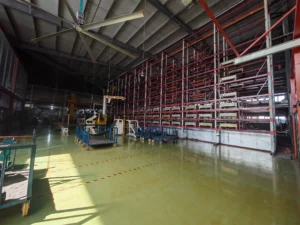
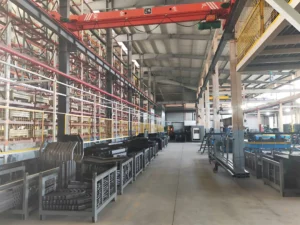
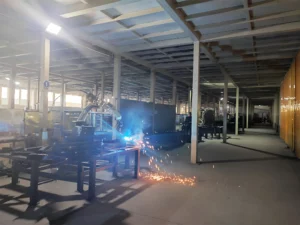
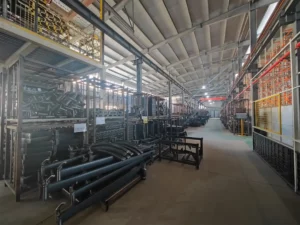
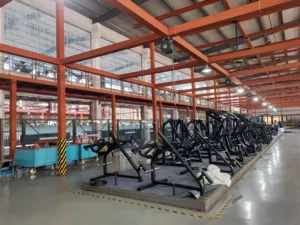
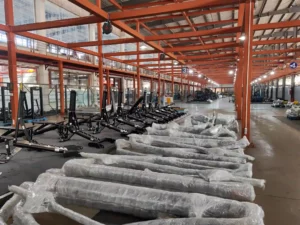
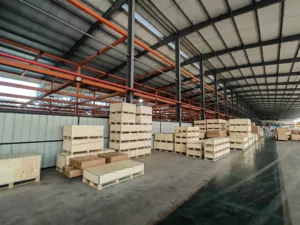
China Ledong offers a comprehensive range of high-quality manufacturing services, from welding and painting to assembly, packaging, and rigorous quality testing, to meet your specific needs. Our experienced team utilizes advanced technology to deliver customized solutions at competitive prices.
Contact now. Get the best solution!
Frequently Asked Questions
Commercial specification, installation and supply questions about the DL722.
Which muscles does the DL722 train?
The adductor magnus, the adductor longus and the vastus medialis. The magnus is the largest of the group and does most of the work; the vastus medialis contributes because the knees stay in contact with the pads through the whole range. The gluteal group stabilises the pelvis but is not the target.
Why buy two machines when the DL721 does both directions?
Three reasons, and none of them is about the movement itself. First, throughput: on the DL721 one member at a time uses one seat, and at 18:00 that is a queue; two dedicated units let two members train in opposite directions simultaneously in 1.49 m of wall. Second, the pad position is set for one start angle instead of compromising between two. Third, if a cable or a pulley needs attention, the other direction is still in service. If floor area is the binding constraint rather than peak-hour traffic, the DL721 is the right answer and we will say so.
Why an 80 kg stack for a muscle group this small?
Because the group is small in cross-section but not weak. The adductors work close to the hip joint with a short lever, and the working range for a general-fitness member runs 20–50 kg, with trained athletes and rehab progressions going higher. 80 kg covers that with headroom; the 5 kg plate steps matter more than the ceiling does.
How much floor space does it need in use?
The footprint is 0.746 m × 1.664 m, and the usable area adds roughly 0.7 m in front of the seat. Nothing moves behind the machine, so it can back onto a wall or a mirror with a normal 100 mm gap. Two units, one of each direction, need 1.49 m of wall plus the gap between them.
Can a shorter member set it up without help?
Yes. The seat runs on a torsion-spring parallelogram, so the pad weight is carried by the spring and the height change is one-handed. The parallelogram also keeps the pad face parallel through the travel, which means a member who sets the height by feel ends up with the same knee contact angle as a taller member — the thing that normally goes wrong on a plain pin-and-hole seat.
Is the DL722 used in rehab and post-injury work?
It is the machine of the pair that gets used that way most often, because adduction loading is progressive and controllable from a very light start. It is a strength station, not a clinical device, and the programming decision belongs to whoever is treating the member — but 5 kg steps from a low start position are what make progressive loading practical on it.
What warranty and certification apply?
One year on the complete machine. The unit is manufactured to meet or exceed EN ISO 20957 / EN 957, and we supply the declaration with the shipping documents. We do not hold our own certificate for re-badged units, so we state compliance rather than certification.
What is the minimum order and lead time?
10 units per order in total, with no per-model minimum — a single DL722 plus nine other machines is a valid order, and ordering it alongside the DL723 keeps one colour approval and one spare-parts set. Regular production runs 25–35 days to Shenzhen port, excluding ocean freight; customized colour or branding runs 35–45 days. FOB Shenzhen, payment before shipment.