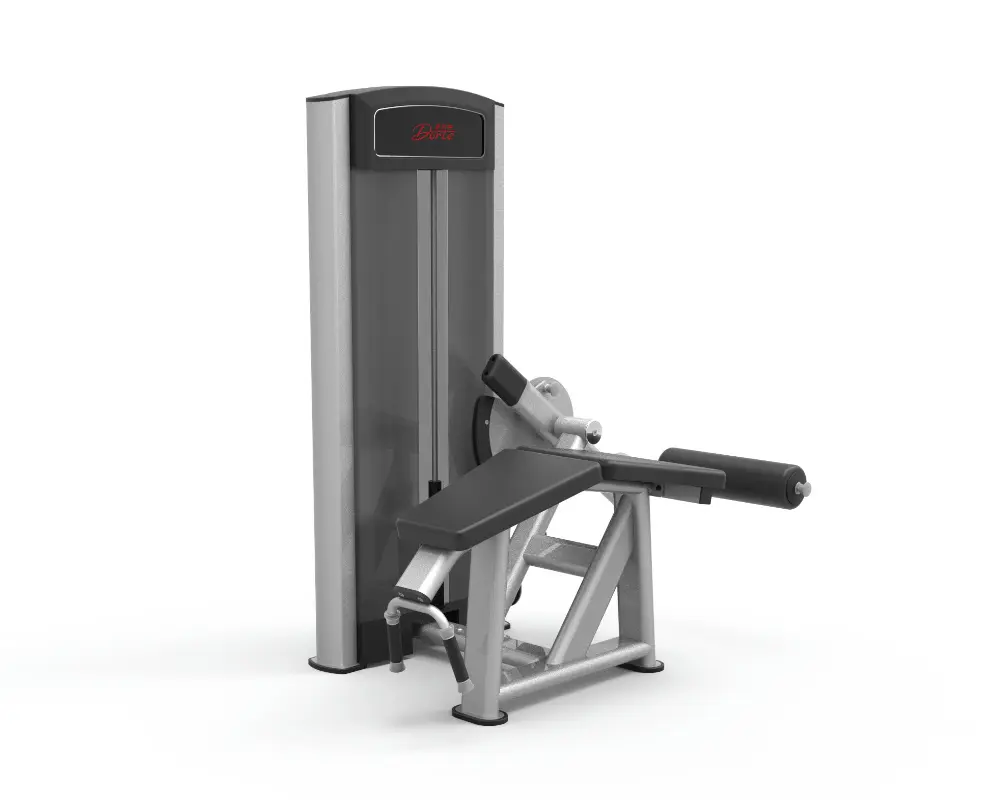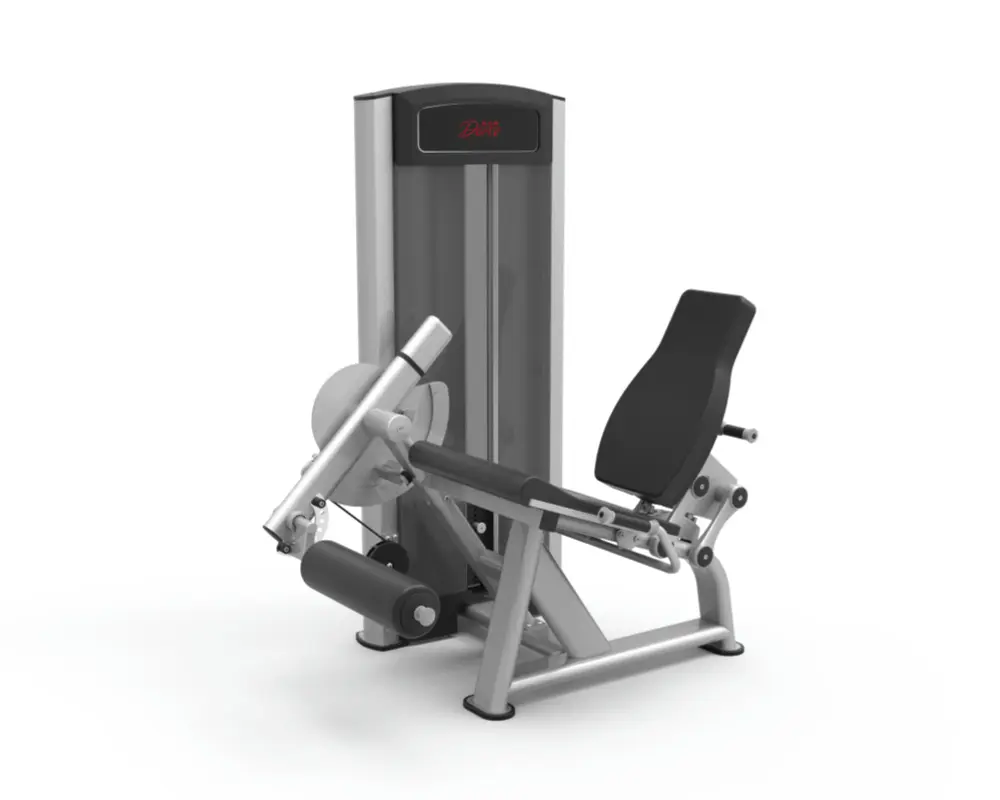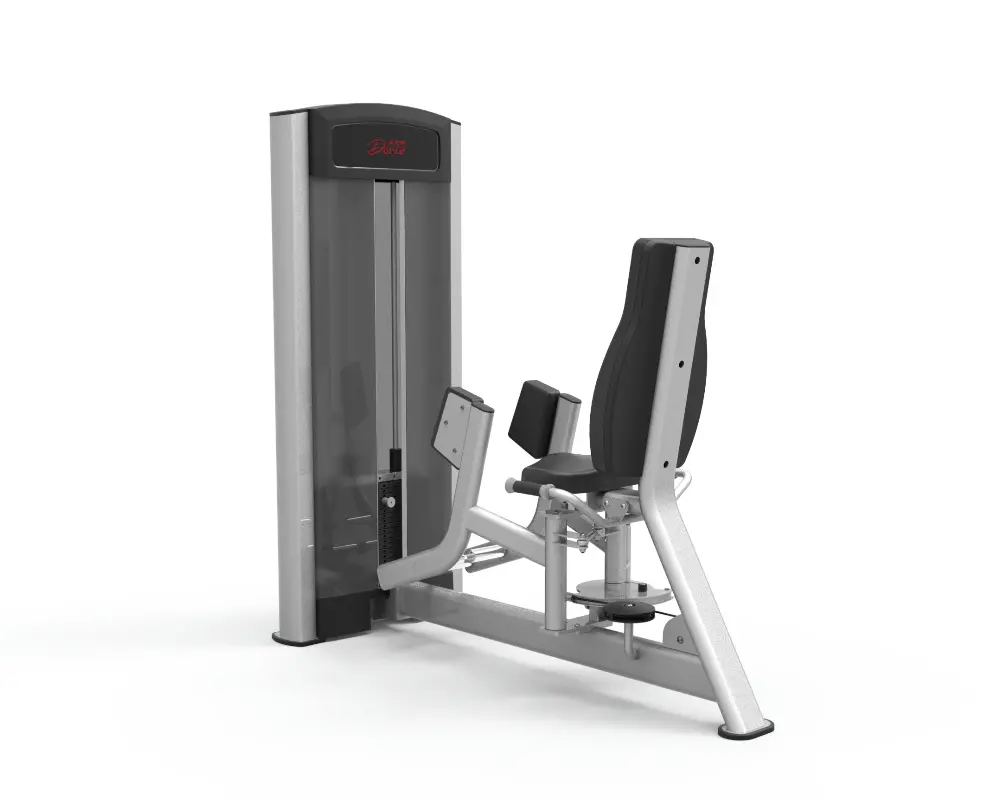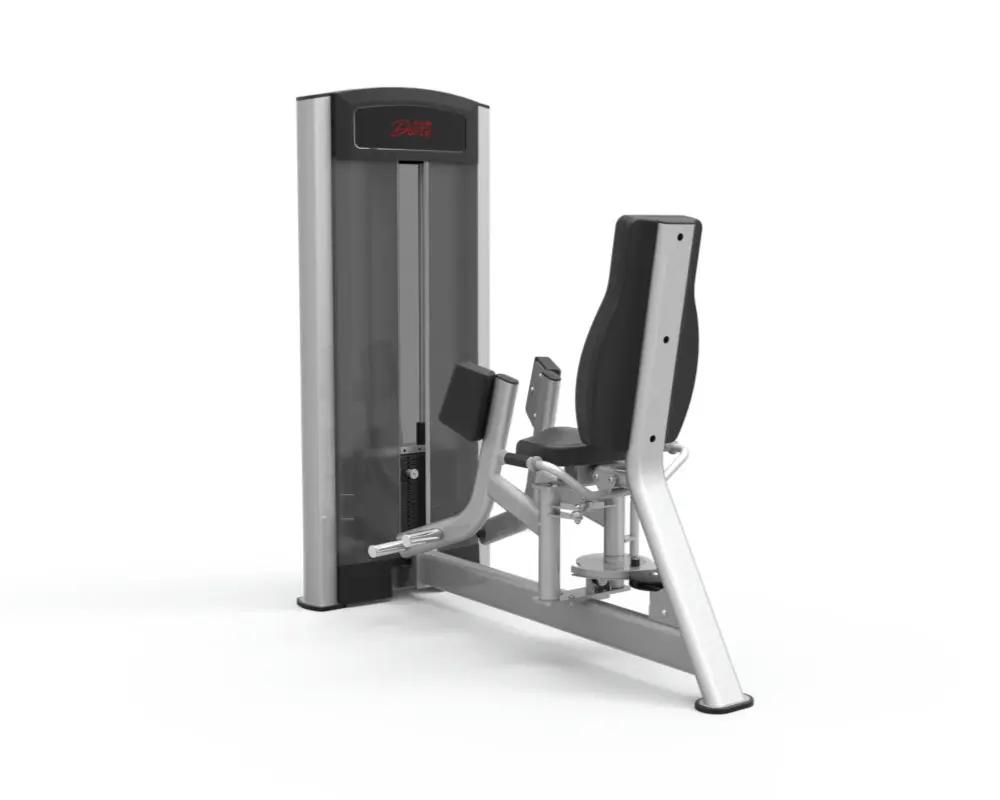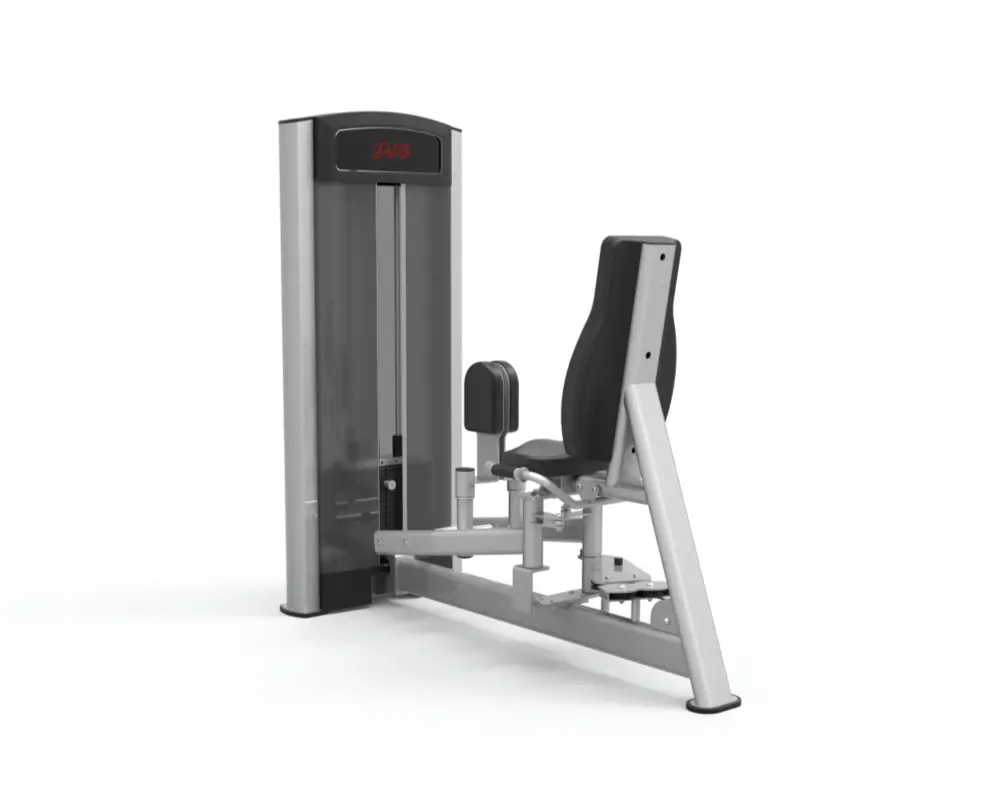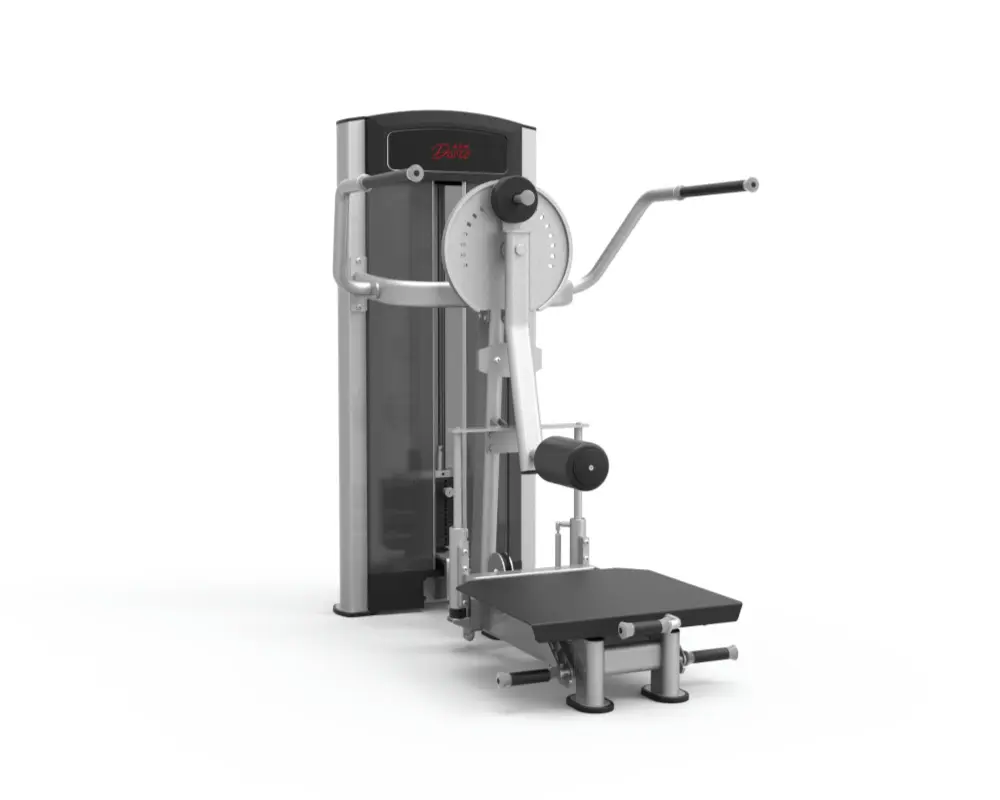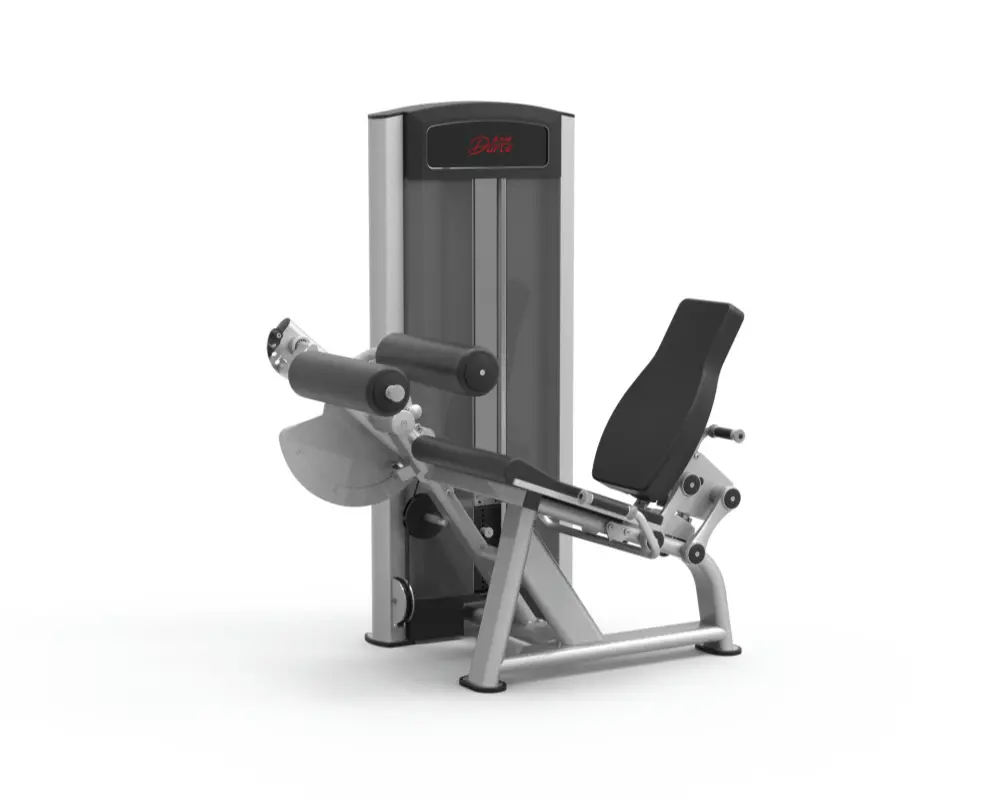

Product Model
| Specification | DL726 |
|---|---|
| Target muscles | Biceps femoris long head and short head, semitendinosus and semimembranosus - the hamstrings, with the short head of the biceps carrying a larger share from a seated hip position |
| Product size | 1458*1053*1660mm |
| Counterweight | 80KG |
| Net weight | 203KG |
| Maximum load capacity | 160KG |
| Wire rope tension | more than 1400KG |
| Main frame specification | Q235 steel, 120*75*3.0mm bread-type tube for the main frame; 120*50*3.0mm flat elliptic tube for secondary members |
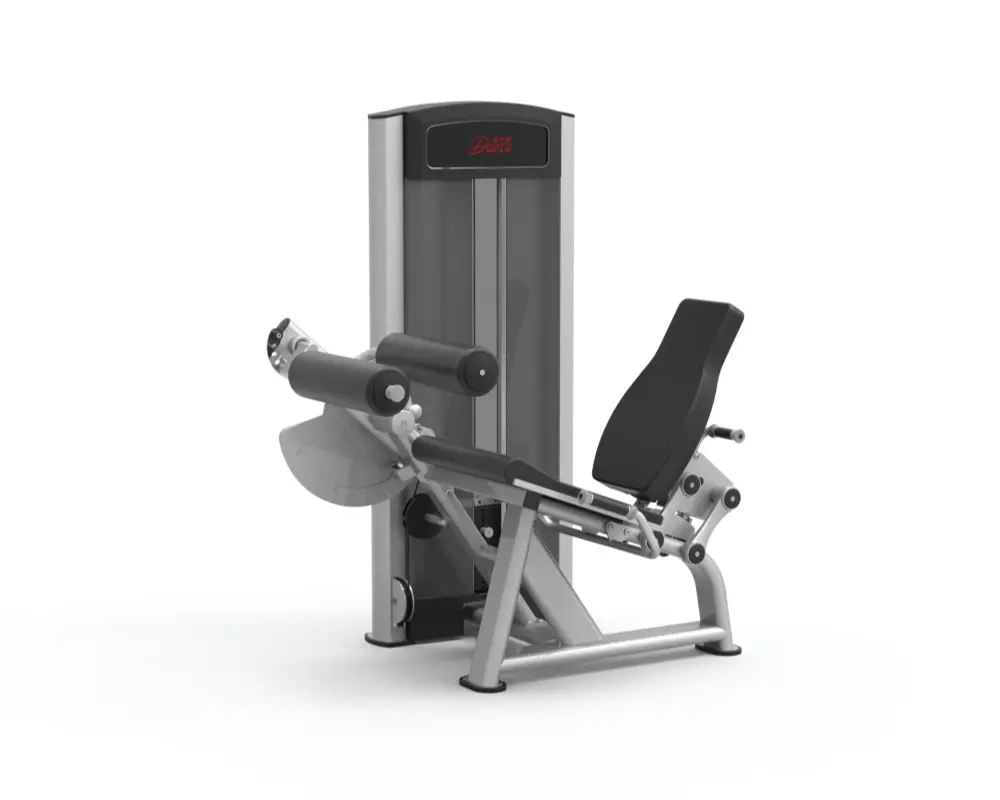
Seated Knee Flexion Station
The DL726 flexes the knee with the member sitting upright, the thigh pinned under a pad and the hip held at about ninety degrees of flexion. On a catalogue page that looks like the comfortable version of a prone leg curl, and it gets sold that way. The pad is not a comfort feature. It is the mechanism that decides how much of the work the hamstrings actually has to do.
Start with what the thigh pad removes. Hamstrings attach at the ischial tuberosity, so any movement of the pelvis or the hip changes their length and their leverage. On a prone curl the member's own body weight and the hand grips are the only thing holding the pelvis down, and an experienced member can shift the hip, tilt the pelvis and keep the bar moving when the muscle has had enough. On the DL726 the pad sits across the front of the thigh and the thigh cannot rise, which takes that option away. One machine makes cheating a technique problem; the other makes it a structural one. For a room with 200 members and nobody coaching, the difference is worth more than the stack size.
The ninety-degree hip angle has a second consequence and it is the one members feel every set. The long head of the biceps crosses both joints, so sitting down shortens it at the top before the first repetition and curling the knee shortens it at the bottom as well. Near full flexion both ends are short at once, the muscle cannot develop the same tension, and the last twenty degrees get disproportionately heavy. That is active insufficiency, and it is a physical property of a two-joint muscle rather than a fault in the machine. The prone station does not have it because the hip end stays long. Two machines, one joint, opposite ends of the range loaded hardest.
The third reason this station exists has nothing to do with bodybuilding. The semitendinosus tendon is the most common graft for anterior cruciate reconstruction, and after harvest the donor site sits near the ischial tuberosity and the inner knee. A seated curl keeps the front of the knee unloaded, keeps body weight off the chest, and lets a clinician set a hard stop well short of full flexion while the graft site settles. Rehabilitation rooms, private clinics and school sports programmes choose the seated station for that reason, not because it is easier. Whether a given member may use it, and through what range, is a clinical decision and not a specification one.
The load path is unremarkable and that is the point. The ankle pad sits roughly 0.29 m from the knee axis, so 80 kg is about 230 N·m of knee flexion torque, within a few percent of what the prone station produces at the same pin. Anyone expecting the seated version to feel dramatically lighter or heavier because of the geometry will be disappointed: the lever arms are nearly identical, and the difference between the two machines lives in muscle length, not in leverage.
Frame is Q235 steel: 120 × 75 × 3.0 mm bread-type tube for the main structure, 120 × 50 × 3.0 mm flat elliptic tube for the secondary members. The wire rope is rated above 1400 kg on a 203 kg machine rated for a 160 kg member, a margin of about seven to one. Seat pad, thigh pad and leg roller are one-piece foam under PU leather on aluminium parallelogram arms with torsion spring assist, so the pads stay parallel through their travel and each adjustment is one hand. The thigh pad is the part to inspect at service: it takes the reaction force of every set on the machine.
At 1458 × 1053 × 1660 mm the DL726 is 12 mm narrower and 39 mm deeper than the DL725 that usually sits beside it — a difference no floor plan will notice. What the two machines do not share is the set of members they suit, and that is the rest of this page.
What the Thigh Pad Changes
Three things happen when the thigh pad comes down, and none of them appear on a specification sheet. It fixes the pelvis, so the hamstrings cannot borrow length from a posterior pelvic tilt. It fixes the knee axis against the pivot, so the resistance arm stays the length the designer intended. And it gives the member a hard end position at the bottom of the movement, which is where a controlled eccentric starts. A seated leg curl without a working thigh pad is a different machine — the member rolls the pelvis back under load, the lumbar spine flexes, and the last third of the set is held up by the lower back rather than the hamstrings.
The ninety-degree hip angle also shifts which head of the biceps does the work. With the long head shortened at the hip, a larger share of the resistance lands on the short head, which crosses only the knee, and on semitendinosus and semimembranosus. That is not a flaw to be corrected; it is a reason to own both stations and to programme them apart. A workable split is seated for mid-range strength at eight to ten reps with a two-second pause at the contraction, prone for six to eight reps with a four-second return, because the prone position is the only one of the two that loads the muscle while it is long.
For a rehabilitation room the ordering of exercises matters more than the loading. The seated position allows a range stop short of full flexion, allows single-leg work without the member having to lie down, and keeps the front of the knee free of contact, which matters when the knee is the thing being rehabilitated. Set the range stop, set the pad, and let the member work inside it; the machine will hold that position set after set without a therapist standing over it, which is the actual constraint in a clinic that runs one therapist across six members.
The footprint is the least interesting number on this page, and it is worth stating precisely because it settles an argument. 203 kg over 1.54 m² is 132 kg/m². The DL725 beside it is 134 kg/m² and the DL724 extension is 158 kg/m², so the two leg curls differ by 1.5% on floor loading while the extension is 16% heavier on the slab. A building survey that separates the two curls onto different floors is separating them on a figure that does not exist in practice.
Placement follows the entry, not the footprint. A seated station is entered from the front, where the legs already are, so 0.7 m of clear floor in front of the ankle pad is enough and the stack end can go against a wall with a 100 mm service gap. The prone station needs about 0.9 m because the member has to step in and lie down. Placed back to back, the two curls need 2.928 m of run and project 1.053 m — the same envelope a single leg press needs, for both hip angles of the same joint.
Set-up is three adjustments and one of them is routinely wrong. Seat depth first, so the knee axis lines up with the pivot rather than sitting an inch behind it. Then the thigh pad height: across the middle of the thigh, never on the kneecap, and never so high that it rides the groin. Then the ankle roller, two to three centimetres above the joint with the foot at ninety degrees. A thigh pad set too low is the most common fault on a seated curl, because it looks secure and it leaves the kneecap taking the reaction force of every repetition.
One ordering note, because it decides one machine or two. If the room has space for a single leg curl, the prone station is the safer default: its position cannot be replicated by anything else in the room, while a seated curl can be approximated by a prone curl with a restricted range. If the room is a clinic, a school or a hotel with a large sedentary membership, reverse that. If the room has space for two, buy the pair on one purchase order — same platform, same colour approval, same spare-parts set, one installation sequence.
Fitness Equipment Factory
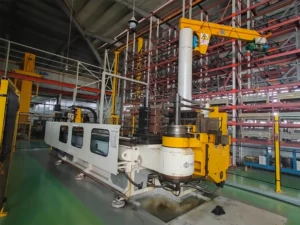
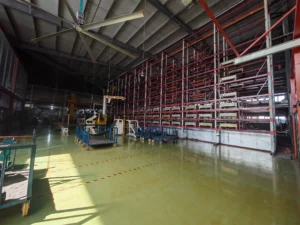
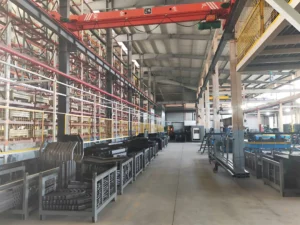
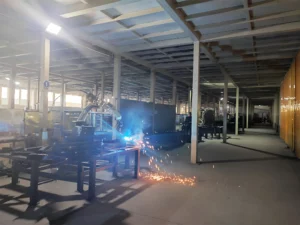
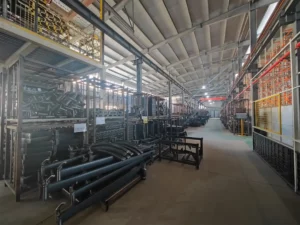
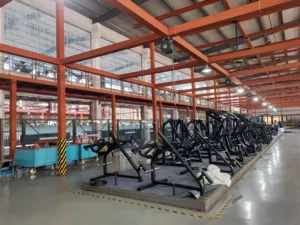
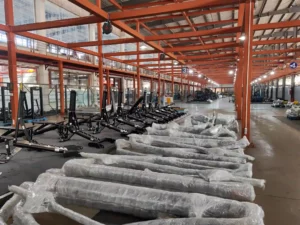
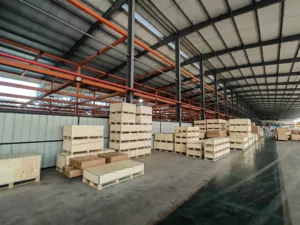
China Ledong offers a comprehensive range of high-quality manufacturing services, from welding and painting to assembly, packaging, and rigorous quality testing, to meet your specific needs. Our experienced team utilizes advanced technology to deliver customized solutions at competitive prices.
Contact now. Get the best solution!
Frequently Asked Questions
Commercial specification, installation and supply questions about the DL726.
Which muscles does the DL726 train?
Biceps femoris long head and short head, semitendinosus and semimembranosus, with the gastrocnemius assisting because it crosses the knee. The seated hip position shortens the long head at the top, so a larger share of the load lands on the short head and on the two medial muscles than it would on a prone curl. Glutes and calves stabilise the position but are not the target.
Seated or lying leg curl: which one should a commercial gym buy?
Decide by population and by whether anyone coaches the floor. A general commercial room with one leg curl should take the prone station, because nothing else trains the hamstrings at long muscle length. A clinic, a school programme, a hotel gym with a sedentary membership or any room where members set up alone should take the seated station, because the thigh pad prevents the load migrating to the lower back. A room with space for two takes both: they load opposite ends of the same range.
What does the thigh pad actually do?
It holds the pelvis and the femur so the hamstrings cannot borrow length from a posterior pelvic tilt, it keeps the knee axis on the pivot, and it gives the member a fixed bottom position for the eccentric. Without it, a heavy set ends with the pelvis rolling back and the lumbar spine flexing, which is the position most associated with a strained lower back on this movement.
Why does the last part of the curl feel so much heavier?
Because both ends of a two-joint muscle are short at once. Sitting at ninety degrees shortens the long head of the biceps at the hip; curling the knee to near full flexion shortens it again at the knee. A shortened muscle cannot produce the tension it produces at resting length, so the final twenty degrees cost more than the first sixty. It is active insufficiency, it is normal, and it is the reason this station is programmed for mid-range strength rather than for end-range loading.
Is 80 kg enough for a trained member?
A plate number is a mass; what the joint resists is a moment. The ankle pad sits roughly 0.29 m from the knee axis, so 80 kg is about 230 N·m of knee flexion torque, which is within a few percent of the prone station at the same pin. Most trained members cannot hold that through a two-second pause at the top for ten repetitions. A slower return and one limb at a time will get more out of 80 kg than another 20 kg on the pin.
Can it be used after ACL reconstruction or hamstring graft harvest?
That is the case the seated position suits best: the front of the knee stays unloaded, the member does not have to lie face down, and the range can be stopped well short of full flexion. Whether a specific member may use it, through what range and at what load, is a decision for the treating clinician. What the machine contributes is a position that holds a chosen range consistently from the first repetition of the first week to the last.
Can it be used one leg at a time?
Yes, and in a clinic it usually is. Working one side at a time puts the full pin under one limb, needs no change to the pad settings, and makes a left-right gap visible that a two-leg set conceals. The thigh pad makes single-leg work steadier than it is on a prone curl, because the working thigh cannot rotate out from under the load.
How much floor space and floor loading does it need?
1.458 m by 1.053 m of footprint, plus about 0.7 m of clear floor in front of the ankle pad for sitting down and standing up. Net weight 203 kg over 1.54 m² is 132 kg/m², so it sits on an upper floor as easily as the prone station does and more easily than the leg extension beside it.
What warranty and certification apply?
One year on the complete machine, with the thigh pad and its pivot covered as part of that because they carry the reaction force of every set. The unit is manufactured to meet or exceed EN ISO 20957 / EN 957, and we supply the declaration with the shipping documents. We do not hold our own certificate for re-badged units, so we state compliance rather than certification.
What is the minimum order and lead time?
10 units per order in total, with no per-model minimum — one DL726 plus nine other machines is a valid order, and pairing it with the DL725 keeps one colour approval and one spare-parts set. Regular production runs 25–35 days to Shenzhen port, excluding ocean freight; customized colour or branding runs 35–45 days. FOB Shenzhen, payment before shipment, and the packing list and installation sequence go out before the container leaves.