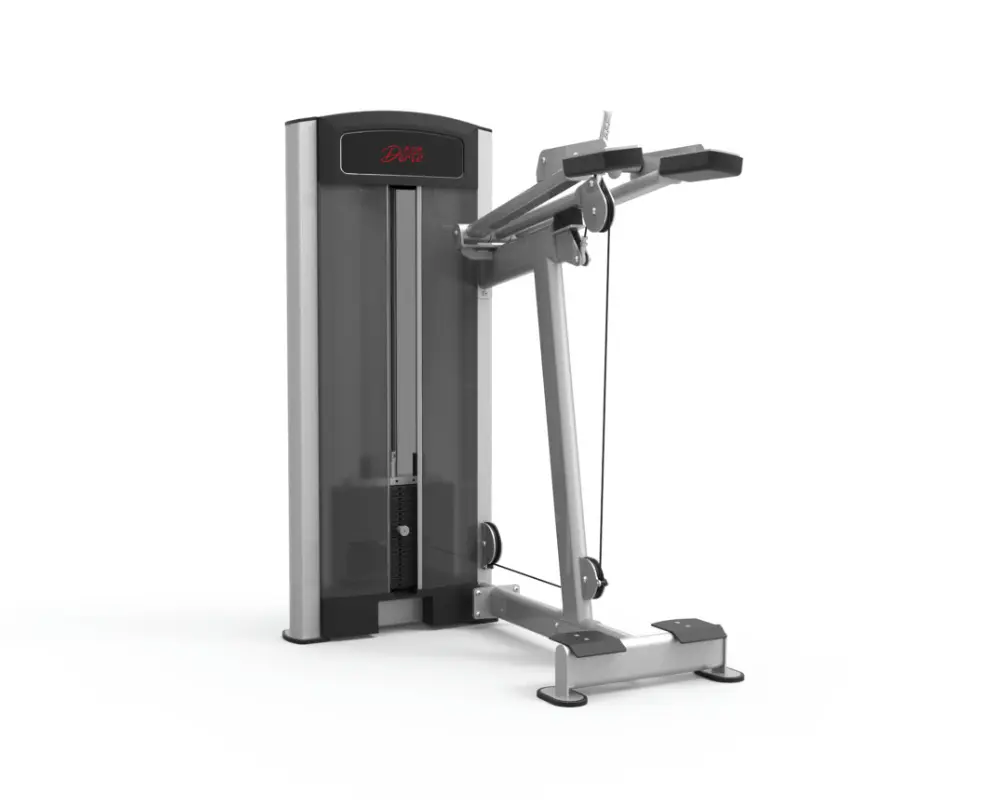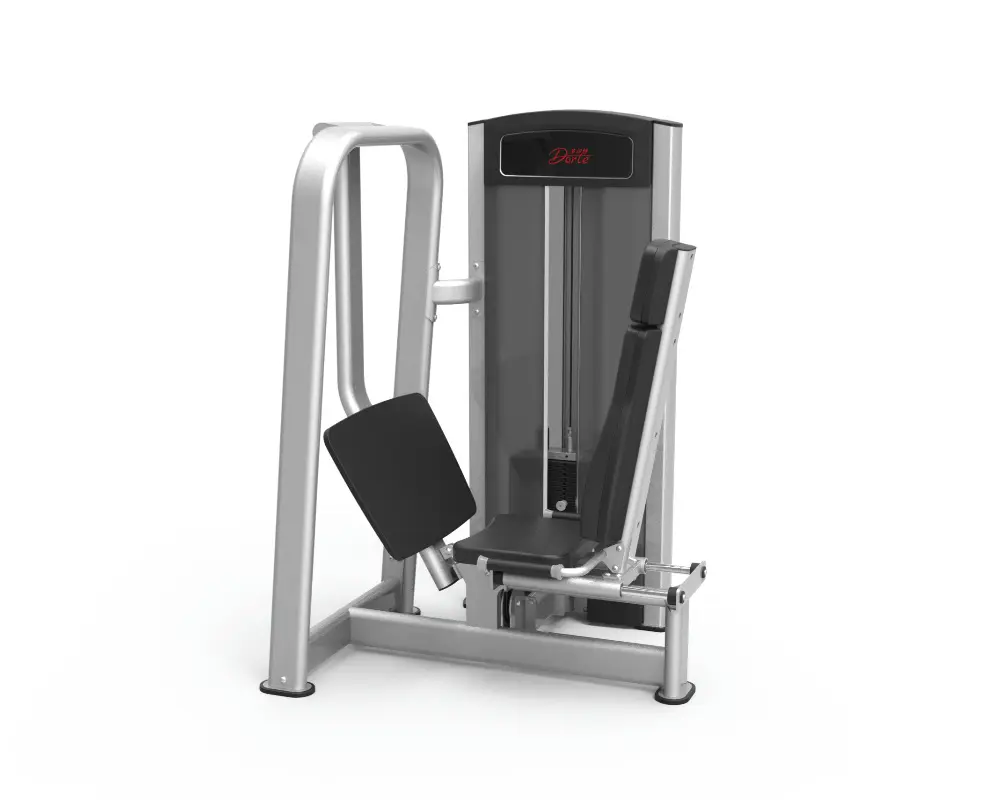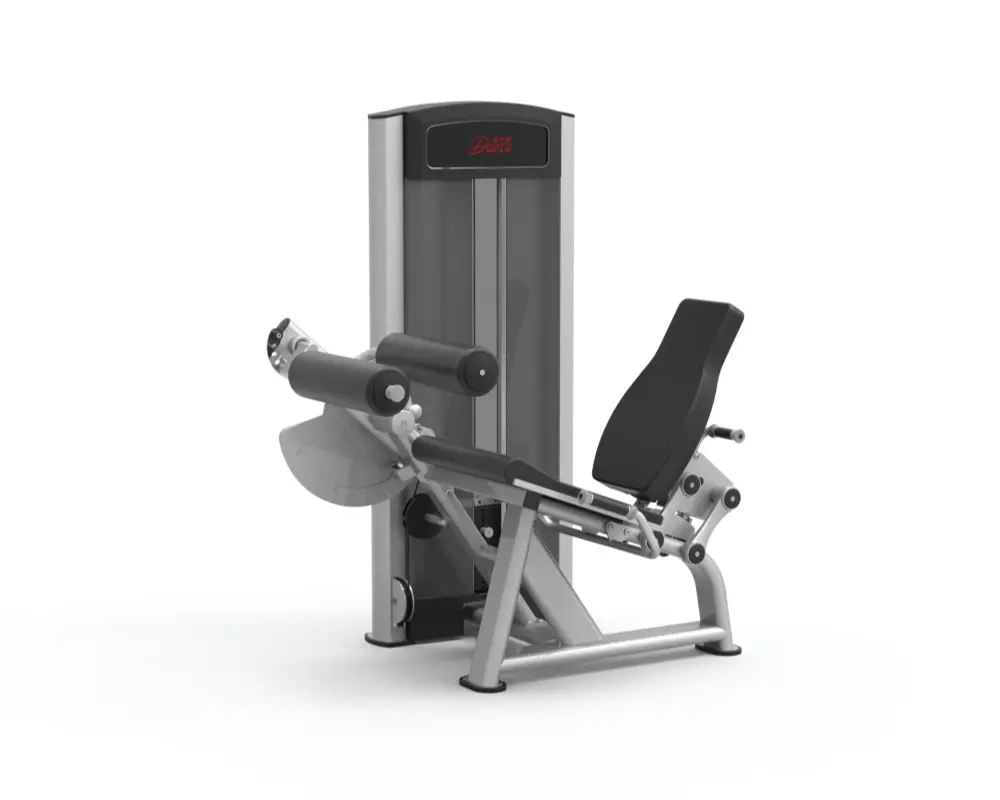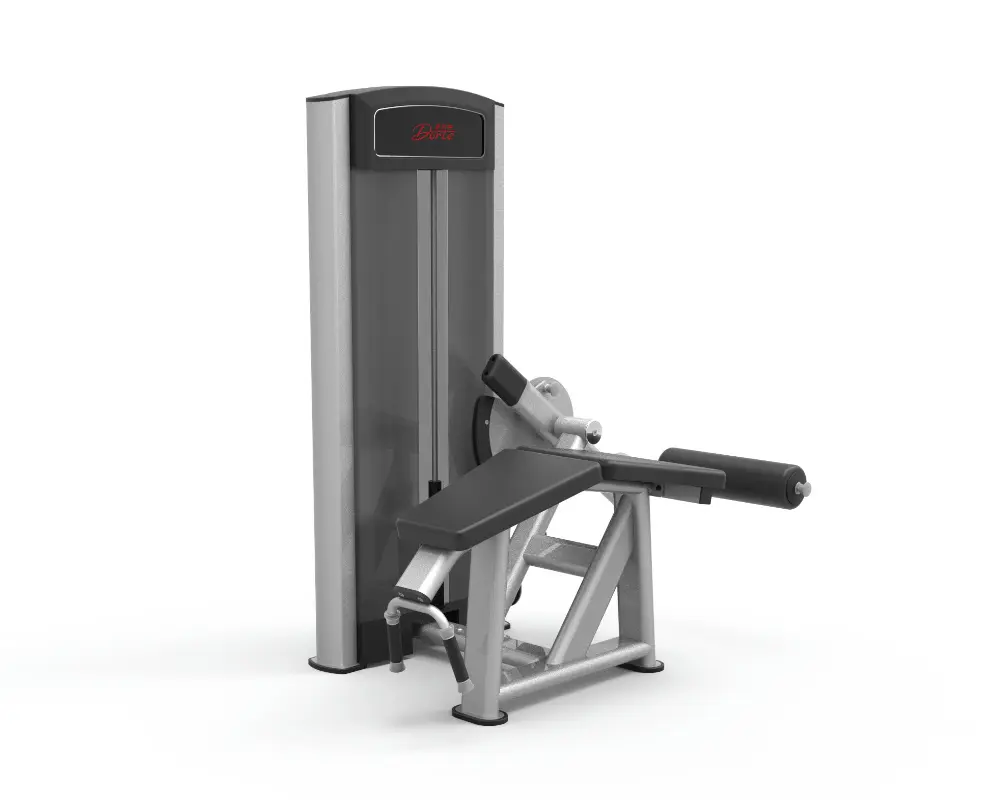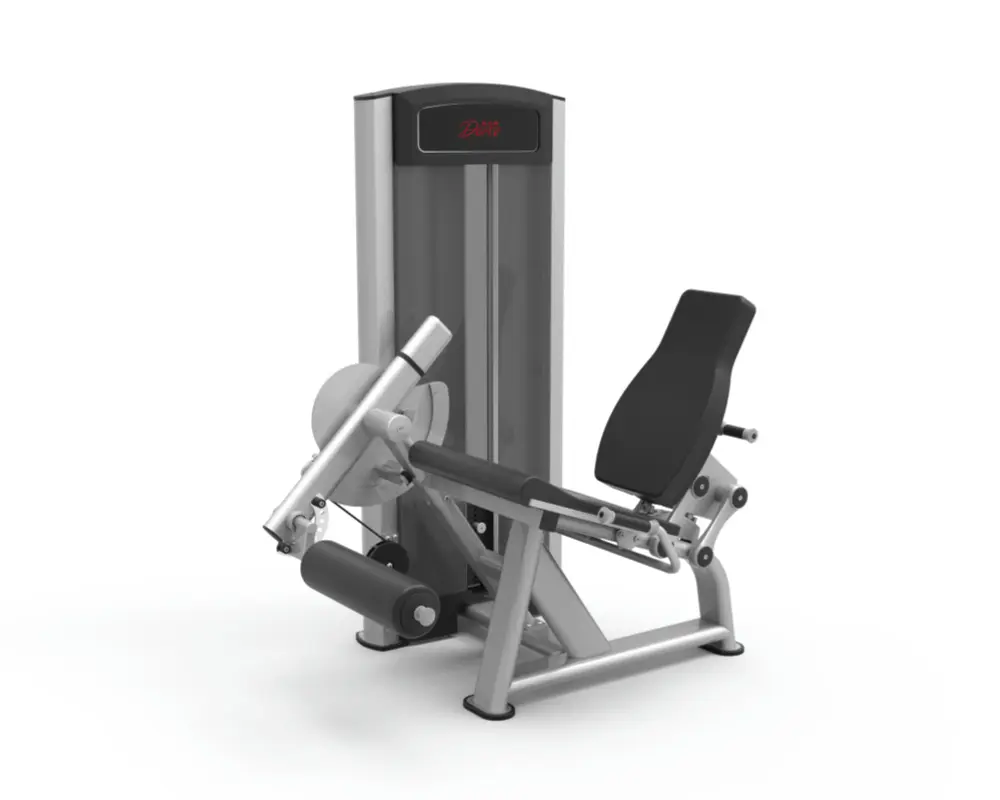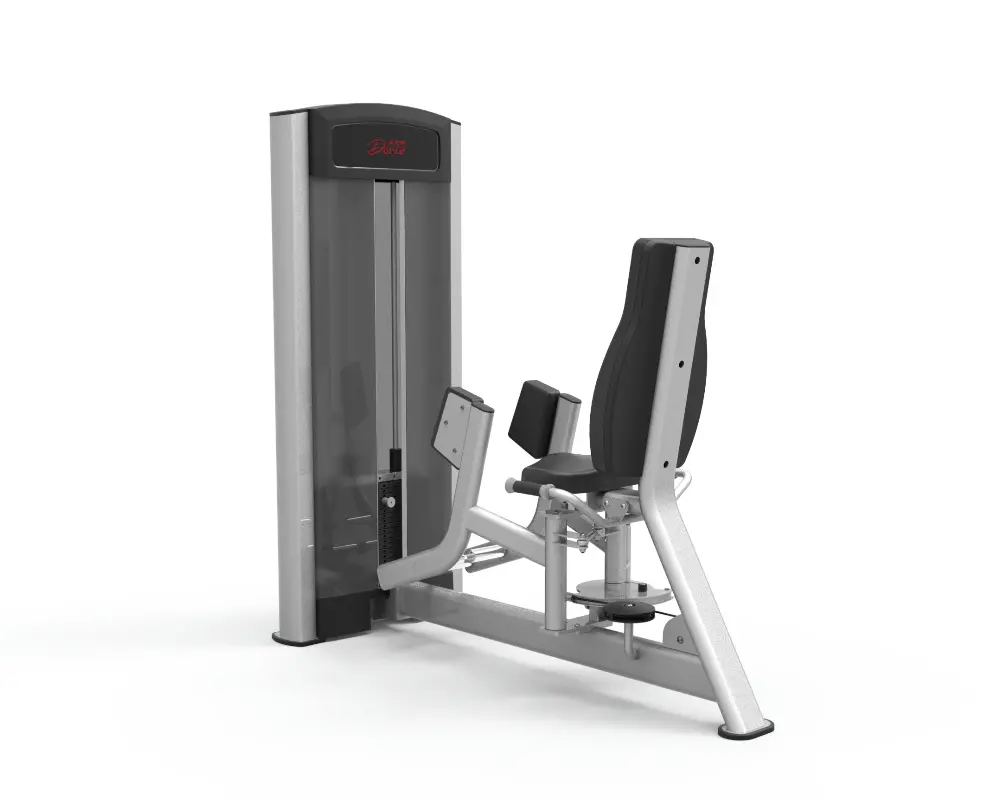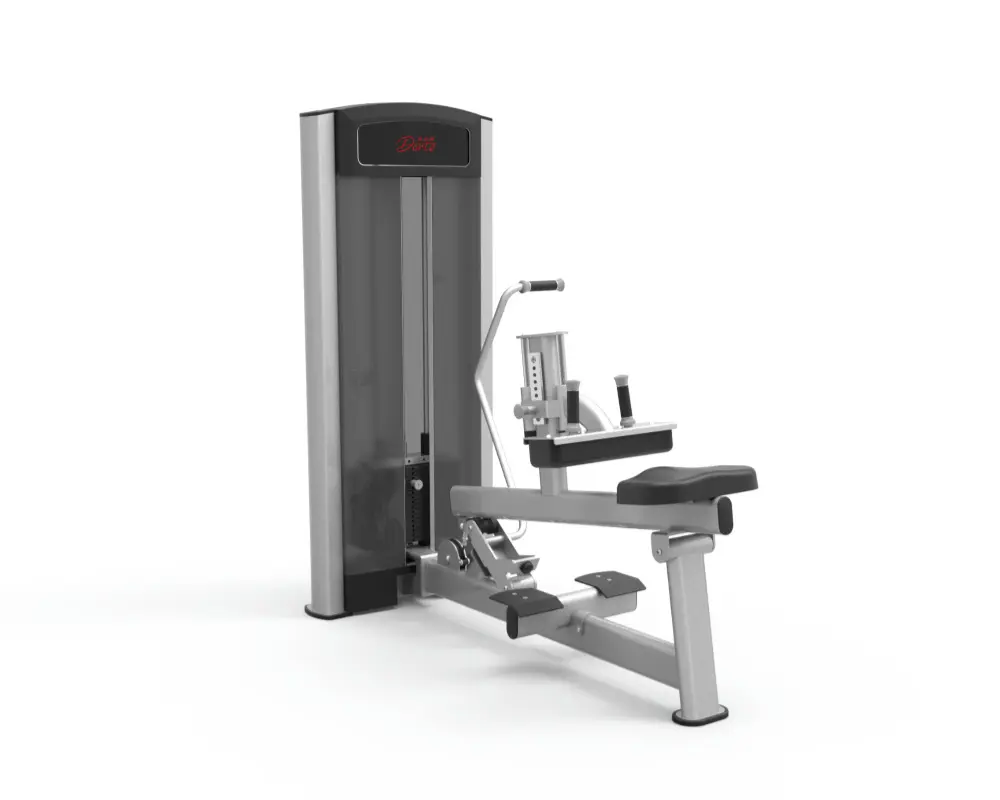

Product Model
| Specification | DL728 |
|---|---|
| Target muscles | Soleus as the primary target, with the gastrocnemius contributing little because a flexed knee shortens it at its upper attachment |
| Product size | 746*1618*1660mm |
| Counterweight | 80KG |
| Net weight | 190KG |
| Maximum load capacity | 160KG |
| Wire rope tension | more than 1400KG |
| Main frame specification | Q235 steel, 120*75*3.0mm bread-type tube for the main frame; 120*50*3.0mm flat elliptic tube for secondary members |
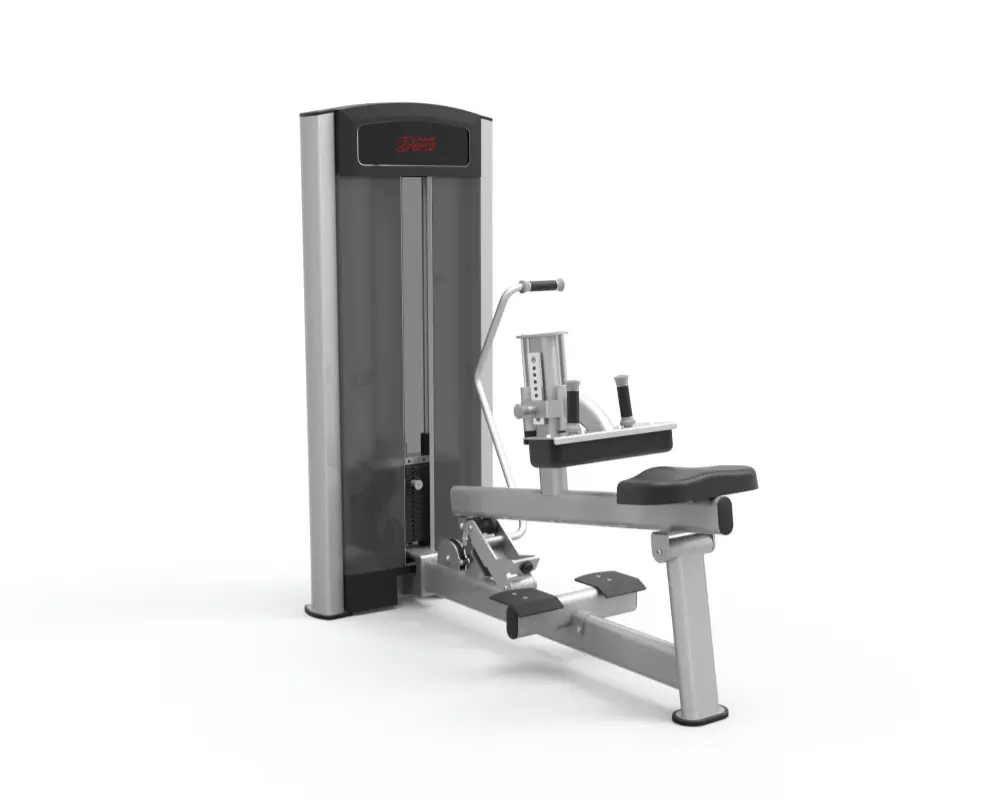
Seated Calf Station
The seated calf raise gets filed as the standing machine's cheaper sibling, and the two look similar enough on a catalogue page that the filing never gets corrected. The correction matters, because it decides which one a room buys first. Bend the knee to ninety degrees and the gastrocnemius can no longer develop its share of the load; what is left working is the soleus. That is not a limitation a designer worked around. It is the reason the station exists.
Gastrocnemius has two heads, both originating above the knee on the femoral condyles, so it crosses the knee and the ankle. Soleus originates below the knee on the tibia and fibula and crosses the ankle only. Flex the knee and the gastrocnemius is shortened at its upper end; take it through plantar flexion and it is shortened at the lower end too. Short at both ends means the length-tension curve has already fallen before the first repetition, so the muscle contributes little and the soleus carries the work. A seated calf raise is a soleus station by anatomy, not by marketing.
That explains the only number anybody asks about. The stack is 80 kg here and 100 kg on the standing station, and the difference is not a saving — it is the difference in what the two movements have to resist. Standing, the member's own body weight rides on the same lever as the pin; seated, the body weight sits on the seat and never reaches the calf. The two readings cannot be compared directly, and the smaller stack is not the weaker machine — it is the machine whose number excludes the member.
Soleus is a postural muscle and the histology says so. Published fibre counts put it at roughly 80% slow-twitch against nearer 50 to 60% for the gastrocnemius, with a spread between studies but a consistent direction. Its job is to hold the ankle steady against gravity for hours rather than to fire once explosively, and it supplies much of the force in the stance phase of running. Loading it with the same low-repetition work used for the gastrocnemius follows the wrong programme for the tissue: the soleus recovers quickly, tolerates volume, and answers to time under tension rather than to a heavy single.
The structure that fails first is not the muscle. The Achilles tendon carries roughly two and a half to three and a half times body weight in walking and six to eight times in running, on a tissue whose blood supply is poor in the mid-portion and poorer still at the insertion. Calf raises are a repeated end-range load on exactly that tissue, which is why Achilles problems cluster among people who do a great many of them rather than among people who do none. Quality here is measured at the ends of the range, not on the pin: pause a second at the top, control the return, and never let the heel drop and bounce.
At 746 × 1618 × 1660 mm the DL728 is narrow and deep, which is the opposite of what its area suggests when it is compared with the standing station. 1.207 m² against 1.225 m² is a difference of 1.5% — close enough for a plan drawing to treat them as the same object. Their shapes are not the same object at all.
Shape and Area Are Not the Same Number
The pad across the thigh is the adjustment that decides which exercise the member is doing. Set it over the distal thigh, five to eight centimetres above the knee, and the load runs through the ankle as intended. Set it too high, toward the hip, and the member can extend the knee against it: the station turns into a knee extension with a calf movement attached, and the soleus stops being the muscle that fails first. Set it too low, over the patella, and it slides under load. Check it on every new member, because the gap between the right position and the wrong one is the width of a hand.
Area and shape answer different questions, and this pair is the clearest case in the range. Seated, 746 mm of wall and 1618 mm of depth. Standing, 991 mm of wall and 1236 mm of depth. 1.207 m² against 1.225 m², a difference of 1.5%, with the two outlines 245 mm apart on one axis and 382 mm apart on the other. A layout that sorts stations by footprint will place them on the same wall in either order. A layout that sorts by the wall each one needs will put the seated station where the wall is short and the standing one where the floor is.
The 746 mm width is not a coincidence: it is the width the adductor and abductor stations are built on as well, at 746 × 1664 mm and 746 × 1618 mm, a depth spread of 46 mm across three machines. Three stations on one frame width is a wall, not a coincidence — 2.238 m of run before gaps, one colour, one spare-parts set, and a visual rhythm that a room reads as deliberate rather than assembled.
Programme it by time under tension. Fifteen to twenty-five repetitions, one second up, three seconds down, a full second at the top and no bounce at the bottom, is the working set; add load only after the tempo holds for all of it. Where the standing station takes eight to twelve heavy repetitions because the gastrocnemius is fast-twitch, this one takes volume because the soleus is not. A member who can hold twenty controlled repetitions here and only eight on the standing station has trained exactly what each station is for — the two numbers are not in conflict, they describe two tissues.
Placement is a seated entry, so it wants depth rather than width. The stack tower goes against the wall with a 100 mm service gap and the member sits facing away from it, which leaves about 0.7 m of clear floor at the foot end for stepping in. In a room where the wall run is the scarce dimension this is the calf station to take: it costs 245 mm less wall than the standing one and asks for 382 mm more floor, and floor is usually the resource a gym actually has.
Fitness Equipment Factory
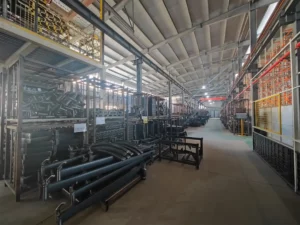
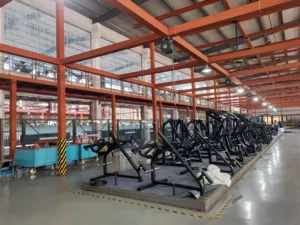
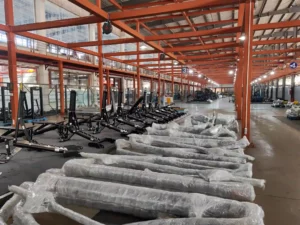
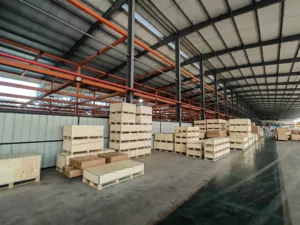
China Ledong offers a comprehensive range of high-quality manufacturing services, from welding and painting to assembly, packaging, and rigorous quality testing, to meet your specific needs. Our experienced team utilizes advanced technology to deliver customized solutions at competitive prices.
Contact now. Get the best solution!
Frequently Asked Questions
Commercial specification, installation and supply questions about the DL728.
Which muscles does the DL728 train?
Soleus primarily, because the flexed knee shortens the gastrocnemius at its upper attachment and reduces its contribution. The gastrocnemius still contracts and still contributes a little, the deep posterior compartment and the foot intrinsics stabilise, but the muscle that reaches failure on this station is the soleus. That is the reason to own it alongside a standing calf station rather than instead of one.
Seated or standing calf raise: which should a gym buy?
Standing, if there is room for only one. The gastrocnemius is the larger and faster muscle, it produces the visible shape of the calf, and the standing position is the only one that loads it while it is long. Seated comes second, for a room that already has the standing station or one that serves runners, older members, or anyone whose ankle work is about endurance. Two stations, one joint, different muscles — the same logic as buying both hip angles of a leg curl.
Why is the stack only 80 kg when the standing station has 100 kg?
Because the reading means different things on the two machines. Standing, the member's body weight rides on the same lever as the pin, so total resistance is the pin plus the member. Seated, the body weight rests on the seat and never reaches the calf. 80 kg seated is 80 kg against the soleus; 100 kg standing is 100 kg plus a body. The smaller number is not the lighter machine.
Where should the thigh pad sit?
Across the distal thigh, five to eight centimetres above the knee, with the knee at about ninety degrees. Higher than that and the member can drive the knee into the pad, which turns the movement into a knee extension and takes the load off the soleus. Lower and it rides the patella and slides under load. This is the one setting that changes which muscle the station trains, so it is worth marking on the pad.
Why do calf raises cause Achilles pain?
Because they load the tendon repeatedly at its end range, and the tendon's blood supply is poorest in the mid-portion and at the insertion. Walking loads the Achilles at roughly two and a half to three and a half times body weight and running at six to eight times, which is already substantial before a member adds a hundred repetitions of heel raises. The control that matters is tempo, not load: pause at the top, lower under control, no bouncing at the bottom. Anyone with established pain needs a clinician, not a programme adjustment.
How many repetitions should members do on it?
Fifteen to twenty-five, at a one-second lift and a three-second return with a full second at the top. The soleus is around 80% slow-twitch, recovers faster than the gastrocnemius and responds to time under tension, so volume and tempo do more than load. Add weight only after the tempo holds for the whole set at the current pin. Eight to twelve heavy repetitions belongs on the standing station, where the muscle is faster.
Can it be used one leg at a time?
Partly. The pad spans both thighs, so a single-leg set means the working leg lifts the pad while the other thigh follows it up without contributing — workable at moderate load, awkward at a heavy one. The honest answer is that unilateral calf work belongs on the standing machine, where each leg is loaded independently and balance rather than the pad is the limit. Here the better tool against asymmetry is range and tempo on both legs together.
How much floor space and floor loading does it need?
746 mm by 1618 mm of footprint, with about 0.7 m of clear floor at the foot end for sitting down and standing up and a 100 mm service gap at the stack end. Net weight 190 kg over 1.207 m² is 157 kg/m², lower than the standing station at 171 and well below the leg press at 208, so it is the easiest of the three to place on an upper floor.
What warranty and certification apply?
One year on the complete machine, with the thigh pad and its linkage covered as part of that because they carry the reaction force of every set. The unit is manufactured to meet or exceed EN ISO 20957 / EN 957, and we supply the declaration with the shipping documents. We do not hold our own certificate for re-badged units, so we state compliance rather than certification.
What is the minimum order and lead time?
10 units per order in total, with no per-model minimum, so one DL728 plus nine other machines is a valid order, and pairing it with the DL729 keeps one frame width, one colour approval and one spare-parts set. Regular production runs 25–35 days to Shenzhen port excluding ocean freight; custom colour or branding runs 35–45 days. FOB Shenzhen, payment before shipment, and the packing list and installation sequence go out before the container leaves.