
Product Model
| Specification | DL731 |
|---|---|
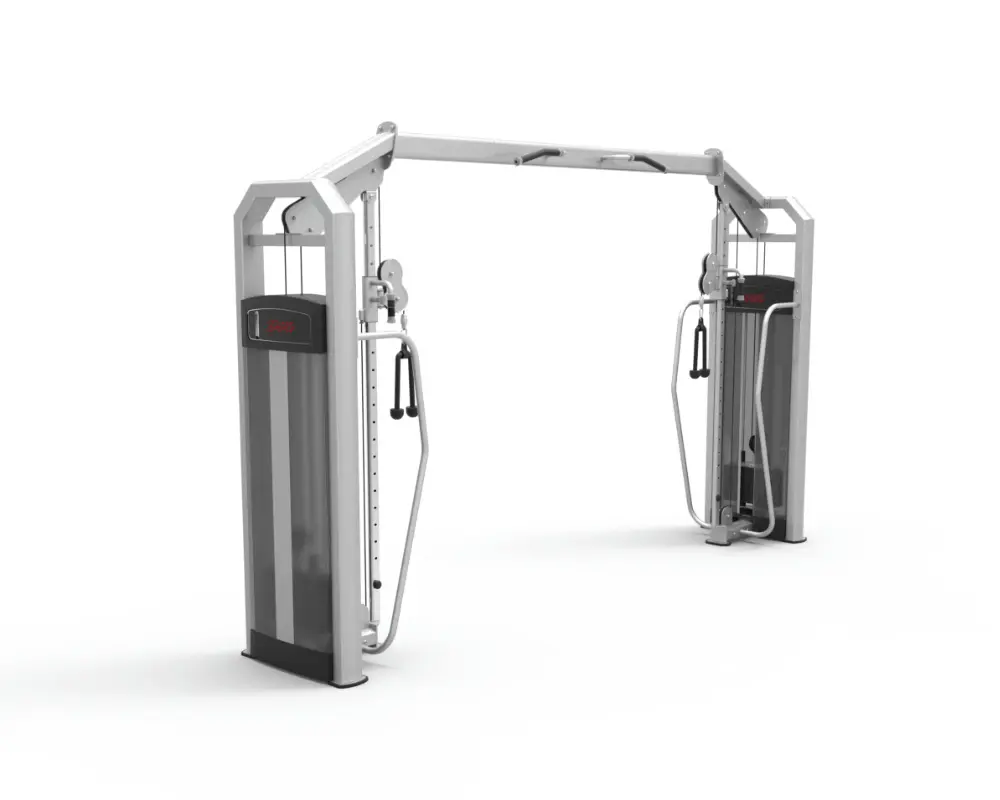
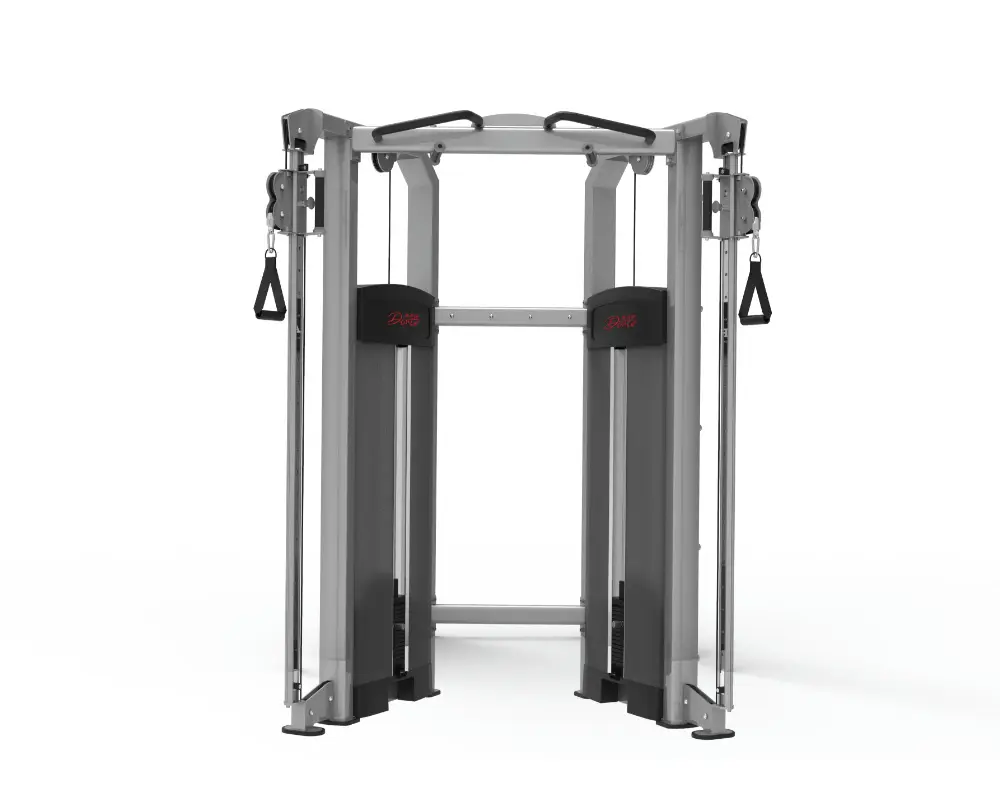
| Target muscles | Upper body, back, chest, shoulders, waist and abdomen, legs - any movement a cable can load, because the two adjustable pulleys are the station rather than a fixed cam |
| Product size | 1792*1074*2283mm |
| Counterweight | 140KG (two 70KG stacks) |
| Net weight | 355KG |
| Maximum load capacity | 160KG |
| Wire rope tension | more than 1400KG |
| Main frame specification | Q235 steel, 120*75*3.0mm bread-type tube for the main frame; 120*50*3.0mm flat elliptic tube for secondary members |
| Guide rail | aluminium alloy guide rail, both pulley carriages adjustable along the column |
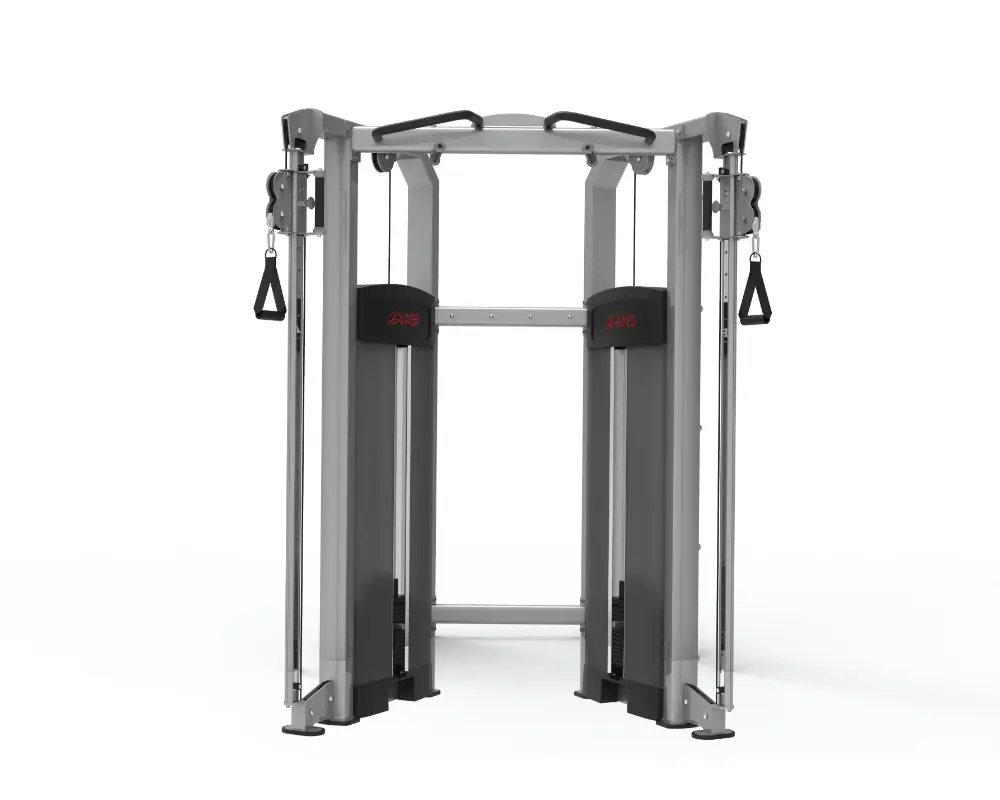
DL731 leaves the line with both 70 kg stacks tensioned and each pulley carriage run to the top of its rail, because a carriage that binds at the top reads as a heavy stack to everyone who uses it afterwards.
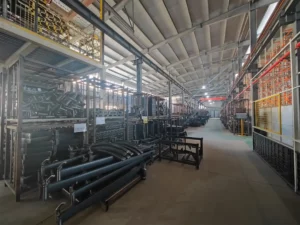
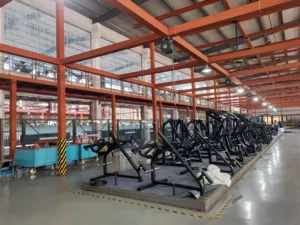
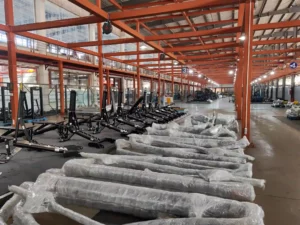
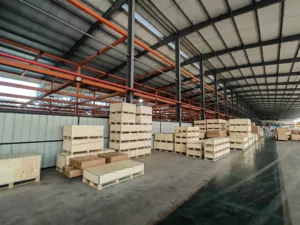
Ask for the DL731 carton size before you plan the door
What 2283 mm Actually Clears
A functional trainer is bought on capability and installed on clearance, and the two are never checked together. The specification lists eight numbers; seven describe what the machine can do, and one — 2283 mm — describes whether it enters the building at all. In a hotel or office fit-out that height is the number that decides the sale, and it rarely appears on the comparison sheet.
Finished soffit heights explain why. An office floor converted to a gym is commonly 2400 to 2600 mm to the underside of the slab, and ducts, sprinkler drops and light track take another 150 to 250 mm of that before anything is hung. A 2283 mm column clears a 2400 mm soffit by 117 mm. The long-span DL730 at 2416 mm does not clear it at all. Two machines with the same 140 kg stack, the same cable and the same frame standard end up in different buildings over 133 mm.
The frame is compact in plan as well, and that is the second thing the height buys. 1792 × 1074 mm is 1.925 m², against 2.934 m² for the long-span unit. In the 6 × 4 m room most business hotels can spare for fitness — 24 m², a window on one long side, a door on the other — one square metre of equipment footprint is one square metre of circulation, and circulation is what both the fire officer and the member judge the room by.
What the shorter span costs is worth stating plainly. At 1792 mm between the columns, a true crossover — hands passing behind the body at shoulder height — is not available to a member of average height; the useful ranges are front, side and split-stance. That is a real loss, and in the rooms we fit out it costs nothing, because a guest doing twenty minutes before a meeting does rows, presses, rotations and pressdowns, and has never once asked the front desk for a crossover.
The two stacks are the line on the spec sheet that most often gets read wrong. They do not make a two-person station, and that is worth settling before a buyer finds out on site. The DL731 is a single-station machine: one member trains at a time, standing inside the 1792 mm frame. The second stack exists so that the same member works one arm at a time—forty kilos left, forty right, no reset between sides—or holds two loads for a press and a pulldown and switches at chest height instead of crouching to the selector. What it buys a 24 m² room is a shorter occupancy per member, not two members at once. Two people training side by side need two independent stations with their own resistance; even a multi-station frame shares its stacks across stations—DLZ506 puts its six stations on two 60 kg stacks—so on one functional trainer the second person stands in the space the first member is already using, and waits.
So the choice between the two trainers is not good against better. A club with 400 m² and a dedicated cable zone takes the long span and the crossovers. A hotel, an office floor, a residential tower gym or a school fitness room takes the compact frame, usually against the wall that already carries the mirror. If the room is around 100 m², the 100 sqm equipment list shows where it lands in a full layout and what it displaces.
184 kg/m² on a Footprint Under 2 m²
355 kg over 1.925 m² is 184 kg/m². The long-span DL730 is 390 kg over 2.934 m², which is 133 kg/m². The compact trainer is 39% heavier per square metre than the big one, and among the cable and selectorized stations on this site only the seated leg press at 208 sits above it. Compact does not mean light on the slab; it means the same mass on less area.
The reason is that the mass is not spread, it is stacked. Two columns carry two 70 kg stacks, their shrouds, the carriages and the top cross member, and all of it arrives on four feet. Static load per foot is about 89 kg. When a 70 kg stack is released from the top of its travel the dynamic factor on the loaded side runs between two and three, so one foot can see 180 to 270 kg for a fraction of a second, thousands of times a year.
On grade that is noise. On a first-floor office slab rated 3.0 to 5.0 kN/m² it still fits, but set the frame over a beam or beside a column rather than mid-span, and if the floor is a raised access floor put a spreader plate under each foot: 89 kg resting on a 600 mm tile is fine, 270 kg landing on the corner of one is how tiles crack. That is a two-minute decision at layout and a structural survey if it is left until after installation.
Depth is where the compact frame spends its area. 1074 mm against 746 mm for the long-span unit, because the stack shrouds sit behind the columns rather than beside them. That extra depth is what lets a bench sit inside the frame for a cable press — the movement that turns a guest room into somewhere a member can train chest properly, without a spotter and without a rack taking up another two square metres.
Programme it as one circuit rather than one exercise, because a single frame is all the room has. Six movements, 24 minutes: cable row 3 × 12 at 30 kg a side, cable press 3 × 12 at 25 kg, split-stance pulldown 3 × 12 at 30 kg, cable rotation 3 × 10 at 15 kg, pressdown 3 × 15 at 20 kg, with 90 seconds between sets. Eighteen working sets on 1.9 m², and nobody waiting for the rack.
Wear sits in the carriages, not the cable. The cable is rated above 1400 kg against a 140 kg stack, a ten-to-one margin, so the sheave bearings and the carriage lock go first and both are service parts. In hotel use — 60 to 120 members a day, most of them moving a pulley — check cable tension and carriage play every quarter and expect sheave bearings at around three years. The frame stands on four levelling feet and does not need bolting on a level slab; on a raised floor, or where members work the top of the travel, anchor the base.
Frequently Asked Questions
Specification, installation, MOQ, lead time and certification questions about the DL731.
What is the DL731 and what does its Chinese name mean?
It is a compact functional trainer: two columns, two 70 kg stacks, two adjustable pulleys on one 1792 mm frame. The Chinese trade name translates literally as little flying bird, the smaller sibling of the long-span trainer that the same workshops call the big one. The name is about span, not about capability — both machines carry the same 140 kg of resistance and the same rated cable.
What weight stack does it use?
140 kg in total, as two independent 70 kg stacks, one inside each column. Maximum user load is 160 kg and the cable is rated above 1400 kg. Because the stacks are separate, the same member can set 25 kg for a press and 60 kg for a pulldown and move between the two without touching a pin, which a single-stack tower cannot do.
What ceiling height does the DL731 need?
2283 mm. On a 2400 mm finished soffit that leaves 117 mm, which is enough to stand the frame up and adjust the levelling feet, and not enough to hang a light directly above it. A machine that is 2416 mm tall needs 2500 mm or a change to the ceiling plan, so measure the lowest obstruction — duct, beam or sprinkler branch — not the nominal floor-to-floor figure.
Can two members use it at the same time?
No. It is a single-station machine, and two stacks do not make two stations. The member stands in the middle of a 1792 mm frame with a pulley on each side, so a second person has nowhere to stand outside the first person's working area. What the second stack removes is the pin change between sets, not the queue. If two members must train at once, that is a multi-station machine, not a functional trainer.
How is it different from the DL730 functional trainer?
Span and height, and both matter more than the muscle list. The DL730 is 3933 mm long, 2416 mm tall and weighs 390 kg over 2.934 m²; the DL731 is 1792 mm long, 2283 mm tall and weighs 355 kg over 1.925 m². The long frame allows a genuine crossover behind the body and takes a bigger room. The compact frame clears a 2400 mm soffit and leaves the circulation intact. Same stack, same cable, different building.
What steel frame does the DL731 use?
Main frame is Q235 steel, 120 × 75 × 3.0 mm bread-type tube; secondary members are 120 × 50 × 3.0 mm flat oval tube, with aluminium alloy guide rails for the two pulley carriages. That is the tube specification used across the commercial range, which is why the same frame is rated for unsupervised member use rather than home training.
Can a bench be used inside the frame?
Yes, and it is the reason the frame is 1074 mm deep rather than 746 mm. A flat or adjustable bench set inside the columns gives a cable press, a cable fly and a chest-supported row without occupying the floor outside. Allow about 900 mm of clear space in front of the frame for the member to step in and out with the bench in place.
How heavy is it, and does it need to be anchored?
355 kg net. It ships partly assembled; on site the work is positioning, hanging the carriages, loading both stacks and checking cable tension and pulley alignment before handover. It stands on four levelling feet and does not need bolting on a level slab. On a raised access floor, or in a room where members work the top of the pulley travel, anchor the base — a 2.3 m frame with two cables pulling sideways will walk on a floor that flexes.
What is the minimum order quantity?
Ten units per order in total, with no per-model minimum: you can take one DL731 and fill the rest of the order with other machines. Ten units is roughly the full equipment list of a small gym of about 50 m², so one order equips a floor rather than a single station.
What is the lead time?
Lead time runs from order confirmation to cargo ready at Shenzhen port, excluding ocean freight. In-stock models ship in 7–10 days, regular production takes 25–35 days, and customised or private-label orders need 35–45 days including sample approval. The sea leg is quoted separately so nothing is buried inside one vague date.
What warranty and certification come with it?
One year on the complete machine, covering manufacturing defects and functional failure under normal commercial use; pads, grips and cables are consumables, and misuse or unauthorised modification is excluded. It is manufactured to meet or exceed EN ISO 20957-1 and EN 957-2 for strength equipment. Our production partners run CE-certified lines, but as we sell under our own brand the certificate is not issued in our name, so we state compliance rather than claim a certificate we do not hold.