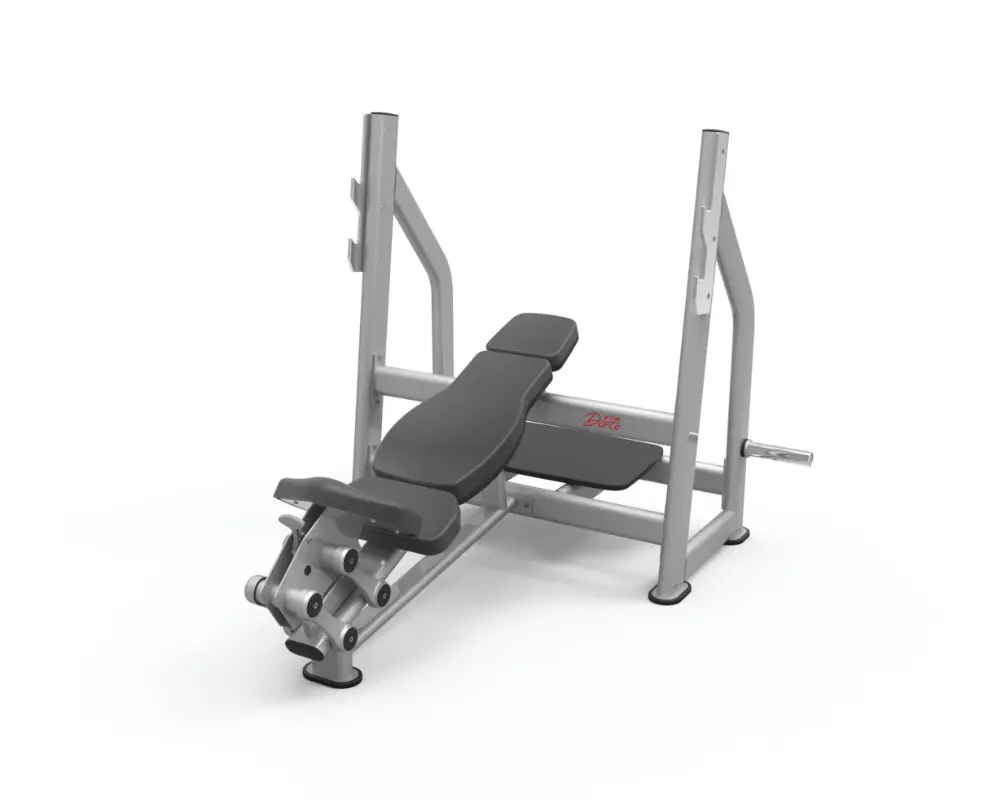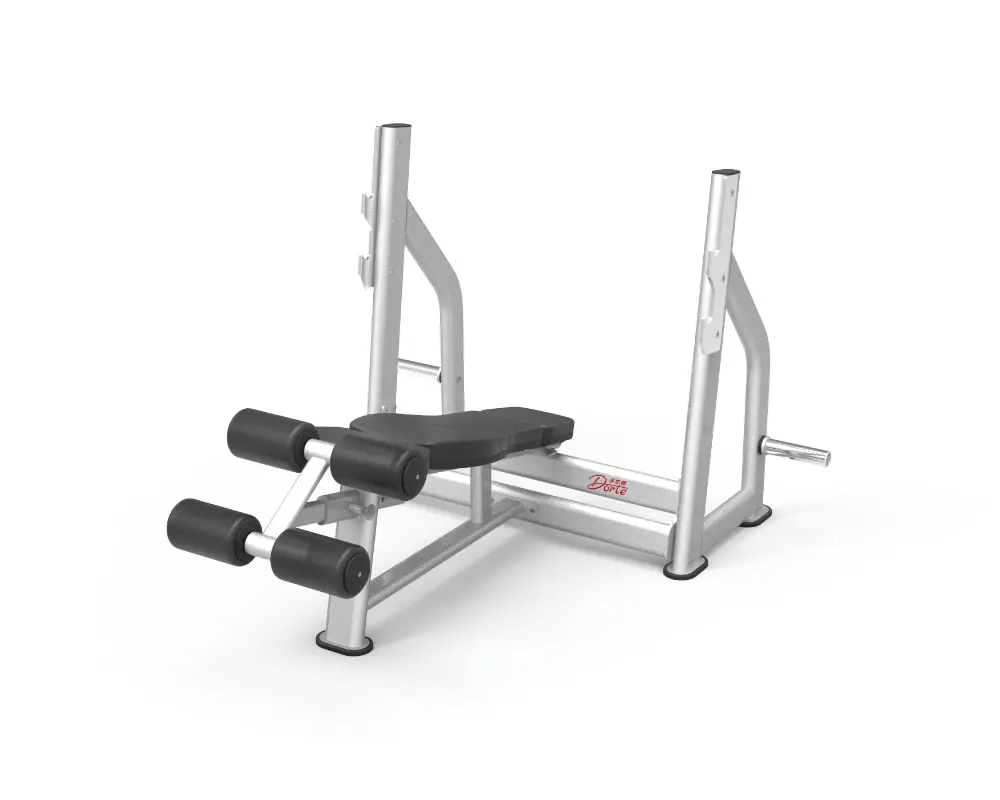

Product Model
| Specification | DL737 |
|---|---|
| Target muscles | Lower pectorals as the primary target, with the triceps finishing the lockout and the anterior deltoid taking less of the load than it does on a flat or an incline |
| Product size | 1616*1800*1167mm |
| Counterweight | None - uses a barbell and plates, supplied separately |
| Net weight | 95KG |
| Maximum load capacity | 160KG (user rating - the resistance is the bar, not the frame) |
| Main frame specification | Q235 steel, 120*50*3.0mm flat elliptic tube |
| Seat pad | One-piece foam with PU leather cover - the datasheet lists a seat pad only |
| Leg hold | Not listed on the current datasheet - confirm the type and adjustment range in writing before ordering |
| Resistance source | Not included - set by the barbell and plates available on site |
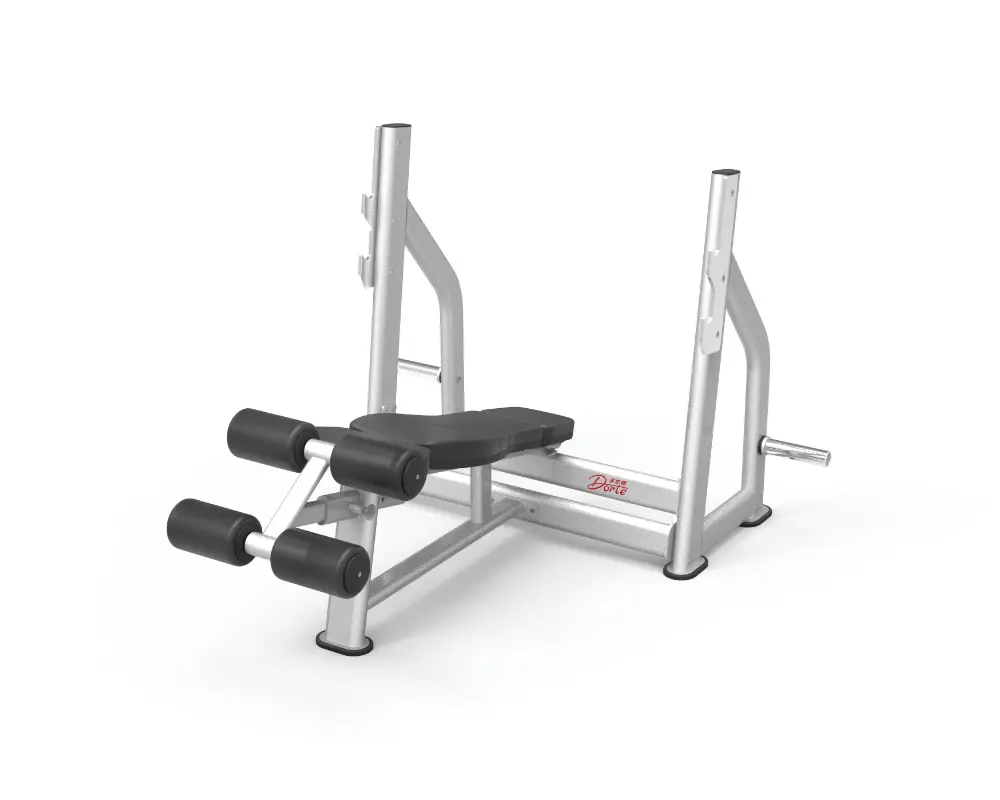
Every DL737 is squared on the assembly jig before the pads are fitted, with both diagonals checked and the leg hold cycled through its full adjustment by hand. A decline that is out of square sends the bar to one hook on the re-rack, and on a decline the member cannot see the hook to correct it.
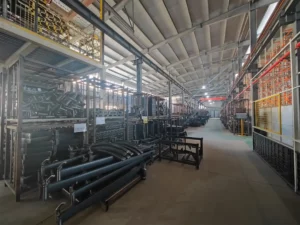
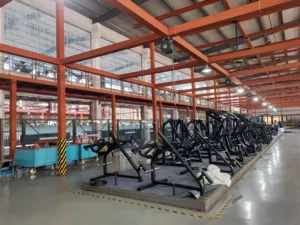
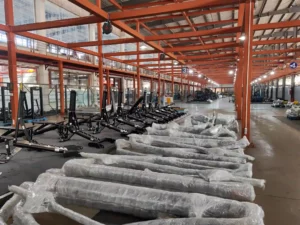
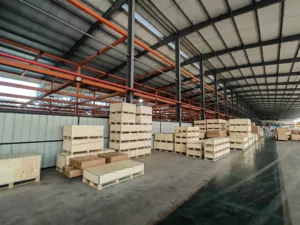
Ask for the DL737 leg hold type and the height of the lowest hook
Five Kilos Buys the Slope, Forty-Five Buys the Mechanism
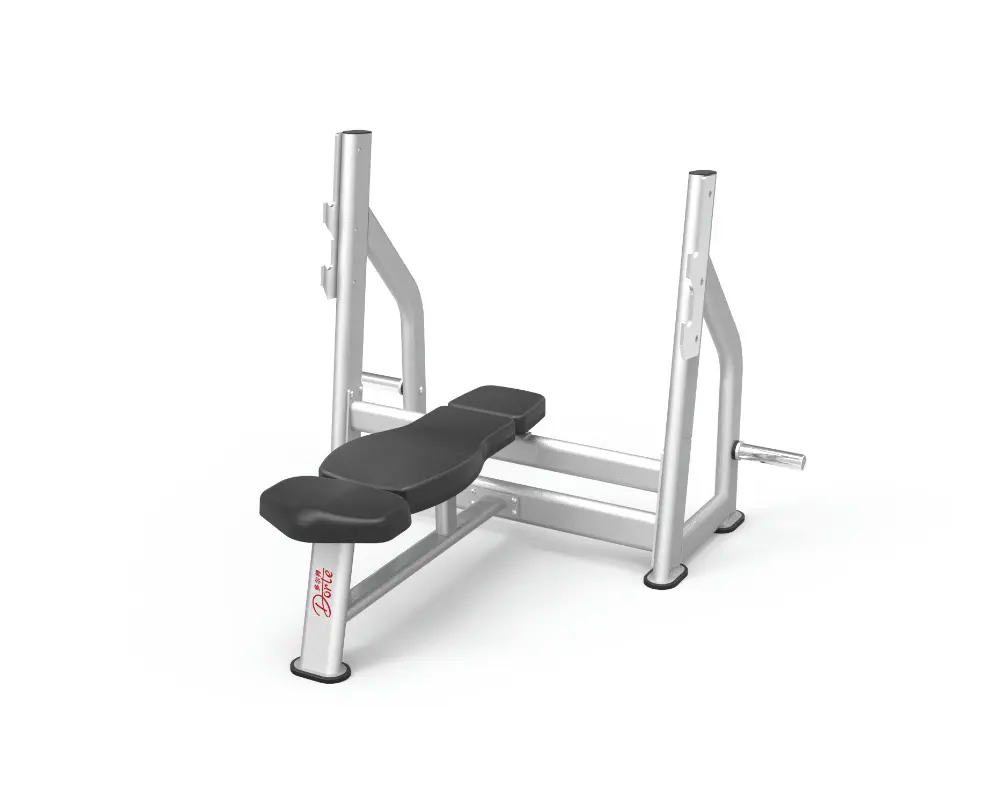
The series carries three barbell press benches and two of them are built on the same uprights. The DL736 flat bench is 1616 x 1523 x 1167 mm and the DL737 decline is 1616 x 1800 x 1167 mm — the same width to the millimetre, the same height to the millimetre, and the same Q235 flat elliptic tube at 120 x 50 x 3.0 mm.
The difference between them is 277 mm of depth and 5 kg of frame. Put the incline alongside and the numbers stop being comparable at all: the DL735 is 1612 x 1727 x 1344 mm and 135 kg, 45 kg heavier than the flat bench and 177 mm taller.
That split is the whole story of this bench. Forty-five kilograms bought the incline a parallelogram arm, a torsion spring and a second pad, because on an incline the angle has to move while the member stays put. Five kilograms bought the decline nothing but a slope — the bed tilts, the uprights do not change, and no mechanism is added. The decline is the smallest structural change in the range, and that is exactly why it deserves a closer read before it goes on a purchase order.
Nothing on the Datasheet Holds Your Legs
A decline is the only barbell press where the head sits below the hips. Lie on it and gravity has a component running along the bed toward the low end, which is the end the head is on. The only thing stopping the body from travelling that way is the leg hold.
Now read the seventh line of the specification: a seat pad, one-piece foam with a PU leather cover. There is no entry for a leg hold. That is not a fault unique to this bench — it is how this generation of datasheets is written across the range — but on a decline the hold is the one component the whole exercise depends on, and it is the one component the sheet leaves out.
The load through it is not small. On a 30 degree decline roughly half the body weight resolves along the bed, so an 80 kg member puts about 40 kg of steady pull through the hold for the length of a set. Steady pull rather than impact, which is why a hold that merely looks adequate is usually enough on the first rep and not on the tenth.
Compare that with the incline. On the DL735 the feet press down and forward into a foot plate, the member is upright, and the correction is active and visible. On a decline the hands are on the bar and the correction is passive. If the legs come off the hold, the body slides toward the head with nothing free to stop it. An incline that slips is a missed rep; a decline that slips is a fall.
277 mm Is Mostly the Hold Sticking Out
1800 mm against 1523 mm. On the floor that is 2.909 m² against 2.461 m², a difference of 0.448 m² or 18 per cent, and it is worth knowing where the extra goes, because none of it is structural beef.
The depth sits at two ends. At the foot end the leg hold and its adjustment travel reach out past the uprights, because the hold has to sit at a height that clears the shin and still catches behind the knee. At the head end the frame runs further past the low end of the bed, partly so the bar has somewhere to travel on the re-rack and partly so a head at the low end is not hanging in open air.
This matters twice in a real room. On the floor plan, a decline of this depth set against a wall needs its clearance added at the head end rather than the foot end, because that is where the bar comes down. On circulation it matters more: a member mounts a decline from the high end, the opposite end from where they mount a flat or an incline bench. Two benches set side by side off a common walkway will not work the same way once one of them is a decline.
For scale, 0.448 m² is about a 670 mm square. In a 100 m² free weights area it is noise. In a 40 m² studio where the free weights corner is 12 m², it is 3.7 per cent of that corner spent on the bench that gets used least.
Head Below the Heart Is the Real Constraint
None of the above is the reason declines sit idle in most commercial gyms. The reason is the position. With the head below the heart, venous return rises and intracranial and intraocular pressure rise with it. Members report head pressure, facial flushing and ringing in the ears, and most of them do not come back to the bench a third time.
That is not a defect in this frame. It is a property of the movement, and it happens on a decline from any supplier. What it changes is what the bench is for.
A decline is a capability bench, not a traffic bench. It completes a chest station to three angles and it lets a coach load the lower pectoral without going to a cable. It does not bring members in and it will not be the bench with a queue. Where the budget or the floor is tight, the order is flat first, incline second, decline last.
There are rooms where it is not optional: a powerlifting or bodybuilding floor, a personal training studio where the coach sets the set-up for a specific member, and any programme that treats the lower chest as a target rather than a by-product. In those rooms the hold and the hook height matter more than anything else on this page.
One note for the floor itself. High blood pressure, glaucoma and retinal conditions are reasons to keep the angle shallow or skip the bench, and a small notice at the head end is worth more than a line in the member induction, because the member who needs it is the one who will not read the induction.
Same 1167 mm, a Different Shoulder Position
The uprights are 1167 mm, identical to the flat bench, which means the hooks sit at the same absolute height they do on the DL736. That is where the similarity ends, because the shoulder does not sit in the same place.
On a flat bench the shoulder rests on a horizontal pad at a fixed height. On a decline the body travels down the slope toward the head end before the hold catches it, so the shoulder finishes the set-up lower than it does on the flat bench, on hooks that have not moved down with it. The gap between hook and shoulder grows, and the unrack becomes a longer reach.
So the number to ask for is not the frame height. It is the vertical distance from the bed at the shoulder end up to the lowest hook position. That single distance decides whether a 1.60 m member reaches the bar with the elbows bent, or has to lock the arms out before the bar clears the hook.
Test it in ninety seconds. Lie on the bench, set the legs under the hold and reach for the bar. If the elbows have to be straight to touch it, the hook is too high for that member and the set-up starts with a shrug instead of a press. If the elbows can stay at 90 degrees or more and still clear the hook, the height works.
There is a second consequence of lying head-down. On the re-rack the bar is above the eyeline and behind the arms, so the member finds the hook by feel rather than by sight. That makes the shape of the hook worth a look: an open J with a wide mouth lets the bar drop in on the first attempt, and a narrow hook turns every re-rack into a search.
What to Ask Before the Order Goes In
The leg hold. Fixed rollers, an adjustable clamp or a padded bar, and how many positions it carries. Ask for the setting that closes tightest and check the shin clearance at that setting, because the tightest position is the one a smaller member will be using.
The bed angle. Whether it is fixed or adjustable, and the actual number in degrees. The datasheet says the angle is designed and stops there, which is not an answer to give a coach.
The lowest hook height above the bed. Covered above, and it remains the one number that decides who can use the bench unassisted.
The clear width inside the uprights. A 2200 mm Olympic bar on a 1616 mm outer width leaves the plates close to the frame, and on a decline the bar path drifts toward the head end where the uprights are. Ask for the inside measurement, not the outside one, and remember collars take clearance the datasheet does not account for.
Safeties. A decline at working load with no spotter is the one press where a failed rep cannot be rolled off the torso. Catcher arms or a pair of spotter stands are worth pricing even when they are not on the list.
One supply note. The decline shares its upright section, its tube and its pad construction with the flat bench, so the two run on the same line and order together well. A single decline added later means a separate set-up and a wait for the next slot on that section.
The short version: if the floor already has a flat and an incline, a decline finishes the station and nothing else does that job. If it would be the only press bench in the budget, it is the wrong one to start with.
Frequently Asked Questions
Bed angle, leg hold, hook height and layout questions about the DL737.
What decline angle is the DL737 set at?
The current datasheet lists a designed incline angle without a number. Before ordering, ask for the angle in degrees and whether the bed is fixed or adjustable. The answer decides whether the bench suits a coach setting it for a specific member or only a general lower-chest set.
Does the price include a barbell and plates?
No. The DL737 is a plate-loaded frame and the counterweight line reads barbell and plates supplied separately. Budget the bar and the plates as their own line, and check the bar length against the clear width inside the uprights.
How is the member held in place on a decline?
By a leg hold at the foot end, which carries the share of body weight that resolves along the bed. The datasheet does not list the hold, so its type and adjustment range need confirming in writing. On any decline, from any supplier, that is the component I would ask about first.
Why is it only 5 kg heavier than the flat bench when the incline is 45 kg heavier?
Because the decline adds a slope and the incline adds a mechanism. The flat bench is 90 kg, the decline is 95 kg and the incline is 135 kg, all on the same tube. The 45 kg on the incline is a parallelogram arm, a torsion spring and a second pad; the 5 kg on the decline is the bed angle and the hold.
What does the 160KG figure measure?
It is a user rating, not a bar rating. The resistance on this bench comes from the barbell and the frame carries the member. If you plan to run heavy singles, ask separately for the rated load per hook.
Can it be used for flat or incline pressing?
No. The bed is built at a decline and does not adjust to horizontal. The flat bench in the same series is the DL736 and the incline is the DL735, both on the same 1167 mm upright height and the same tube.
How much floor space does it need?
The frame is 1616 x 1800 mm, or 2.909 m², which is 277 mm deeper and 0.448 m² more than the flat bench. Add clearance at the head end for the bar and at the foot end for mounting, because a member gets on from the high end.
Is a spotter required?
On a decline a failed rep cannot be rolled off the torso the way it can on a flat bench, and the member is head-down. I would treat a spotter or a set of catcher arms as part of the equipment rather than as an option.
Can members with high blood pressure use a decline?
Head-down positions raise intracranial and intraocular pressure, so high blood pressure, glaucoma and retinal conditions are reasons to keep the angle shallow or use a flat bench instead. Put a notice at the head end rather than relying on the induction.
What barbell length suits a 1616 mm frame?
A 2200 mm Olympic bar is the standard and it fits, with the plates sitting close to the uprights. Check the inside width before committing to a longer specialty bar, and keep collars in mind — they take up clearance the datasheet does not account for.