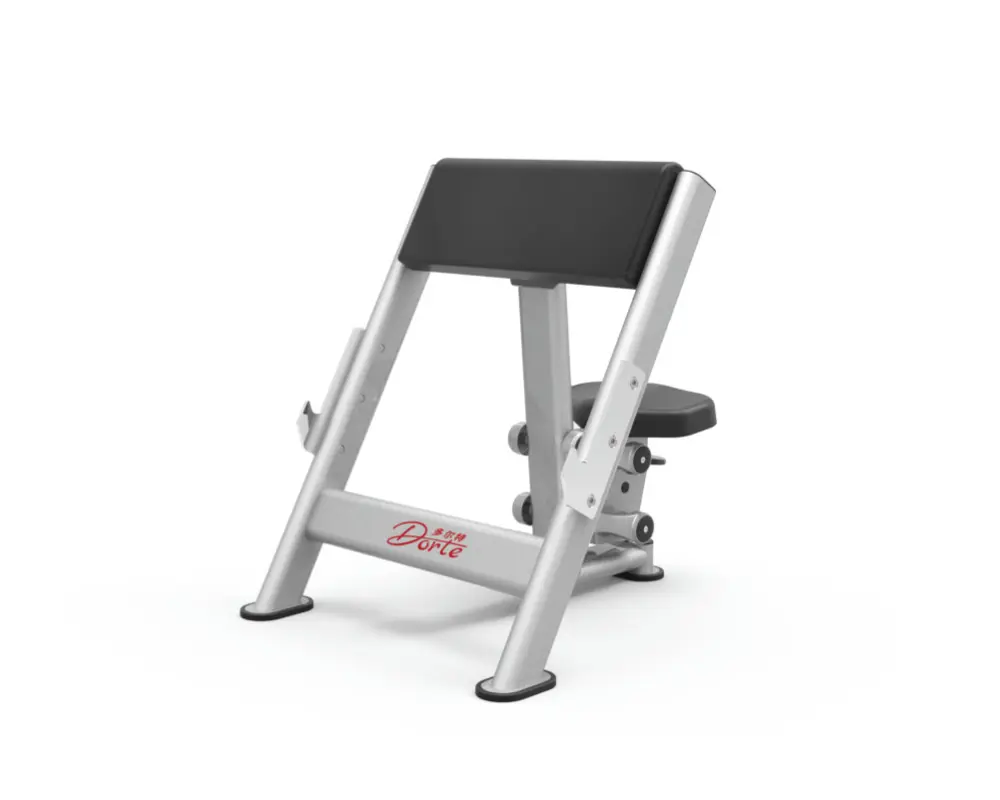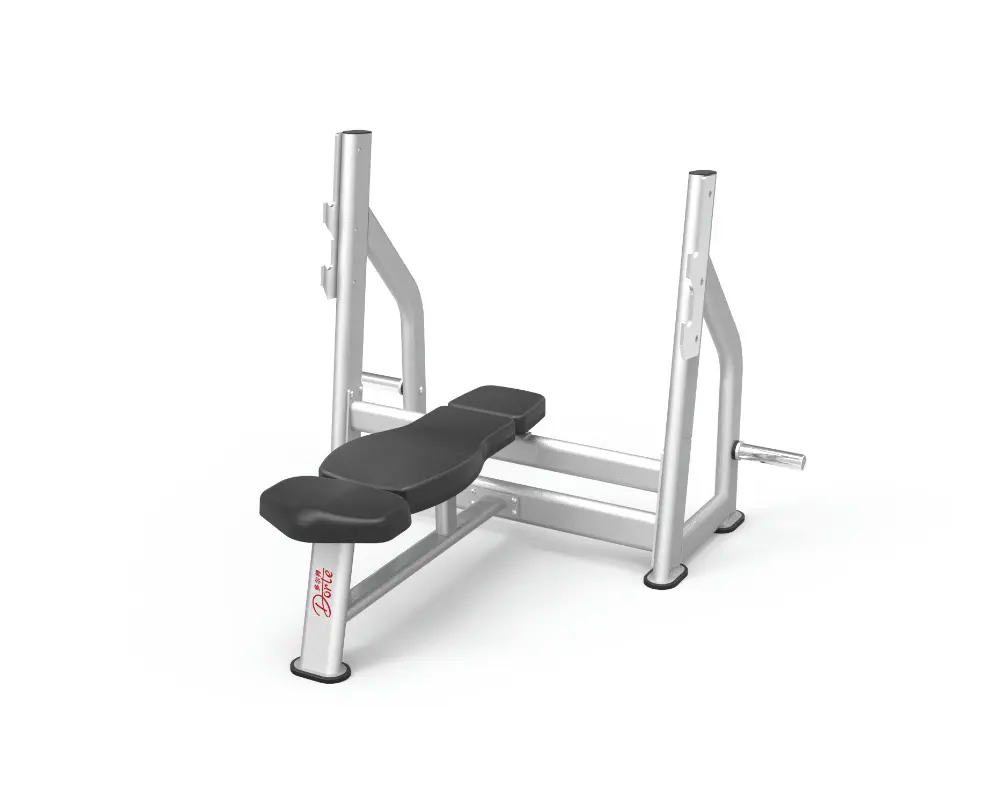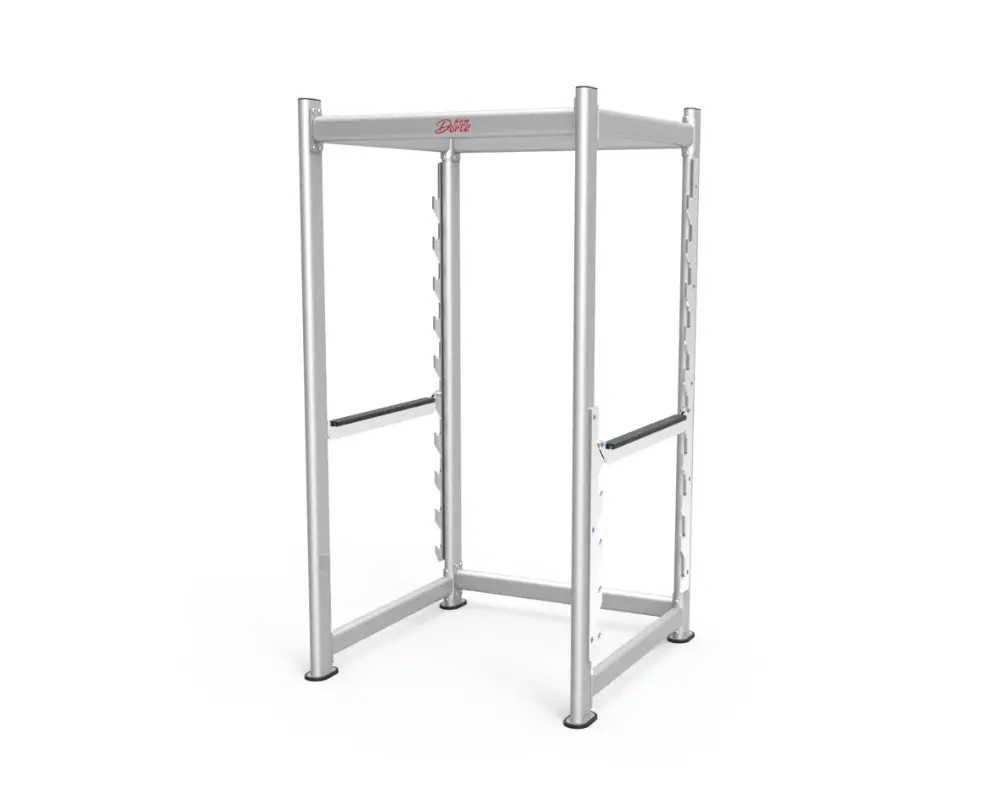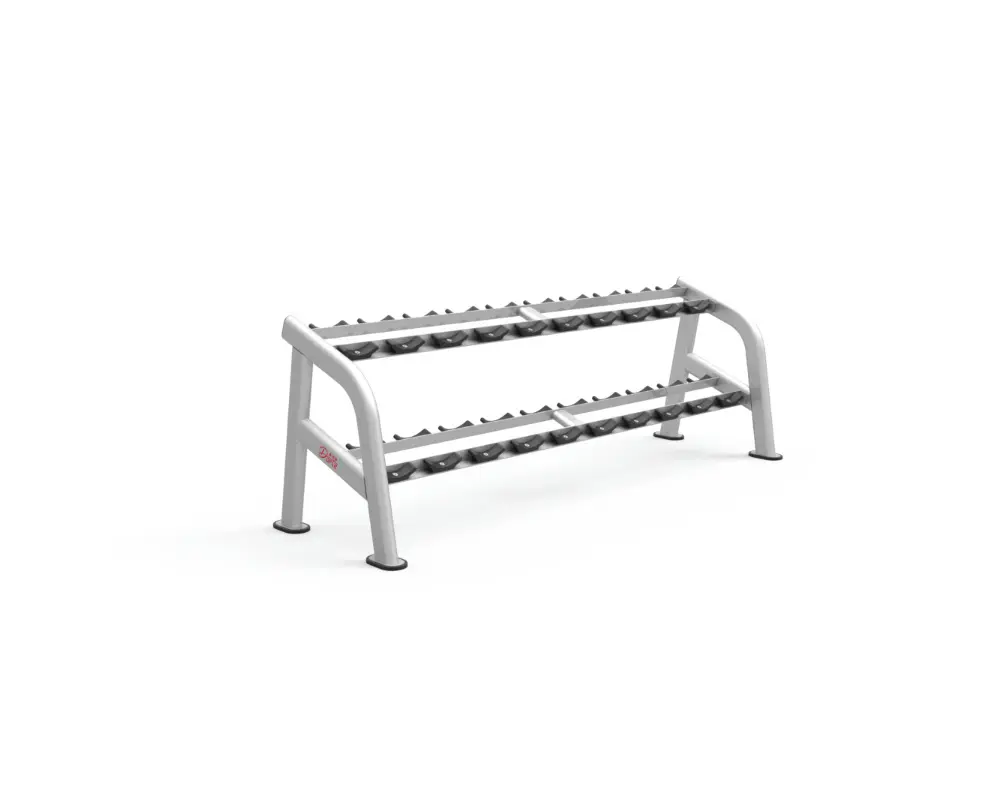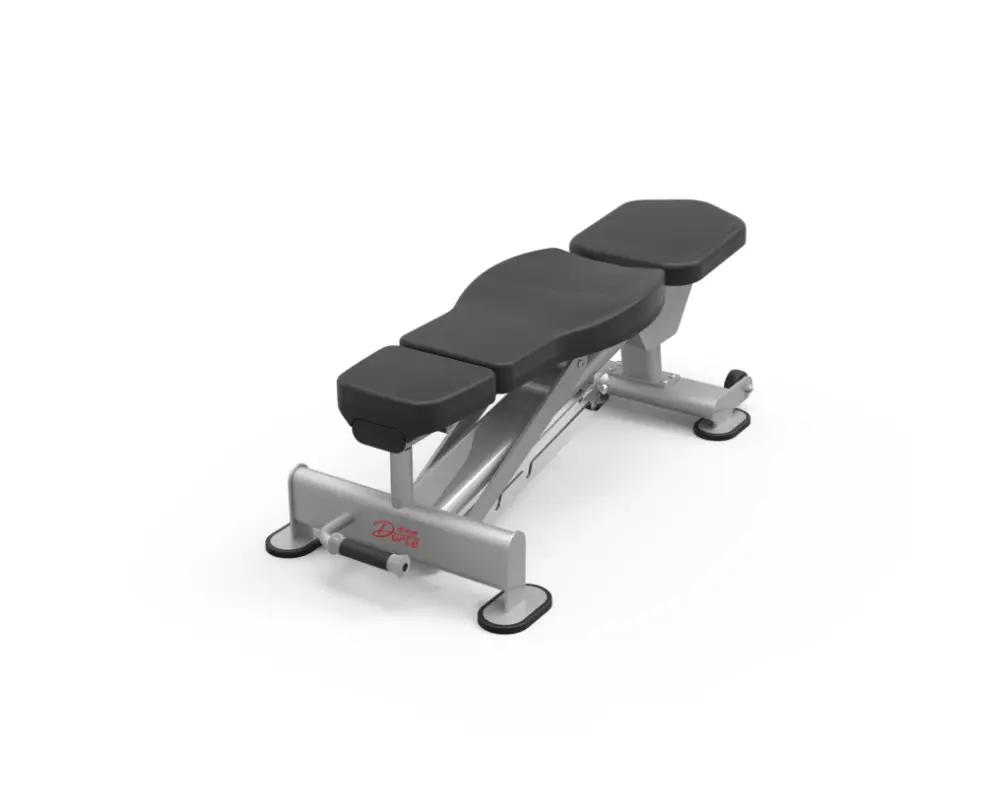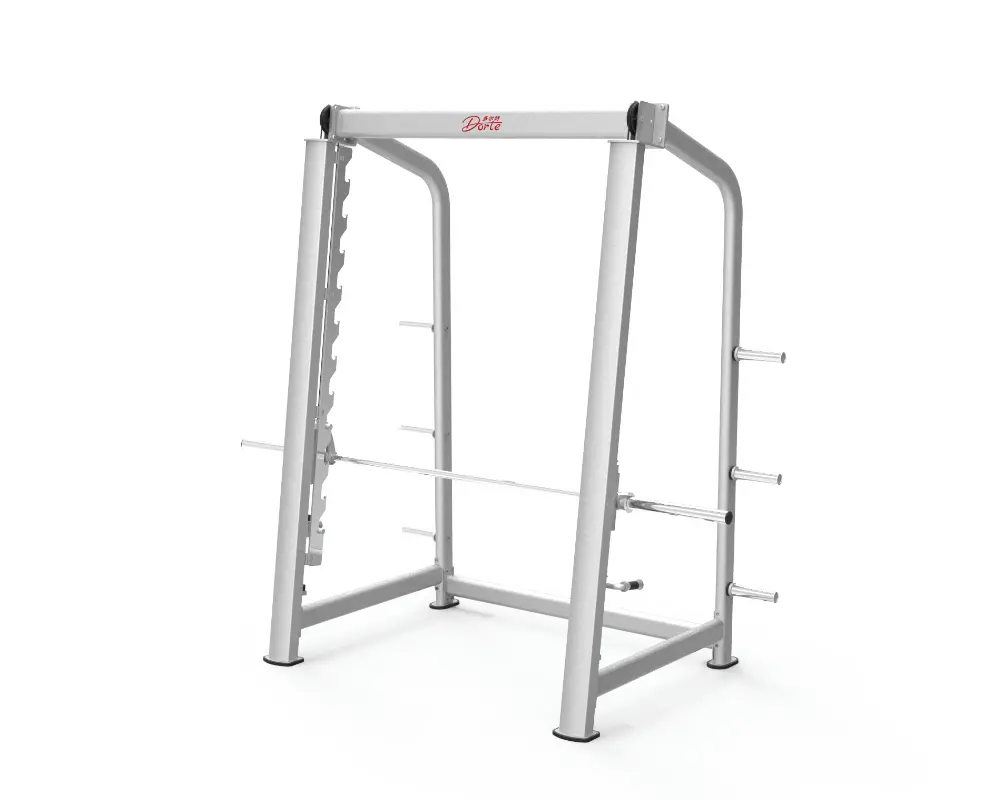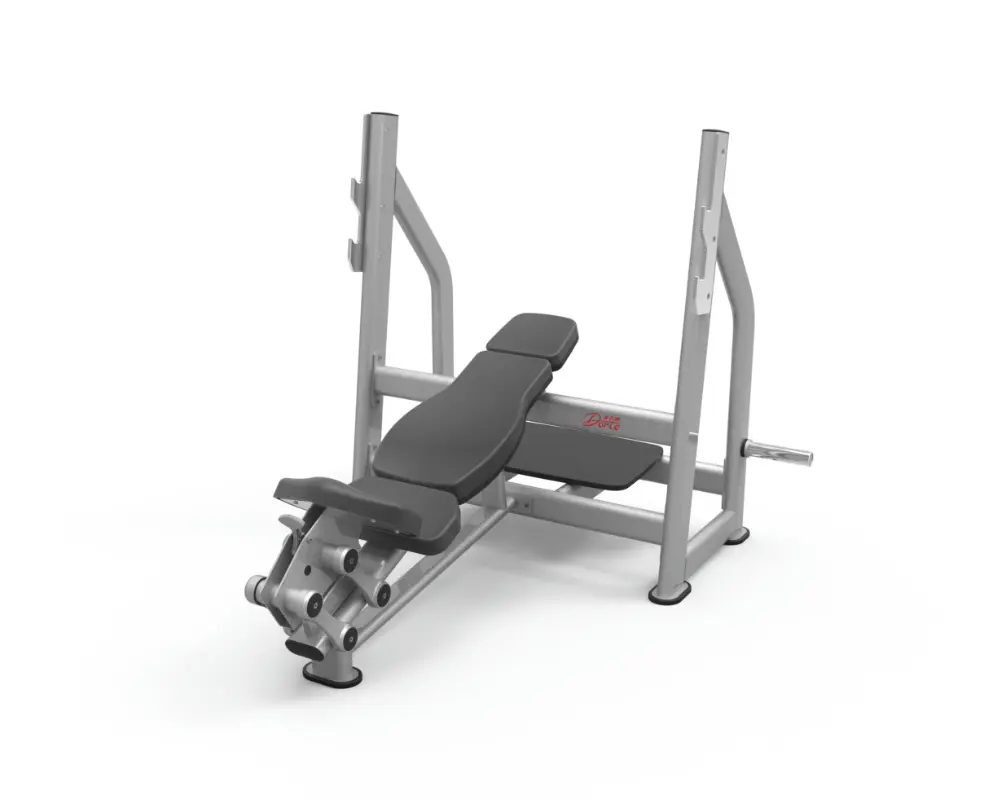

Product Model
| Specification | DL735 |
|---|---|
| Target muscles | Upper pectorals as the primary target, with the anterior deltoid taking a larger share as the pad angle rises and the triceps finishing the lockout |
| Product size | 1612*1727*1344mm |
| Counterweight | None - uses a barbell and plates, supplied separately |
| Net weight | 135KG |
| Maximum load capacity | 160KG (user rating - the resistance is the bar, not the frame) |
| Main frame specification | Q235 steel, 120*50*3.0mm flat elliptic tube |
| Back pad | One-piece foam with PU leather cover on an aluminium alloy arm, parallelogram linkage, torsion-spring assisted height adjustment |
| Foot plate | Included - a raised surface for the feet to drive against on the incline |
| Resistance source | Not included - set by the barbell and plates available on site |
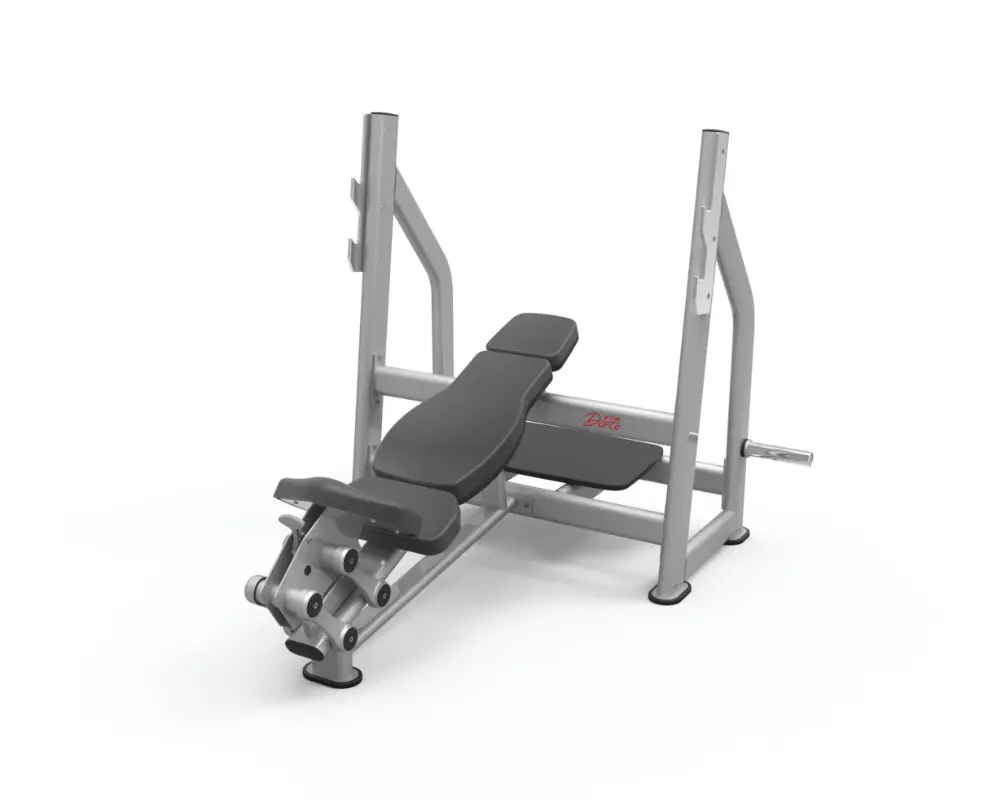
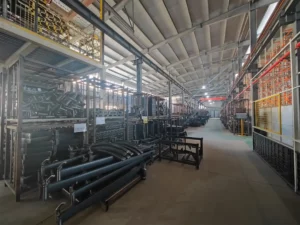
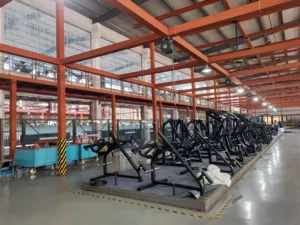
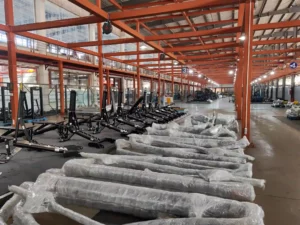
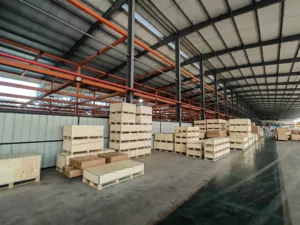
DL735 is cycled through the full back pad range before packing, with the pivot checked for play at both ends of the travel and the torsion spring checked against its rated preload. Each unit is photographed at the lowest and the highest pad position with the serial number in frame.
Ask for the DL735 back pad angle range and the rated load per hook
Three Press Benches, 45 kg Apart
The range carries three barbell press benches and the width will not tell them apart. The DL735 incline is 1612 mm wide, the DL736 flat bench and the DL737 decline are 1616 mm. All three use the same Q235 flat elliptic tube at 120 x 50 x 3.0 mm, and all three carry the same 160 kg user rating.
What does separate them is weight. The flat bench is 90 kg, the decline is 95 kg and the incline is 135 kg — 45 kg more frame than the flat bench for the same tube and the same rating. That number does not come from thicker steel, because the tube specification is identical on both datasheets.
It comes from the seventh line of the specification. The flat bench lists a seat pad and stops. The incline lists a seat pad, a back pad, an aluminium alloy arm in a parallelogram layout and a torsion-spring assisted height adjustment. The 45 kg is the mechanism that lets the angle move, and everything below is about what that mechanism buys and what it costs on the drawing.
One Fixed Angle, a 350 mm Spread
Take the frame away and look at the geometry. On a flat bench the torso is horizontal and the bar travels straight down, so the bar meets the sternum at the same place for everyone who lies on it. On an incline the torso is tilted but the bar still travels vertically. The drop line now meets the torso on a slope, and where it lands depends on three things: the pad angle, the length of the torso and the depth of the chest.
The spread is not small. A 1.65 m member and a 1.90 m member differ by roughly 350 mm across torso and arm reach. Lock the back pad at one angle and the shorter member takes the bar above the collarbone with the shoulder at the limit of its external rotation, while the taller member takes it at the bottom of the sternum, which turns the movement into a flat press with extra steps.
That is the whole reason the flat and the decline can be fixed and the incline cannot. A flat bench's touch point is a property of the bench. An incline's touch point is a property of the bench plus whoever is lying on it.
The adjustability shows up three times on the datasheet. Height goes from 1167 mm to 1344 mm, because the back pad needs somewhere to travel. Net weight goes from 90 kg to 135 kg. Footprint goes from 2.461 m² to 2.784 m² — 13% more floor for a bench of exactly the same width.
A Parallelogram That Holds Its Pivot
A back pad that rises is easy to draw and awkward to build, because the pivot has to stay where it is. On a plain hinge, lifting the pad swings its top edge backwards. The pad does not follow the member; the pad leaves the member, and the shoulders slide down the incline under load. On a bench where the bar is passing over your face, sliding is not a comfort problem.
The parallelogram separates the two movements. Four links let the pad tilt further back as it rises while the point it rotates about stays put. The member's back keeps contact through the full range and the hips do not walk forward as the pad comes up.
This is the same mechanism as the seated curl bench DL734 doing a different job. There the linkage holds the upper-arm pad square to the elbow as the seat climbs. Here it holds the back pad's pivot still as the pad tilts. One part, two problems, and neither of them is solved by a slide rail.
The arm carrying the pad is aluminium alloy rather than steel, which looks like an odd place to save weight on a 135 kg frame until you follow the load. The part that moves is the part the spring has to lift, so every kilogram taken off the linkage is a kilogram the torsion spring does not have to counterbalance. On a bench this heavy, the only useful place to save is the part that travels.
The Torsion Spring Is a One-Hand Adjustment
The back pad assembly is not light. Pad, backing plate, arm and pivot together are a load, and lifting them at the top of a 1344 mm bench means lifting at chest height with one arm out in front of you. The torsion spring carries most of that load, so the adjustment becomes a one-hand movement instead of a two-hand lift.
The case for it is a shared bench. A commercial floor with three presses on it does not reset a back pad once a season; it resets it between members. A two-hand adjustment means the member steps off, changes the pad and sits down again. A one-hand adjustment happens while they are still seated, which is also when they can feel whether the angle is right.
It also puts the spring on the maintenance sheet. The torsion spring, the pivot bushings and the pad cover are the three parts that wear on this bench. That is a shorter list than a selectorised machine's cable, pulley and selector pin, and it is why the assembly drawing lists those three as service items with their own part numbers rather than as a single welded assembly.
Half Your Weight Pulls Downhill
An incline puts the member on a slope, and a body on a slope has a share of its own weight pulling it down that slope. At 30 degrees that share is about half the body weight, and the only thing holding it back is the feet.
Leg drive on a flat bench goes straight down into the floor. On an incline the feet have to push forward and down at once to stop the slide, and the angle of the knee decides how that push splits between the two. A foot plate gives the feet a fixed raised surface at a height the knee angle can work from, so the drive goes into the slide instead of into the floor.
It is also what makes the bench practical without a helper on the set-up. The member can plant both feet before unracking rather than after. That reads as a small thing on a datasheet; on a bench where the bar comes off two hooks above the head it is the difference between a controlled first rep and a rushed one.
To check it in the room rather than on the drawing, set the pad to its lowest position, sit down and press a light bar for five reps, then repeat it at the highest position. If the member has to shuffle back into place between reps at either end, the pad is not holding them and the foot plate is not doing its job. Two ends of the range, five reps each, and the whole question is answered in under two minutes without a load on the bar.
Depth Sorts the Three Benches
Width is not what separates the three presses — 1612, 1616 and 1616 mm is a difference no floor plan will notice. Depth is: 1523 mm on the flat bench, 1727 mm on the incline and 1800 mm on the decline.
The order makes sense once you follow where the body goes. On a decline the legs hook at the top and extend forward, so the frame has to reach past the feet. On an incline the back pad tips backwards while the feet come forward, so the depth has to hold both ends at once. On a flat bench everything stays inside the shoulder width of the bench itself, which is why it is the shortest of the three by 204 mm.
Turn that into floor. Flat bench 2.461 m², incline 2.784 m², decline 2.909 m². For layout the number that matters is the clear zone in front. A 2200 mm bar loaded to 100 kg needs 1100 mm each side of the centreline, and the bench is 1600 mm wide, so a row of three along a wall wants about 4.5 m of run and 2.4 m of clear depth in front. The incline's extra 204 mm of depth comes out of that clear zone, not out of the run.
Height matters as much as depth on the incline. The top of the back pad sits at 1344 mm, and a member reclined against it has their head another 200 to 250 mm above that. Under a 2400 mm soffit there is room to sit and to unrack, but not room to stand up with the bar still in hand — which is worth knowing before the bench is placed under a duct or a mezzanine edge.
Frequently Asked Questions
Angle range, back pad adjustment, layout and supply questions about the DL735.
How is this different from the flat bench press rack DL736?
Same width, same tube, same 160 kg user rating; the difference is 45 kg of mechanism. The DL736 holds one fixed angle and lists only a seat pad, at 90 kg net and 1167 mm tall. The DL735 lists a back pad on an aluminium alloy parallelogram arm with torsion-spring assistance, at 135 kg net and 1344 mm tall. If every member is within a narrow height band and the room only needs a flat press, the DL736 does that job on 0.323 m² less floor. If the bench has to serve a mixed membership, the fixed angle is the limitation and no amount of steel fixes it.
What angle is the incline, and how far does it adjust?
The datasheet does not state a degree range, and we will not invent one. What it does state is that the back pad adjusts under torsion-spring assistance. When you request a quote, ask for three numbers: the lowest pad angle, the highest pad angle and the increment between positions. Anything that gives you only a single figure is telling you the pad has one locked position. A range that starts below 20 degrees is barely an incline; one that goes past 45 degrees is closer to a shoulder press.
Can the back pad be adjusted without tools or getting up?
Yes to both. The adjustment is a manual movement assisted by a torsion spring, with no pins, no knobs and no tools, and the assist is sized so it can be done from a seated position. That matters on a shared bench: an adjustment that requires standing up gets made once a day, an adjustment that happens while seated gets made between members.
How much floor space does it need, and what clearance in front?
1612 × 1727 mm, which is 2.784 m². In front, leave 2.4 m of clear depth for a 2200 mm bar loaded to 100 kg — that allows 1100 mm each side of the centreline plus room to walk past a loaded end. Along a wall, three presses in a row want about 4.5 m of run.
What ceiling height do I need?
The frame is 1344 mm tall and the top of the back pad is at that height. A reclined member's head sits another 200 to 250 mm above the pad, so 2400 mm clear is comfortable to sit and to unrack. What 2400 mm does not give you is room to stand up while still holding a loaded bar — check that against any duct, soffit or mezzanine edge before the bench goes in.
Do I need to buy the bar and plates separately?
Yes, the bench ships as a frame only. A 2200 mm Olympic bar is the usual match, and a 1300 mm short bar also works if the room is tight because the hooks are not bar-length dependent. Plates are not included and are not quoted with the bench; they are a separate line because shipping weight and container planning for plates is nothing like planning for frames.
The 160 kg rating — is that the user or the bar?
The user. That is the rating across this whole bench series, and it is a body weight figure, not a barbell figure. The barbell capacity is not printed on the datasheet and it is the first question to put to any supplier: ask for the rated load per hook, the number of crossmembers between the uprights, and how the base is tied together.
Why is the incline 45 kg heavier than the flat bench?
Because it carries a mechanism the flat bench does not have: a back pad, an aluminium alloy parallelogram arm, a torsion spring and the travel to make them work, plus a foot plate. The tube specification is identical at 120 x 50 x 3.0 mm on both. None of the 45 kg is thicker steel, which is also why the incline is 177 mm taller rather than wider.
What warranty and certification apply?
One year on the complete unit, with the torsion spring, the pivot bushings and the pad cover covered as part of it because those are the parts that move. The bench is manufactured to meet or exceed EN ISO 20957 / EN 957, and we supply the declaration with the shipping documents. We do not hold our own certificate for re-badged units, so we state compliance rather than certification.
What is the minimum order and lead time?
10 units per order in total across the range, with no per-model minimum — one DL735 plus nine other stations is a valid order and gets a room kitted in one colour on one spare-parts set. Regular production runs 25 to 35 days to Shenzhen port excluding ocean freight; custom colour or branding runs 35 to 45 days. FOB Shenzhen, payment before shipment, and the packing list plus the assembly sequence go out before the container leaves.