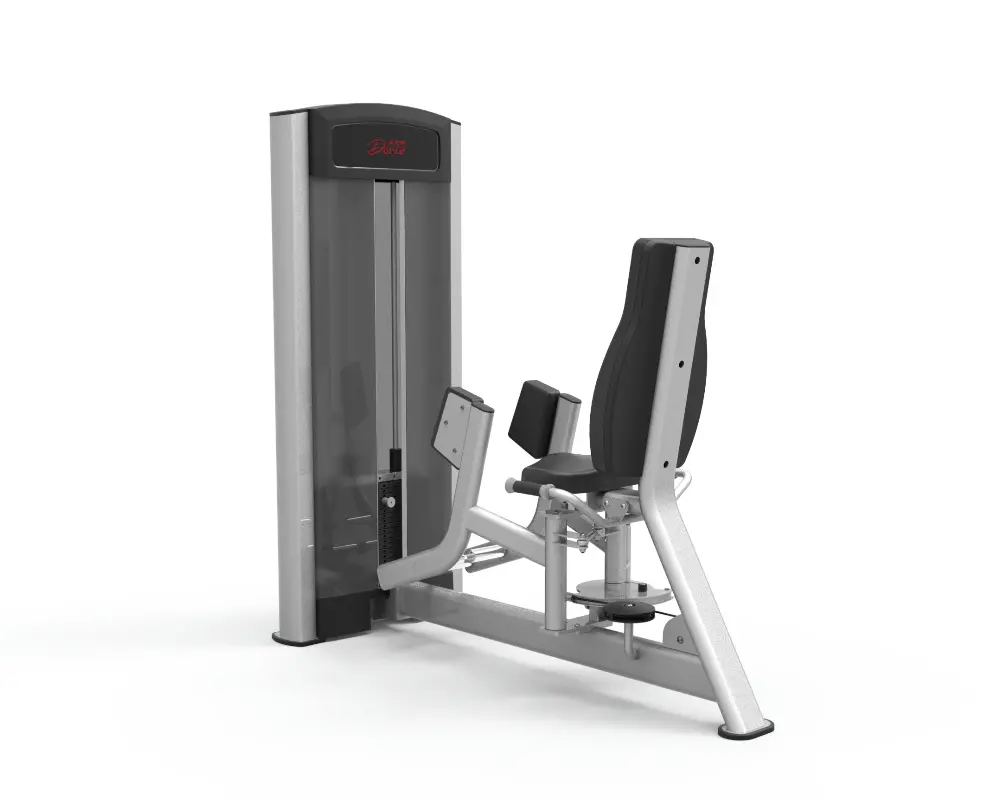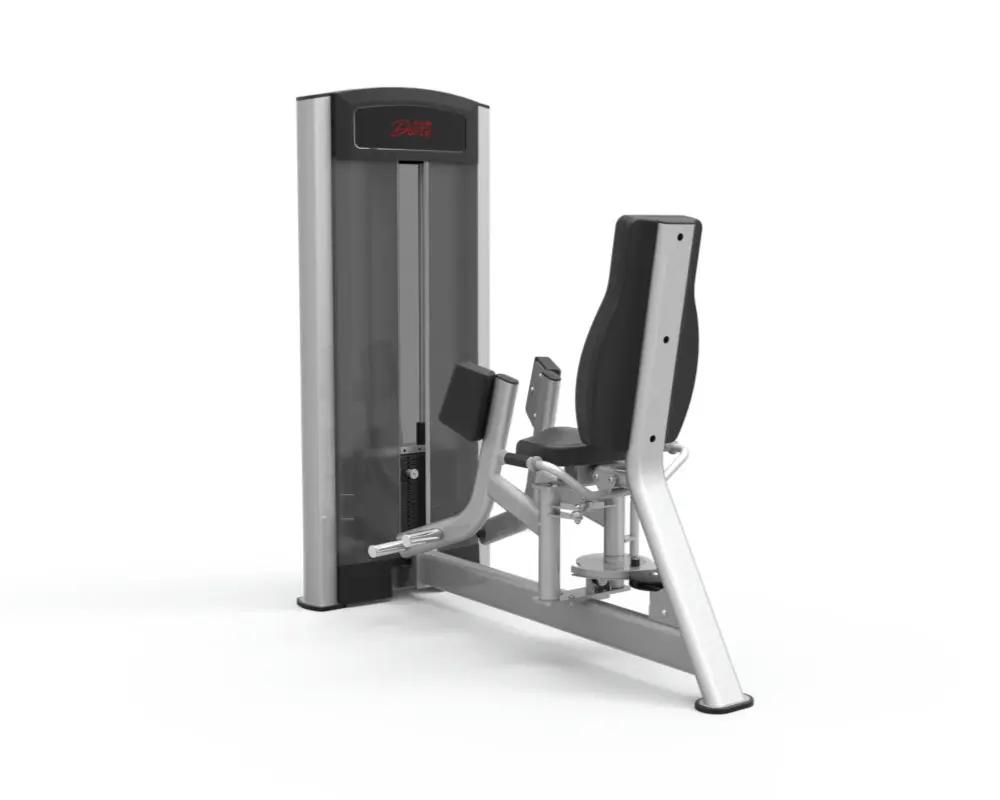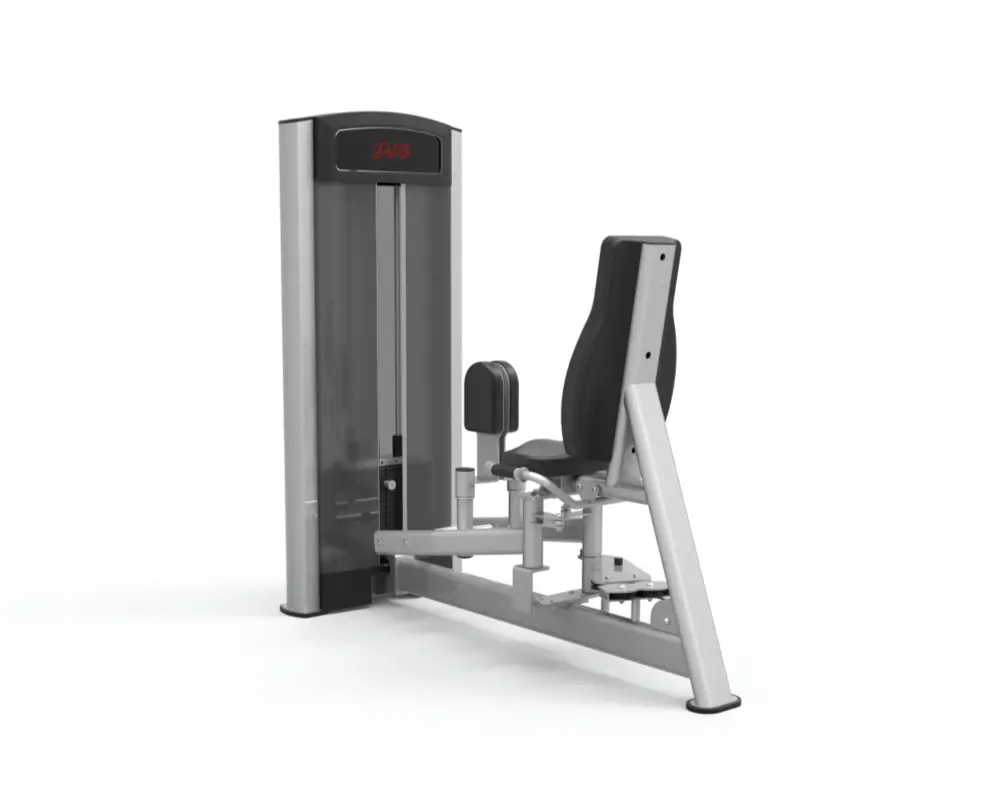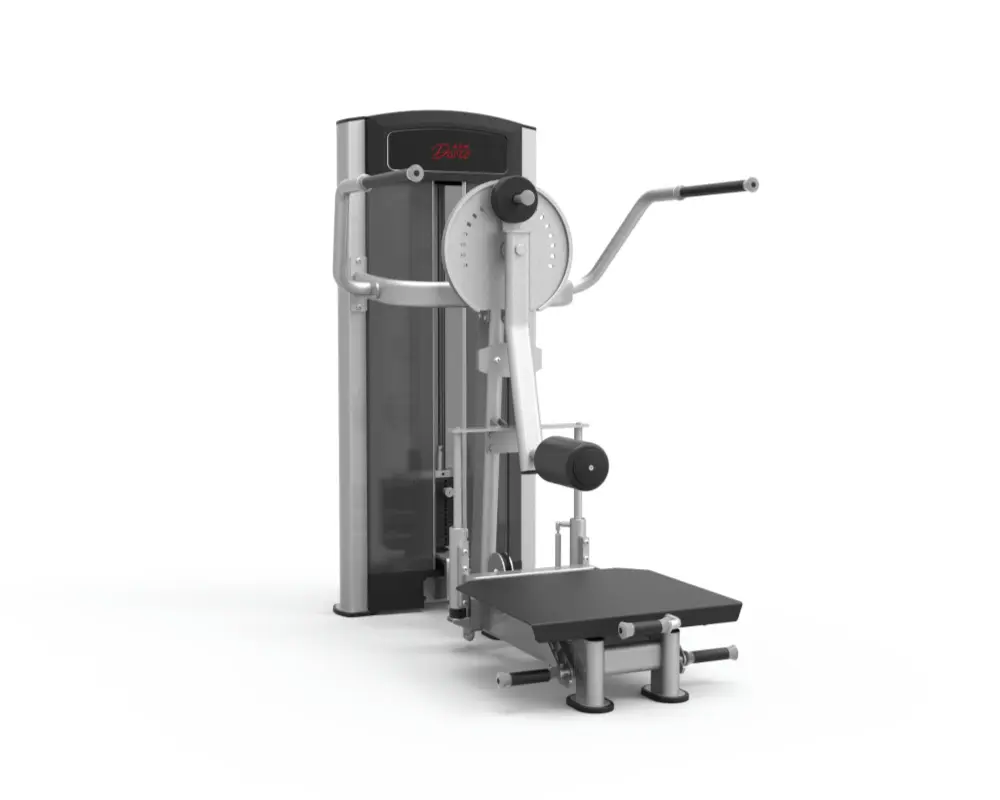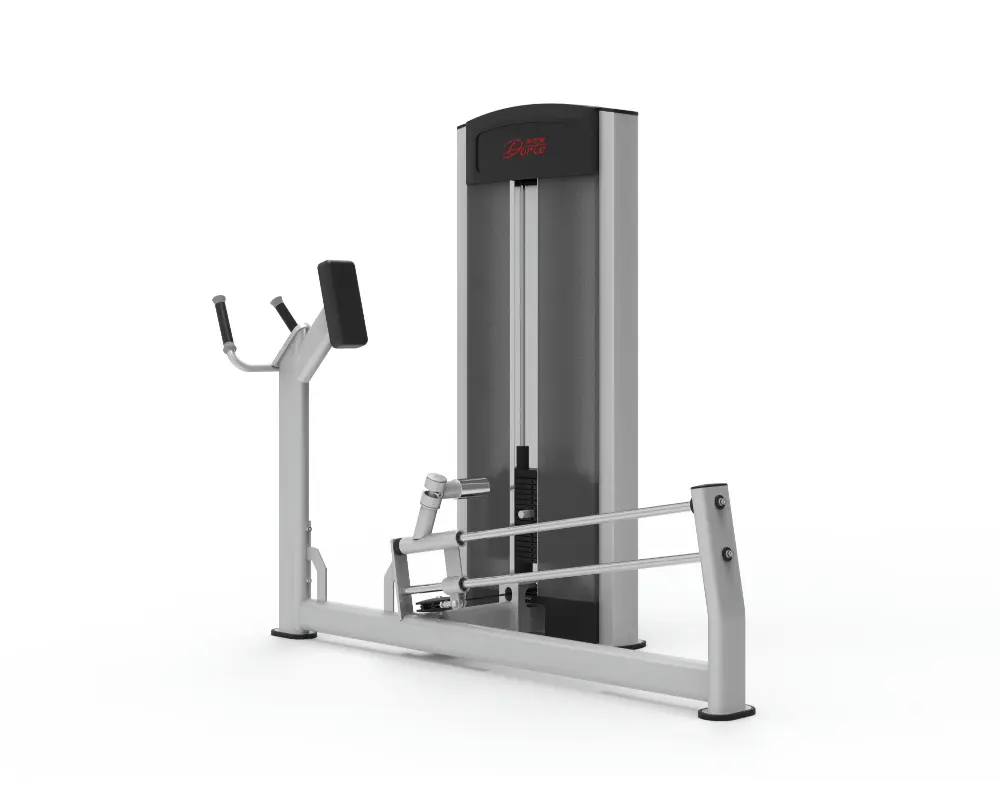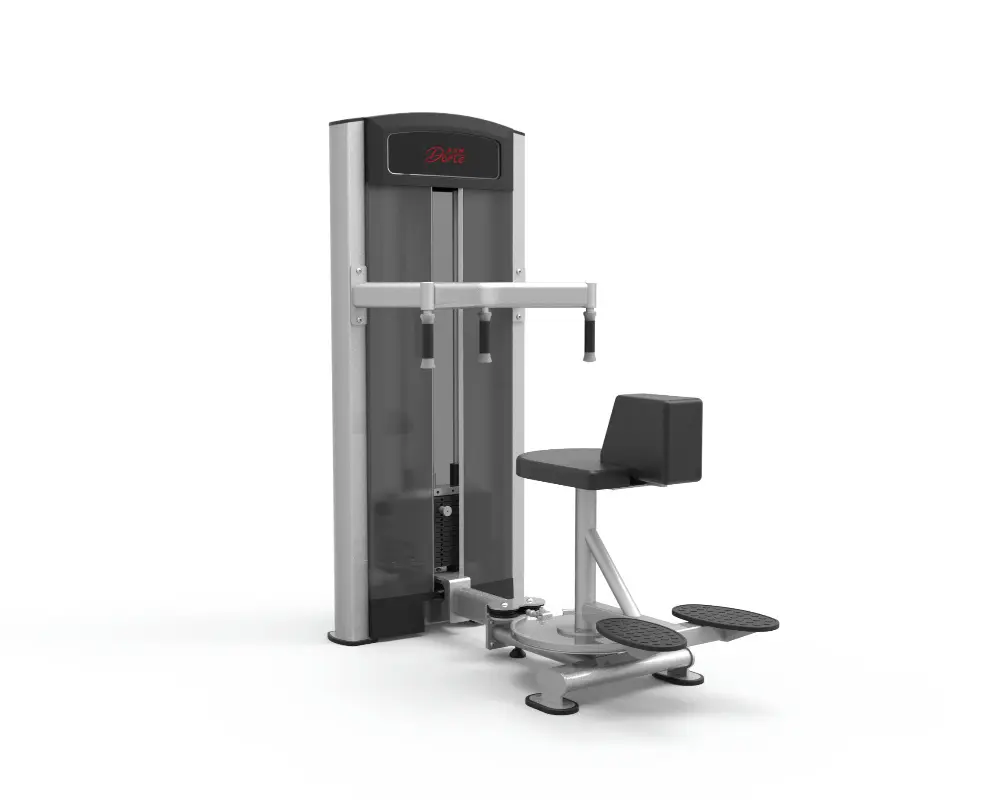

उत्पाद मॉडल
| विनिर्देश | DL724 |
|---|---|
| लक्षित मांसपेशियाँ | Quadriceps femoris - rectus femoris, vastus lateralis, vastus medialis, vastus intermedius |
| उत्पाद का आकार | 1322*1053*1660mm |
| काउंटरवेट | 80KG |
| शुद्ध वजन | 220KG |
| अधिकतम भार क्षमता | 160KG |
| वायर रस्सी तनाव | 1400KG से अधिक |
| मुख्य फ्रेम विनिर्देश | मुख्य फ्रेम के लिए Q235 स्टील, 120*75*3.0mm ब्रेड-टाइप ट्यूब; सेकेंडरी मेंबर्स के लिए 120*50*3.0mm फ्लैट एलिप्टिक ट्यूब |
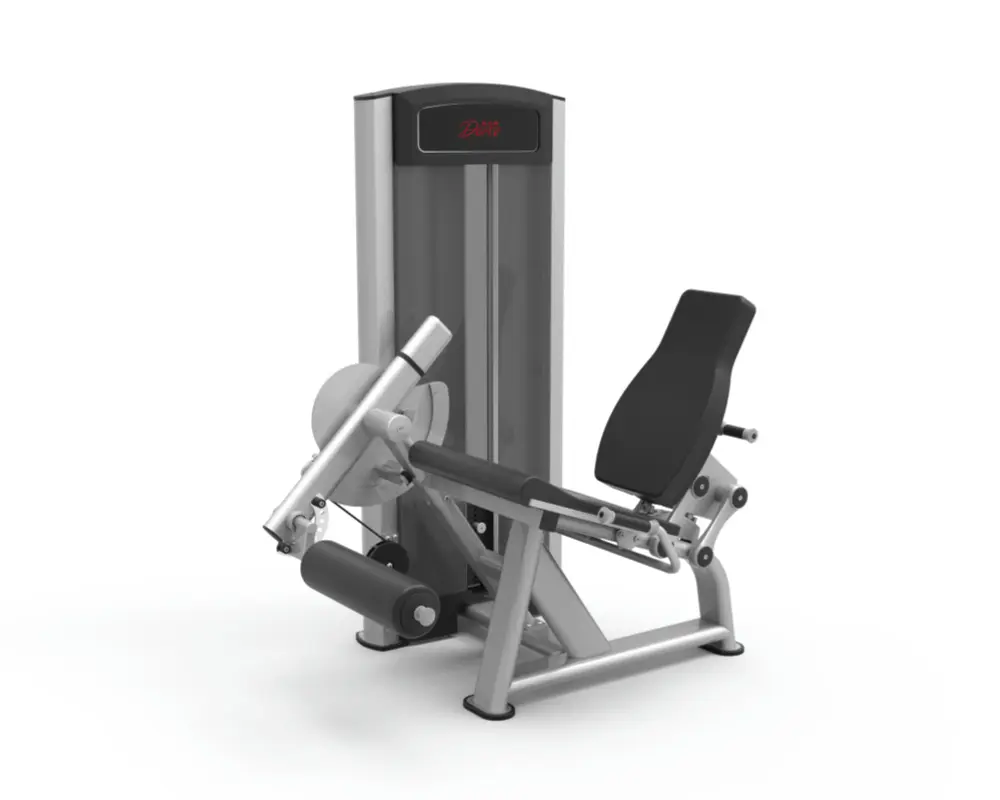
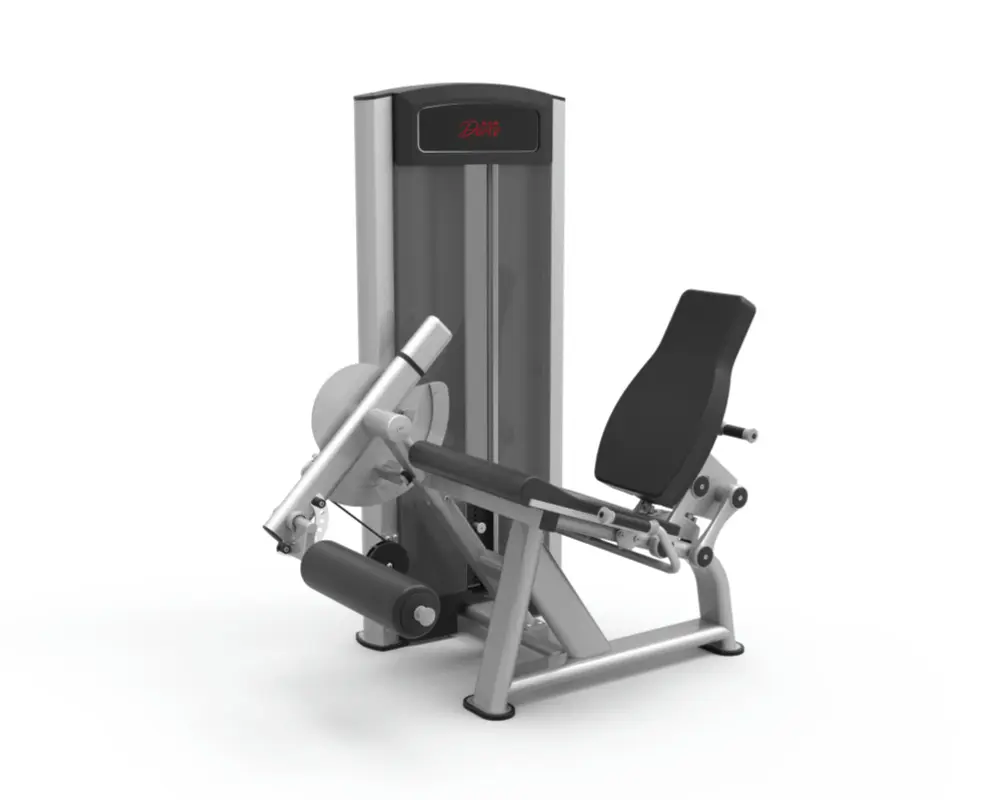
Seated Knee Extension Station
The DL724 does one thing: it extends the knee against resistance, from a seated position with the back supported and the pelvis held. That reads like a narrow brief. It is the only brief on a commercial floor that isolates the quadriceps, because every other leg movement in the room is a two-joint movement that lets the hip take part of the load.
Squat, leg press, lunge and step-up all extend the knee and the hip at the same time. When the hip extends, the rectus femoris shortens at its upper attachment, and the load at the knee drops exactly where a trained member is strongest. The DL724 takes the hip out of the equation: the seat and back pad hold the pelvis, the ankle pad holds the shin, and the resistance stays on the quadriceps through the whole arc. That is what isolation means in mechanical terms, and it is why a member can move 40 kg on a leg press and still fail at 25 kg here.
One objection comes up in every specification meeting, so it belongs in the specification rather than in a sales call: open-chain knee extension loads the anterior cruciate ligament. Tibial translation peaks near 30 degrees of knee flexion, which is why a protocol after ACL reconstruction usually keeps open-chain work inside a restricted band and away from the terminal 0–30 degrees. That is a real constraint for a clinic. It is not a constraint for a corporate fitness room, a hotel gym or a five-a-side squad, because the members using the station are not six months out of a reconstruction. The station is not the risk; unsupervised end-range loading on a healing graft is.
The second objection is more interesting, because it is built into the geometry of every seated leg extension. The rectus femoris crosses the hip as well as the knee, so a seat set at 90 degrees of hip flexion puts that head into a shortened position before the set even starts, and a shortened muscle cannot produce the force it produces at resting length. The answer is back pad angle, not a bigger stack. Reclining the back pad lengthens the rectus femoris and buys force at the top of the range, at the cost of more pressure on the lumbar pad. On the DL724 the back pad angle and the seat depth both adjust, and that pair of settings is what a coach changes for a member who cannot finish the last 20 degrees.
The stack is 80 kg, and the figure that matters is not 80 but the torque it produces at the joint. The ankle pad sits roughly 0.35 m from the knee axis, so 80 kg at the pad is about 275 N·m of knee extension torque. That is the same order as a 100 kg back squat, where the load is split across two legs and the hip produces most of the moment. Members who read the plate and conclude that 80 kg means a light station are reading the wrong number; what the plate measures is mass, and what the knee sees is torque.
Frame is Q235 steel: 120 × 75 × 3.0 mm bread-type tube for the main structure, 120 × 50 × 3.0 mm flat elliptic tube for the secondary members. The wire rope is rated above 1400 kg against a 220 kg machine carrying a 160 kg member, a margin of roughly six to one, which is why the cable is not the service item on these units. Seat and back pad are one-piece foam with a PU leather cover, mounted on an aluminium parallelogram arm with torsion spring assist, so an angle or height change is one-handed and the pad face stays parallel through the travel instead of rotating as it rises.
At 1322 × 1053 × 1660 mm the DL724 is the widest and the shallowest station in this range. It is 77% wider than the DL722 adductor and 37% shallower than it. Both numbers are deliberate, and the rest of this page is about what they cost and what they buy.
Why It Is Wide and Shallow
Set the DL724 beside the hip machines and the footprint reads wrong at first glance. 1322 mm wide against 746 mm, 1053 mm deep against 1664 mm. The station that trains the largest muscle group in the leg takes less depth than the stations that train the smallest ones.
The reason is the arc. Hip adduction and abduction are side-to-side movements: the member sits facing along the machine and the leg swings laterally, so the frame has to carry the seat, the back pad and the stack in a line, and that line is where 1664 mm comes from. Knee extension is a forward movement on a short radius. The knee axis sits under the seat, the ankle pad sweeps an arc of about 0.7 m, and the entire movement finishes inside the machine's own depth. No part of the DL724 travels outside the 1053 mm.
That changes where the machine belongs on a plan. Against a wall it claims 1.322 m of wall and projects 1.053 m into the room. The DL722 claims 0.746 m of wall and projects 1.664 m. A room with a long wall and a shallow depth — the usual shape of a converted office floor or a hotel function room — takes the DL724 easily and fights the hip machines. A narrow room with deep bays does the opposite. One DL724 plus one DL722 plus one DL723 needs 2.814 m of continuous wall and never projects more than 1.664 m.
Floor loading is where a specification sheet misleads most often. The DL724 weighs 220 kg over 1.39 m², which is 158 kg/m². The DL722 weighs 200 kg over 1.24 m², which is 161 kg/m². The heavier machine loads the slab less, by 1.9%. Anyone arguing that the leg extension has to stay on the ground floor while the hip machines go upstairs is arguing from the weight figure instead of the footprint, and on these two units the two figures point in opposite directions.
Allow 0.7 m in front of the ankle pad for getting on and off, and keep the pad side away from a mirror or a glass partition: a member finishing a set drops the shin, and the ankle pad lands exactly where a mirror is. Behind the machine the stack needs the normal 100 mm service gap and nothing else, so the back can go against a wall, a column or the end of a run.
Set-up decides whether the station gets used, more than placement does. The ankle pad belongs on the lower shin just above the ankle joint, not across the top of the foot, which is where most members put it and which turns the movement into a toe press with a fraction of the range and none of the load at the knee. The knee axis has to line up with the pivot, so seat depth changes when a taller member sits down. Both adjustments are on the machine, and a room that demonstrates them once in the first week keeps the station busy for years; a room that does not ends up with a station only three members know how to use.
One ordering note, because it is the question that decides single versus pair. Knee extension and seated leg curl are the two halves of the same joint and they should be bought together or not at all — a room with the extensor side and no flexor side builds an imbalance it then has to correct. The leg curl is the DL725 on the same platform and the same colour approval, and ordering them on one purchase order keeps one spare-parts set and one installation sequence.
व्यायाम उपकरण कारखाना
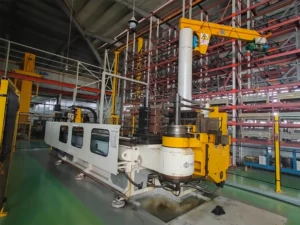
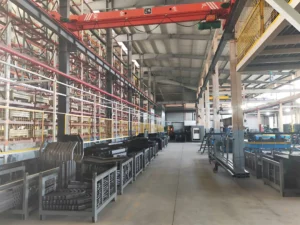
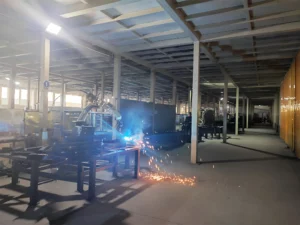
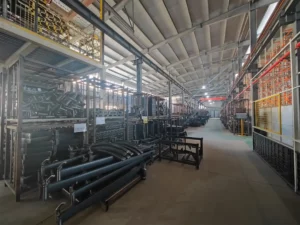
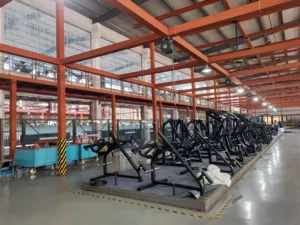
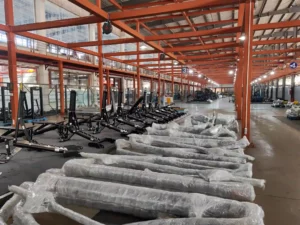
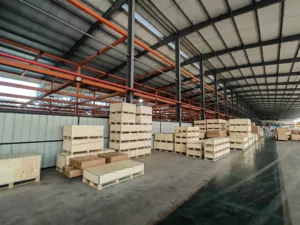
चीन Ledong प्रदान करता है एक व्यापक रेंज के उच्च गुणवत्ता विनिर्माण सेवाओं, से वेल्डिंग और पेंटिंग के लिए विधानसभा, पैकेजिंग, और कठोर गुणवत्ता परीक्षण, करने के लिए अपने विशिष्ट जरूरतों को पूरा. हमारे अनुभवी टीम के साथ उन्नत प्रौद्योगिकी का इस्तेमाल करने के लिए अनुकूलित समाधान प्रदान प्रतिस्पर्धी कीमतों पर.
अब से संपर्क करें. जाओ सबसे अच्छा समाधान है!
अक्सर पूछे जाने वाले प्रश्न
Commercial specification, installation and supply questions about the DL724.
DL724 किन मांसपेशियों को प्रशिक्षित करता है?
क्वाड्रिसेप्स के सभी चार सिरे: रेक्टस फेमोरिस, वास्टस लेटरलिस, वास्टस मेडियलिस और वास्टस इंटरमीडियस। वास्टस मेडियलिस एक्सटेंशन के अंतिम 15 डिग्री का कार्य करता है और यही वह सिरा है जो अधिकांश सदस्यों में कमजोर रहता है, इसीलिए टर्मिनल रेंज का महत्व शीर्ष लोड से अधिक है। हैमस्ट्रिंग्स और ग्लूट्स पेल्विस को स्थिर करते हैं लेकिन इस मूवमेंट से प्रशिक्षित नहीं होते।
क्या ओपन-चेन घुटने का विस्तार घुटने के लिए हानिकारक है?
यह अग्र क्रूसिएट लिगामेंट पर भार डालता है, और यह स्पष्ट रूप से कहा जाना चाहिए। टिबियल ट्रांसलेशन घुटने के 30 डिग्री फ्लेक्सन के आसपास चरम पर होता है, इसलिए पुनर्निर्मित घुटने को पहले महीनों में एक प्रतिबंधित बैंड के भीतर रहना चाहिए, और यह निर्णय जिम के बजाय इलाज करने वाले चिकित्सक का होता है। बाकी सभी के लिए — सामान्य सदस्यता, स्कूल एथलीट, होटल के मेहमान — भार प्रगतिशील, नियंत्रणीय होता है और एक ऐसे जोड़ पर लगाया जाता है जिसे पुनर्वासित किया जा रहा हो, बल्कि प्रशिक्षित किया जा रहा हो।
जब सदस्य 80 किलो से अधिक स्क्वाट करते हैं तो केवल 80 किलो क्यों?
क्योंकि दोनों संख्याएँ तुलनीय नहीं हैं। टखने के पैड पर 80 kg, घुटने की धुरी से 0.35 m की दूरी पर, लगभग 275 N·m का एक्सटेंशन टॉर्क है। 100 kg का स्क्वाट भार को दोनों पैरों में बाँटता है और कूल्हे को अधिकांश मोमेंट पैदा करने देता है। व्यवहार में 80 kg अधिकांश सदस्यों की नियंत्रित दस-रिप सेट के लिए उपयोग की क्षमता से अधिक है, और 5 kg प्लेट के स्टेप ही सदस्य को सप्ताह-दर-सप्ताह प्रगति करने देते हैं, बजाय उस बिंदु से आगे छलांग लगाने के जहाँ टेंडन अनुकूलन करता है।
क्या बैक पैड का कोण वास्तव में व्यायाम को बदलता है?
यह बदलता है कि कौन सा हेड काम करता है। रेक्टस फेमोरिस कूल्हे को पार करता है, इसलिए पूरी तरह से सीधी सीट सेट शुरू होने से पहले इसे छोटा कर देती है; बैक पैड को पीछे झुकाने से यह लंबा हो जाता है और लगभग पूर्ण एक्सटेंशन पर बल बहाल हो जाता है, लेकिन इससे लम्बर पैड पर अधिक दबाव पड़ता है। एक कोच जो किसी सदस्य को सेट कर रहा है जो लॉकआउट से 30 डिग्री कम पर रुक जाता है, आमतौर पर पिन को छूने से पहले पैड को दो स्थितियों तक पीछे झुका देगा।
क्या इसका उपयोग एक बार में एक पैर से किया जा सकता है?
हाँ, और जिनमें भी एक तरफ से दूसरी तरफ का अंतर है, उनके लिए इसका उपयोग करने का यही बेहतर तरीका है। फ्रेम और 80 kg स्टैक को बिना काउंटरवेट के सिंगल-लेग लोडिंग के लिए रेटेड किया गया है, और इस स्टेशन पर यूनिलैटरल कार्य उस अंतर को उजागर करता है जिसे दो-पैरों वाला सेट पूरी तरह छिपा देता है। यह चोट के बाद की प्रगति में भी इस स्टेशन के उपयोग का तरीका है जहाँ एक तरफ को दूसरी तरफ से पहले मंज़ूरी दी जाती है।
इसे वास्तव में कितनी फर्श जगह चाहिए?
322 मीटर गुणा 1.053 मीटर का फुटप्रिंट, साथ ही एंकल पैड के सामने चढ़ने और उतरने के लिए लगभग 0.7 मीटर। उस सीमा से बाहर कुछ नहीं हिलता। यह रेंज में सबसे उथला स्टेशन है, इसलिए यह 100 मिमी के गैप के साथ दीवार से सटकर लगता है और उतनी ही दीवार की जगह लेता है जितनी लेग प्रेस लेता है।
क्या इसे 100 m² के कॉर्पोरेट कमरे में रखना फायदेमंद है?
यह उन चार लेग स्टेशनों में से एक है जो उस आकार पर अपनी जगह बनाते हैं, साथ में एक लेग प्रेस, एक सीटेड लेग कर्ल और एक हिप मशीन, क्योंकि इसे किसी स्पॉटर की आवश्यकता नहीं होती, एक प्रदर्शन और सदस्य के लगभग ढाई मिनट के समय की आवश्यकता होती है। जिस कमरे में कुल पाँच लेग मशीनें होती हैं, वह आमतौर पर दूसरा प्रेस जोड़ने के बजाय उनमें से एक को यहाँ लगाता है।
कौन-सी वारंटी और प्रमाणन लागू होती हैं?
पूरी मशीन पर एक वर्ष की वारंटी। यह यूनिट EN ISO 20957 / EN 957 को पूरा करने या उससे अधिक होने के लिए निर्मित की गई है, और हम शिपिंग दस्तावेजों के साथ घोषणा प्रदान करते हैं। हम री-बैज्ड यूनिट के लिए अपना स्वयं का प्रमाणपत्र नहीं रखते हैं, इसलिए हम प्रमाणन के बजाय अनुपालन का उल्लेख करते हैं।.
न्यूनतम ऑर्डर और लीड टाइम क्या है?
प्रति ऑर्डर कुल 10 यूनिट, प्रति-मॉडल कोई न्यूनतम नहीं — एक DL724 और नौ अन्य मशीनें एक वैध ऑर्डर है, और इसे DL725 लेग कर्ल के साथ जोड़ने पर एक ही रंग अनुमोदन और एक ही स्पेयर-पार्ट्स सेट बना रहता है। नियमित उत्पादन शेनझेन बंदरगाह तक 25–35 दिन लेता है, जिसमें समुद्री मालभाड़ा शामिल नहीं है; अनुकूलित रंग या ब्रांडिंग में 35–45 दिन लगते हैं। FOB शेनझेन, शिपमेंट से पहले भुगतान, और पैकिंग सूची तथा इंस्टॉलेशन क्रम कंटेनर के रवाना होने से पहले भेज दिए जाते हैं।